

What maintenance practices should be implemented to ensure the longevity and performance of nylon and special coatings on aluminium components?
Maintain nylon and special coatings on aluminium by carrying out regular visual inspections, cleaning with mild, coating-compatible products, and avoiding abrasive tools or harsh chemicals that may damage the finish. Address chips, scratches, corrosion or coating separation promptly, and follow the coating manufacturer’s guidance for cleaning methods, inspection intervals and any remedial work.
Effective maintenance of nylon and special coatings on aluminium components combines controlled use, scheduled condition assessment, protection from damaging contact and properly specified remedial work. The maintenance plan should reflect the coating system, the component’s exposure, its operating environment and any loads or chemicals encountered in service.
Establish the coating requirements. Retain the coating specification, application records and any care instructions supplied for the component. These documents can identify limitations relating to temperature, chemical exposure, immersion, sunlight, abrasion and contact with other materials. They also provide a reference point when assessing whether a change in appearance or performance is expected ageing or a developing coating failure.
Match maintenance intervals to the operating environment. Aluminium components in sheltered internal locations may require less frequent assessment than parts exposed to industrial pollutants, road contaminants, moisture, salt or continuous handling. Components used near wash-down areas, process chemicals or abrasive materials need particular attention because repeated exposure can affect the coating and the aluminium beneath it. Review the maintenance frequency if the component’s use, location or surrounding process changes.
Control mechanical damage during use and handling. Nylon coatings can provide a resilient barrier, but dragging, impact, clamping or contact with sharp edges can still mark or penetrate the finish. Use suitable lifting and storage methods, padded supports where appropriate and clean contact surfaces during transport or installation. Avoid stacking coated parts in a way that concentrates pressure on edges, corners or projecting fixings. Any temporary protection used during handling should be compatible with the coating and removed without cutting, scraping or leaving contaminating residues.
Prevent water and debris from remaining against the component. Review the way coated aluminium parts are installed so that moisture, process residue and dirt are not trapped at joints, recesses or horizontal surfaces. Where the design allows, maintain drainage and avoid arrangements that create persistent damp contact between the coating and another material. Particular care is needed around seams, fasteners and interfaces, as retained moisture can contribute to under-film deterioration or corrosion of exposed aluminium.
Manage contact with adjoining materials. Check rubber, plastics, sealants, fixings and protective pads for compatibility with the coating system. Some materials can retain moisture, transfer chemicals or cause staining when held against a coated surface for long periods. Where components are assembled, ensure that tightening, movement and vibration do not create repeated rubbing at the same location. Isolate dissimilar materials where the design or exposure makes galvanic interaction a concern, using an appropriate barrier or approved fixing arrangement.
Monitor performance, not just appearance. A coating can remain visually acceptable while its service conditions are becoming more demanding. Record relevant changes such as increased friction, altered fit, loss of insulation, difficulty moving a coated part, evidence of moisture ingress or deterioration around attachment points. For components with a defined functional or safety role, incorporate coating condition into the wider planned maintenance and inspection records rather than treating it as a cosmetic issue only.
Use a controlled repair process. If a defect is found, identify its likely cause before applying a touch-up product. A repair may require removal of loose material, treatment of exposed aluminium, preparation of the surrounding sound coating and application of a compatible repair system. The repaired area may not have the same appearance, thickness or resistance as the original factory-applied finish, so acceptance criteria should be agreed for the component’s use. Significant damage, recurring separation or corrosion extending beneath the coating should be assessed by a suitably qualified coating or fabrication specialist rather than repeatedly covered over.
Review the coating after process changes. New cleaning agents, lubricants, cutting fluids, de-icing products, production chemicals or heating arrangements can alter the exposure experienced by aluminium components. Before introducing a new substance or process near the coated parts, check its compatibility with the coating specification and consider a controlled trial or technical assessment. Keep records of substances used around the components so that later deterioration can be traced more reliably.
Keep maintenance records. A useful record identifies the component, coating system, location, operating conditions, assessment date, observed condition, work carried out and any follow-up required. Photographs or marked-up component drawings can help track recurring defects, particularly where parts are installed in production equipment or distributed across a site. Trends in damage can indicate a design, handling or process problem that should be corrected at source.
For business-critical aluminium components, the maintenance plan should also define who can approve cleaning materials, repairs and changes to service conditions. Coordinating the end user, maintenance team and coating provider helps ensure that remedial work is compatible with the original nylon or special coating and does not compromise the component’s intended performance.
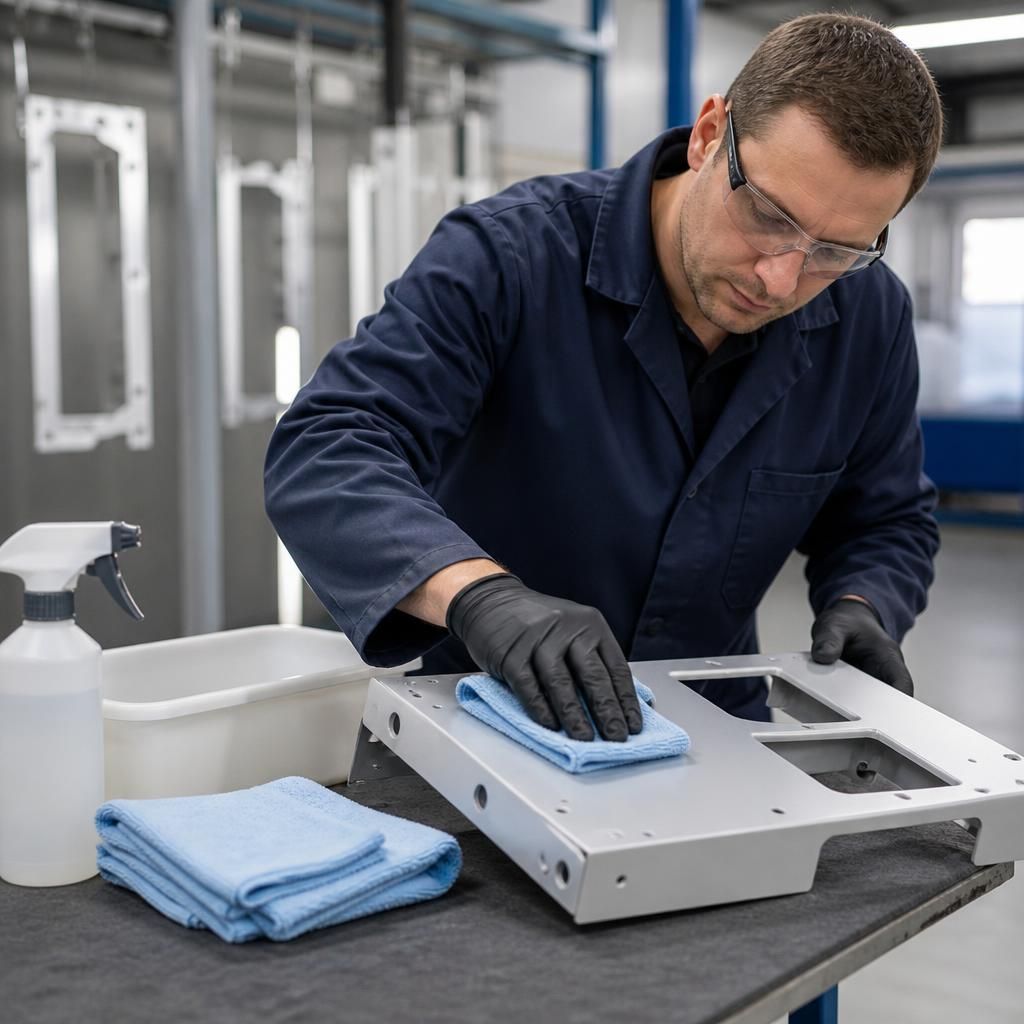
Use a contamination-controlled cleaning method for nylon and special coatings on aluminium. Clean cloths, non-metallic tools and fresh wash solution help prevent trapped grit, metal particles or process residue from creating fine scratches during routine maintenance. Do not reuse cloths that have been used on oily machinery, abrasive materials or uncoated steel parts.
Work from the least contaminated areas towards heavier deposits, then remove all cleaning residue before the component is returned to service. Pay particular attention to edges, joints and contact surfaces where particles can remain hidden and cause wear during movement or assembly. If contamination cannot be removed without aggressive treatment, stop and obtain coating-specific technical advice rather than increasing pressure or using a stronger product.