

What are the specific benefits of using nylon coatings on aluminium components in industrial settings?
Nylon coatings give aluminium components a tough, resilient surface that helps resist impact, abrasion, chemicals and corrosion in demanding industrial environments. They can also provide electrical insulation and reduce friction, helping protect the base metal and extend component service life.
Nylon coatings provide aluminium components with a controlled, non-metallic working surface that can improve handling, reduce noise and vibration, separate aluminium from dissimilar materials and support consistent performance in service. Their value is not limited to protecting the substrate: the coating can also alter the component’s surface behaviour to suit assembly, contact and operating requirements.
- Electrical separation: Nylon is electrically insulating, so a correctly applied coating can help prevent direct conductive contact between an aluminium part and another metal. This is useful in assemblies where electrical isolation, reduced stray-current paths or separation between dissimilar materials is required. The coating specification must account for any areas that need to remain conductive, such as earth points or contact faces.
- Reduced galvanic interaction: Aluminium components can be vulnerable when they are joined to dissimilar metals in the presence of moisture. A continuous nylon barrier limits direct contact and helps separate the materials. This is particularly relevant to brackets, housings, fixings and fabricated assemblies, although joints, cut edges and uncoated interfaces still need careful design and protection.
- Noise and vibration control: The resilient polymer layer can dampen some noise created when coated aluminium parts touch, slide or vibrate against other components. It can also reduce the harshness of metal-to-metal contact in guards, guides, supports and handling equipment. The result depends on coating thickness, hardness, component geometry and the forces involved.
- Protection against marking during handling: A nylon surface is less likely than bare aluminium to create sharp, hard contact between components. It can help reduce scuffing and marking during storage, assembly and repeated handling, which is valuable for visible parts and components that fit within close assemblies.
- Improved sliding and contact behaviour: Nylon can provide a relatively low-friction surface for suitable mating arrangements. This may help parts move more smoothly and reduce sticking in guides, chutes, runners and handling systems. It should not automatically be treated as a substitute for an engineered bearing material: load, speed, temperature, lubrication and the mating surface all affect suitability.
- Stable surface finish: Coating gives the aluminium a uniform polymer surface that can conceal minor visual variation in the prepared substrate and provide a consistent finish across production batches. Colour and texture should be selected according to the part’s visibility, cleaning requirements and exposure conditions rather than appearance alone.
- Comfort and safe handling: The polymer surface is less cold and less harsh to touch than exposed metal, which can be useful on handles, rails, grips and manually handled equipment. It may also reduce the likelihood of contact with exposed aluminium edges, provided the component has been correctly designed and finished before coating.
- Resistance to routine cleaning: A properly selected nylon system can tolerate many normal cleaning processes and helps prevent dirt or residues from directly contacting the aluminium surface. Cleaning chemicals, concentration, temperature and exposure time must be checked against the particular nylon formulation, especially where sanitising agents, solvents or alkaline cleaners are used.
These benefits depend on the coating forming a continuous, well-adhered layer. Aluminium normally requires suitable degreasing, removal of oxidation and a preparation method compatible with both the alloy and the chosen nylon system. Contamination, insufficient surface preparation, trapped moisture or poorly treated edges can lead to adhesion failure regardless of the polymer’s inherent properties.
Design details are equally important. Coating thickness can affect holes, threads, slots, bearing fits and sliding clearances, while masking may be needed for electrical contacts, precision interfaces and drainage points. Components should be reviewed before treatment so that tolerances, hanging points and areas requiring a defined finish are clear.
Nylon is therefore most useful where an aluminium part needs a resilient, insulating and handling-friendly surface in addition to protection of the underlying metal. The correct grade and application method should be selected from the component’s temperature range, contact conditions, cleaning regime, dimensional tolerances and exposure to chemicals. Testing representative parts or assembled interfaces can confirm adhesion, fit and functional performance before full production.
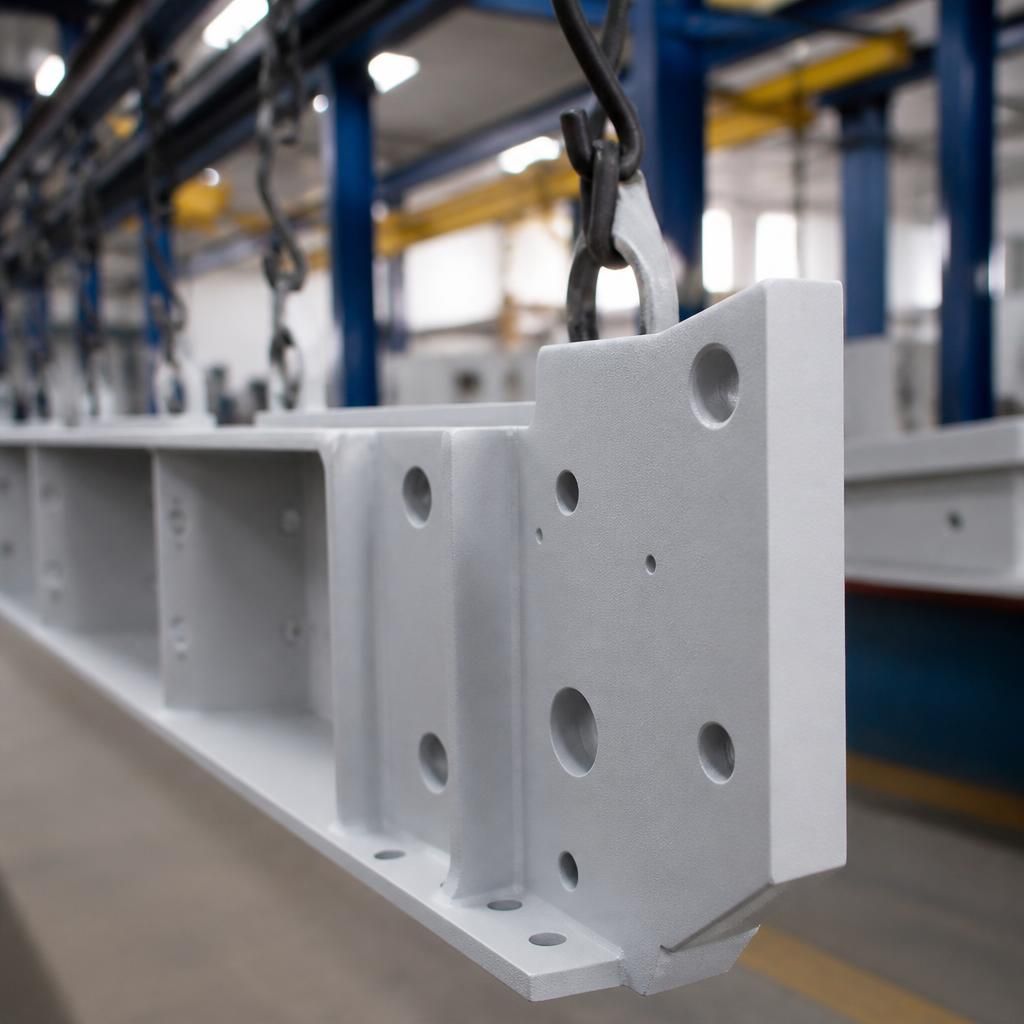
A key benefit of nylon coatings on aluminium components is that they add a functional surface without replacing the lightweight aluminium substrate. This allows a part to retain aluminium’s low-density advantage while gaining a tougher, non-metallic interface suited to contact, handling and assembly conditions.
This combination can be useful for fabricated housings, brackets, guards and other components where reducing the base material’s weight remains important, but bare aluminium does not provide the required surface behaviour. The coating specification should still reflect the component’s operating temperature, loads, clearances and exposure conditions so that the finished part performs as intended.
Discuss Your Aluminium Component Coating Requirements
Discuss your aluminium component requirements with our coating specialists to review the alloy, component design, operating conditions and finish specification. This assessment can help determine whether a nylon coating is suitable and identify any preparation, masking or dimensional considerations before production.