

How do nylon coatings compare to polyester powder coatings for aluminium applications?
Nylon coatings generally provide greater resistance to abrasion, impact and many chemicals, making them suitable for aluminium components exposed to mechanical wear or harsh service conditions. Polyester powder coatings usually offer stronger weathering and UV performance with a broader range of decorative finishes, so they are often preferred for external or appearance-led applications; the best choice depends on the component’s environment and performance requirements.
Nylon and polyester powder coatings are both suitable for aluminium, but they serve different performance priorities. Nylon is generally selected for a thicker, tougher and more functional coating where the component may experience sliding contact, repeated handling or contact with chemicals. Polyester is usually selected where consistent decorative appearance, outdoor exposure and colour retention are more important. The correct comparison therefore depends on the component’s operating environment, required finish and manufacturing tolerances rather than on the coating material alone.
Material and coating structure
Most polyester powder coatings are thermoset materials. During curing, the powder melts and chemically cross-links to form a hard, continuous film that cannot be remelted. Nylon coatings are commonly thermoplastic. They soften when heated and solidify as they cool, creating a coating with different flexibility, surface feel and wear characteristics. The exact performance depends on the nylon grade, coating formulation, application method and final film thickness.
This distinction affects how each coating behaves in service. Polyester is often used as a relatively thin architectural or industrial finish, while nylon is frequently applied as a more substantial functional layer. A thicker nylon film can provide greater separation between an aluminium surface and a contacting part, although the available clearance must be checked before specifying it.
Comparison of key properties
- Surface friction: Nylon can provide a relatively smooth, low-friction surface, making it useful for guides, rollers, chutes, runners and components that slide against another material. Polyester is more commonly chosen as a protective and decorative surface rather than as a sliding interface.
- Coating thickness: Nylon is often applied at a greater thickness than standard polyester finishes. This may help with surface protection and edge coverage, but it can affect holes, threads, mating faces and press-fit dimensions.
- Flexibility: Nylon can be appropriate where the coating must tolerate some flexing or repeated contact. Polyester forms a hard finish with good general-purpose durability, but the formulation and cure schedule determine its resistance to deformation and damage.
- Electrical properties: Nylon may be considered where the coating also needs to provide electrical insulation between an aluminium component and another conductive surface. The required dielectric performance must be verified for the specific coating and service conditions rather than assumed from the name of the resin.
- Appearance: Polyester is widely used where a controlled decorative finish is required across visible aluminium parts. Nylon can provide a practical, uniform surface, but the available appearance, texture and colour options depend on the selected material and application process.
- Heat exposure: Neither coating should be selected solely by its nominal service temperature. The expected temperature range, duration of exposure, thermal cycling and contact with other materials all need to be considered. The coating supplier should confirm suitability for the actual operating conditions.
Aluminium preparation and adhesion
The aluminium substrate needs careful preparation for either coating system. Oils, machining residues, oxide contamination and handling marks can interfere with adhesion and produce defects. Cleaning, suitable chemical pre-treatment and controlled drying are therefore important parts of the process. The preparation route may differ according to the chosen powder, the aluminium alloy, the component’s use and whether the item has previously been coated.
Nylon and polyester also have different application requirements. Polyester powder is electrostatically applied and then cured so that the particles flow and cross-link. Nylon may require a different deposition or fusion process, particularly where a heavier thermoplastic layer is specified. Aluminium conducts heat efficiently, so component mass, geometry and heat-up behaviour should be considered when establishing the process. Areas such as recesses, sharp transitions, welds and concealed faces may require specific attention to achieve consistent coverage.
Dimensional and design considerations
Coating selection should take place before finalising tolerances. A thicker nylon layer can alter the dimensions of bores, slots, threads, locating faces and moving interfaces. Masking may be required on earth points, mating faces, threaded holes or areas that must remain uncoated. Polyester can also affect tolerances, but its usual film build may make the dimensional change less significant in some designs.
Edges and corners should be reviewed because powder does not behave like a liquid paint during application. Very sharp edges can receive less uniform coverage, while recesses may be more difficult to coat consistently. Designing suitable radii, identifying areas that must remain clear and providing appropriate racking points can reduce rework and improve repeatability for batch production.
Choosing by application
- Choose nylon when the aluminium part is exposed to sliding contact, repeated rubbing, abrasive handling or a need for a functional, resilient surface.
- Choose polyester when the principal requirements are a controlled decorative finish, general industrial protection or exterior appearance retention.
- Consider a specialist nylon system where the coating must provide a substantial barrier between the aluminium and another component, subject to checking tolerances and the required operating temperature.
- Consider polyester for panels, frames, housings, profiles and other visible parts where finish consistency and appearance are central to the specification.
- Where a component has both visible and high-wear areas, assess whether one coating can meet both requirements or whether masking, a different design or separate component treatment is more appropriate.
Neither system is automatically better for every aluminium application. The specification should identify the aluminium alloy, preparation method, required film build, colour or texture, contact conditions, chemical exposure, temperature range, dimensional limits and any electrical or regulatory requirements. Sample panels or representative components can be useful where appearance, adhesion, coverage or fit is difficult to judge from a written specification.
For industrial batch work, the coating choice should also be matched to the component’s handling and inspection requirements. Parts should be assessed for cleanability, masking, racking, cure or fusion conditions and the checks needed after coating. A technically suitable powder can still be unsuitable if it cannot be applied consistently to the component geometry or if the resulting film interferes with assembly.
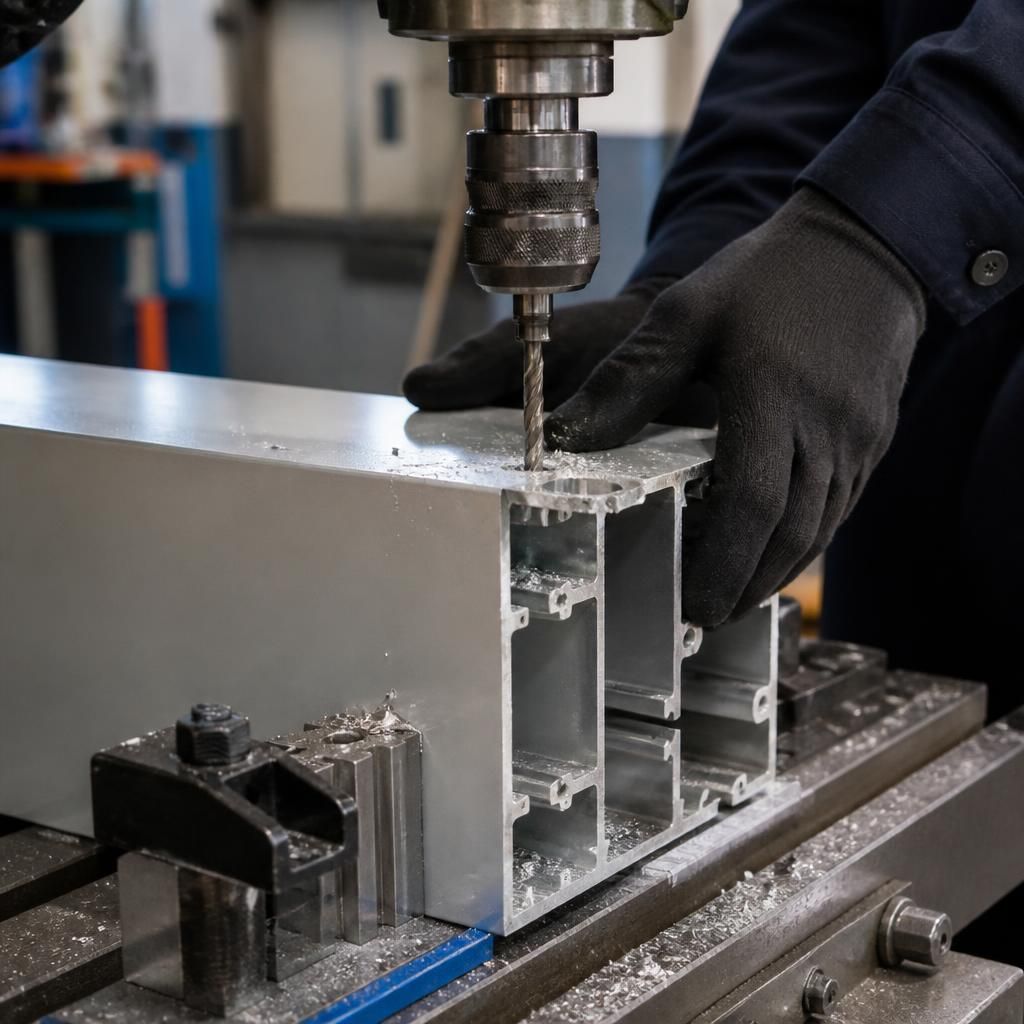
A practical difference between nylon and polyester is how each coating behaves if the aluminium component is modified after coating. Nylon is thermoplastic, so heat from later processing can soften the film and affect its surface or dimensions. Polyester is thermoset and does not remelt, although excessive heat can still damage or degrade the finish.
Drilling, cutting or machining either coating can expose the aluminium substrate and leave an edge that needs suitable protection. For this reason, holes, threads, mating faces and any post-coating operations should be identified before the coating is selected. Where the finished component is unlikely to require alteration, this factor may have little influence; where components are routinely modified or reworked, the coating’s response to heat and mechanical processing should form part of the specification.
Discuss the right coating for your aluminium components
Share your aluminium component drawings and service requirements with Powder-coatings.co.uk for an informed comparison of nylon and polyester powder coating options. The assessment can identify the more suitable finish for the component’s operating conditions, dimensions and intended use.