

How do nylon and special coatings contribute to the safety and compliance of aluminium components in regulated industries?
Nylon and special coatings improve the safety of aluminium components by providing durable protection against abrasion, corrosion, chemicals and electrical contact where the coating specification requires it. By selecting a coating system suited to the operating environment and documenting surface preparation, application and inspection, manufacturers can support consistent quality and demonstrate alignment with relevant industry and regulatory requirements.
Nylon and special coatings support safety and compliance by controlling specific risks associated with aluminium components, such as electrical contact, wear, contamination, chemical exposure and loss of dimensional function. They do not make a component compliant by themselves. Compliance depends on the complete design, the selected coating system, the application process, inspection evidence and the requirements of the industry in which the component will be used.
For regulated applications, the coating specification should begin with a clear assessment of the component’s duty. This normally considers the substances it will contact, operating temperature, friction or impact, exposure to moisture, electrical requirements, cleaning methods, appearance, dimensional tolerances and the consequences of coating failure. A nylon coating may be appropriate where a tough, low-friction or wear-resistant surface is required, while a different specialist coating may be more suitable for electrical insulation, chemical resistance, high-temperature service or a controlled surface characteristic.
Safety benefits can arise in several distinct ways:
- Electrical separation: where the coating system has the necessary insulating properties, it can reduce the risk of unintended contact between an aluminium component and another conductive part. The required dielectric performance, coating thickness, coverage and testing method must be defined for the application.
- Control of wear: nylon can reduce friction and surface damage where aluminium parts slide, guide, support or handle other components. This can help preserve fit and function, but contact pressure, movement, temperature and the mating material still need to be assessed.
- Protection at handling points: a suitable coating can provide a less damaging interface around edges, guides, brackets and fixtures. This may reduce the likelihood of exposed metal, sharp damage or particulate generation during use.
- Resistance to process substances: special coatings can be selected to withstand particular oils, detergents, solvents, salts or other chemicals. Resistance must be confirmed against the actual concentration, temperature, contact time and cleaning regime rather than assumed from the coating name alone.
- Surface control: the coating can provide a specified colour, texture or degree of slip resistance where visual identification, handling or segregation is part of the operating control. These properties must be defined and checked using an agreed method.
Regulated industries also require evidence that the coating is suitable for its intended use. Useful documentation may include the coating product specification, technical data, safety information, batch identification, application records and inspection results. Depending on the sector, the technical file may also need declarations concerning restricted substances, chemical composition, food-contact suitability, electrical performance or other application-specific requirements. These documents should be checked against the customer’s standards and the applicable legislation; a general statement that a coating is “industrial grade” is not sufficient proof of compliance.
Component design has a direct effect on safety. Coating may alter dimensions, affect the fit of threads and mating faces, or interfere with electrical bonding if areas that must remain conductive are covered. Drawings should therefore identify masking requirements, tolerances, contact points, drain holes, apertures and surfaces that must remain free of coating. Designers should also consider whether sharp internal corners, recesses or inaccessible areas could produce uneven coverage. These details are particularly important where the coated aluminium part is incorporated into a safety-critical assembly.
Inspection should be proportionate to the risk. A typical quality plan may specify checks for:
- visual coverage, colour and surface condition;
- coating thickness at defined locations;
- adhesion after curing where required;
- electrical continuity or insulation performance where the coating performs an electrical function;
- porosity, pinholes or exposed substrate where a defect could create a safety or corrosion risk;
- dimensional compliance at mating, sealing and threaded areas; and
- resistance to a representative chemical, wear or environmental test where the service conditions justify it.
The acceptance limits and test methods should be agreed before production. Testing only the appearance of a part cannot demonstrate electrical insulation, chemical resistance or wear performance. Equally, a coating that passes a laboratory test may still be unsuitable if the test conditions do not represent the component’s actual use.
Traceability is another important part of compliance. A controlled production record should link the finished component to its coating material, preparation route, application parameters and inspection results. This allows a manufacturer to investigate non-conformances, manage product changes and show that successive batches were produced to the approved specification. If the coating material, colour, pretreatment or curing conditions change, the effect on the original validation should be reviewed rather than treating the change as purely cosmetic.
Finally, the coating should be considered within the component’s maintenance and inspection regime. Operators should know which cleaning chemicals, tools and repair methods are permitted, and damaged areas should be assessed against the risk they create. Touch-up work, recoating or stripping can change thickness and performance, so repairs on safety- or compliance-critical parts should follow a documented procedure. This approach makes the coating part of a controlled product specification rather than an assumed protective finish.
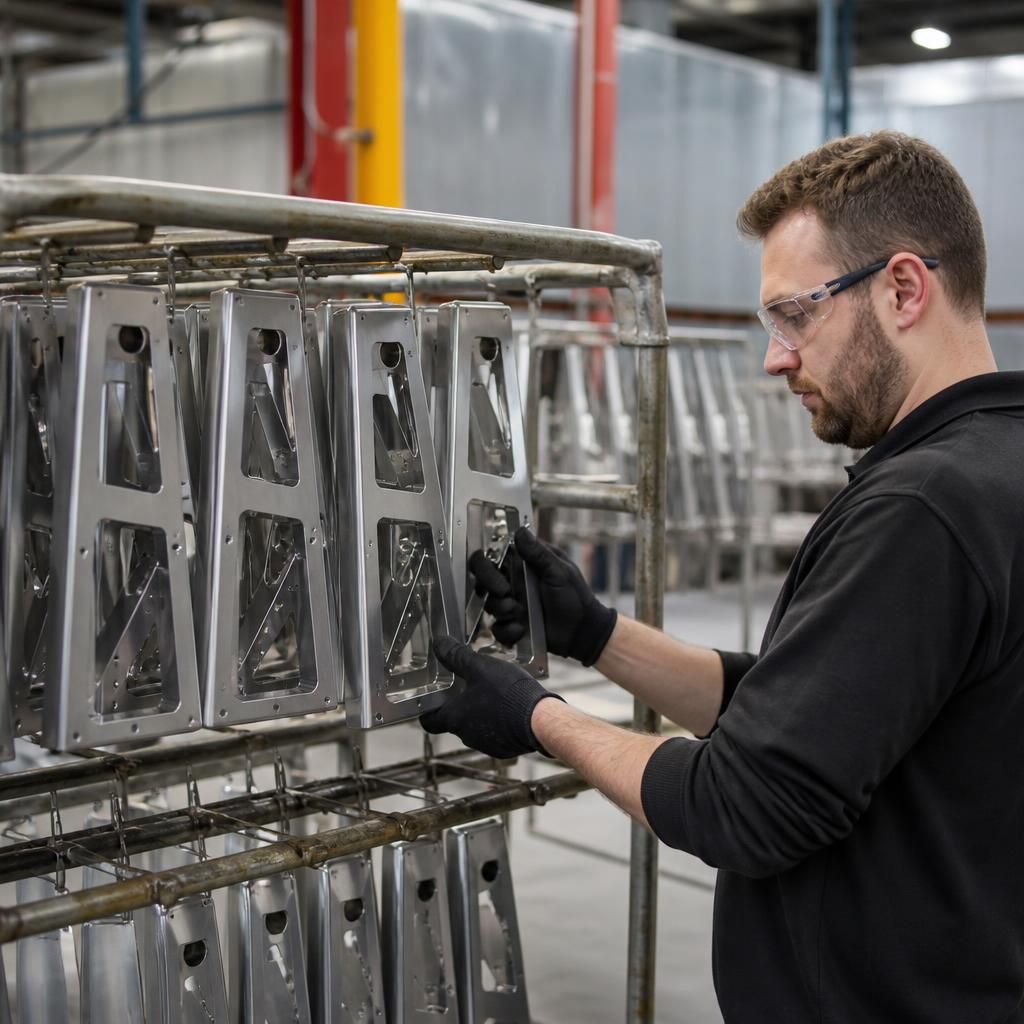
For regulated aluminium components, the coating specification should be linked to the assembly’s hazard and failure-mode assessment. This identifies what could happen if the coating flakes, wears through, loses insulation, changes friction or reacts with a cleaning chemical. The required coating properties can then be prioritised according to the consequence of each failure, rather than selected solely for appearance or general durability.
Verification should also reflect the component’s installed role. A coated part may perform acceptably as an individual item but create a risk when assembled with seals, fasteners, electrical contacts or moving surfaces. Reviewing these interfaces during design approval helps confirm that the coating supports the safety function without compromising assembly performance.
Discuss Nylon Coatings for Compliant Aluminium Components
Discuss your aluminium component’s operating conditions, safety requirements and inspection needs with a powder-coating specialist before finalising the coating specification. Providing drawings, material details and intended use will help establish whether a nylon or other specialist coating is appropriate for the application.