

How does the aluminium powder coating process compare to traditional wet paint in terms of durability and environmental impact?
Aluminium powder coating generally provides a tougher, more abrasion- and corrosion-resistant finish than traditional wet paint, provided the surface is properly pre-treated and the coating is correctly cured. It can also have a lower environmental impact because it contains little or no solvent and overspray may be recovered, although its curing process uses energy and the overall comparison depends on the coating specification and application.
Aluminium powder coating is generally the stronger option for long-term protection, while traditional wet paint can offer greater flexibility for colour matching, repairs and temperature-sensitive components. The environmental comparison is less absolute: powder coating avoids most solvent emissions and can allow unused material to be recovered, but it requires an oven cure and therefore uses energy. The best choice depends on the service conditions, coating specification, component design and production method.
Durability in service
Powder coating forms a continuous, fused film over the prepared aluminium surface. When the coating system is correctly specified, applied and cured, the finish is well suited to components exposed to handling, friction, weather and general industrial use. The performance is influenced by more than the powder itself. Aluminium alloy, surface contamination, edge condition, film thickness, pretreatment and cure all affect adhesion and resistance to degradation.
Wet paint can also provide durable protection, particularly where a suitable primer and topcoat system are used. However, it normally dries by solvent or water evaporation rather than forming a thermally fused film. The resulting coating may be more vulnerable to marking, chipping or wear if the system is not matched to the operating environment. A high-quality wet-paint specification should not be compared with an unsuitable powder coating solely on the basis of application method.
Resistance to outdoor exposure
For external aluminium, the resin type, pigment selection and stated performance classification are important. A coating intended for architectural exposure may be specified differently from one used on an internal machine guard or fabricated component. Exposure to ultraviolet radiation, moisture, salt, pollutants and temperature changes should be considered before selecting the finish.
Powder coating can provide consistent coverage on accessible faces and a hard, uniform surface, but it is not immune to damage. Sharp edges, poorly coated recesses, impact points and areas contaminated before application can become early failure points. Wet paint may be easier to blend or recoat locally when a small area is damaged, whereas a powder-coated part will often need controlled repair or removal and recoating to restore the original finish.
Surface preparation and application control
Aluminium quickly develops a natural oxide layer, and it may also carry oil, processing residue or other contamination. Cleaning and chemical or mechanical pretreatment are therefore central to adhesion for either coating route. Powder coating does not compensate for inadequate preparation, and wet paint is subject to the same basic limitation.
Powder application is electrostatic: charged particles are attracted to the earthed component before being heated to form the final film. Part geometry, recesses, Faraday areas, hanging points and access for spray equipment can affect coverage. Wet paint can be applied by spray, brush or roller and may be more practical for assembled items, very large structures or components that cannot be placed in a curing oven. Conversely, powder coating is well suited to repeatable batches where parts can be prepared and processed consistently.
Environmental considerations
The environmental assessment should cover the whole process rather than focus only on the presence of solvent. Powder coatings are supplied as dry particles and normally contain little or no solvent, so application does not create the same solvent evaporation issue associated with many conventional wet paints. Overspray may be collected and, where the equipment and specification permit, reused or managed to reduce material waste. Collection systems still require appropriate controls, and not every powder can be mixed or reclaimed without affecting finish quality.
Traditional wet paint can release volatile organic compounds as its carrier evaporates. Water-based and low-solvent formulations can reduce this burden, but their environmental performance still depends on the formulation, application efficiency, cleaning materials and disposal arrangements. Wet-paint operations may also generate used solvent, contaminated wipes, filters, masking materials and liquid or sludge waste that require controlled handling.
Powder coating has its own environmental inputs. The parts must usually be heated to cure the film, so oven size, loading, insulation, temperature profile and energy source influence the process footprint. Pretreatment stages also consume water and chemicals, and powder manufacture, packaging and transport contribute to the overall impact. A wet-paint process may avoid oven curing but can require extraction, drying space, multiple coats or longer handling between stages. Consequently, the lower-impact option cannot be identified from solvent content or curing energy alone.
Material efficiency and lifecycle
Material transfer efficiency is relevant to both systems. Powder that misses the component can sometimes be recovered, whereas liquid paint overspray is generally captured by booth filtration or other controls and cannot simply be returned to the paint container. The practical result depends on the equipment, component shape, colour changes, batch size and operator controls.
Durability also affects environmental impact over the product’s life. A coating that remains serviceable for longer may reduce the need for stripping, recoating, replacement parts, transport and associated waste. This should be balanced against the energy and materials used during application. At end of life, aluminium remains recyclable, although coatings, attached materials and the chosen recycling route may affect preparation and processing.
How to make a sound comparison
- Define the exposure: internal or external use, UV radiation, moisture, salt, chemicals, abrasion and likely impact.
- Specify the aluminium alloy, component dimensions, masking requirements and whether the item can withstand an oven cure.
- Compare complete systems, including cleaning, pretreatment, primer where applicable, topcoat, film thickness and curing or drying requirements.
- Ask how overspray, spent pretreatment chemicals, filters, solvents and other process waste are controlled.
- Consider energy consumption in relation to batch loading, oven operation and the number of coating stages.
- Assess likely maintenance, repair and recoating requirements over the intended service life.
For repeatable aluminium components requiring a robust factory-applied finish, powder coating is often the more practical and resource-efficient route. Wet paint remains relevant where on-site application, colour matching, local repair, large assembled structures or low-temperature processing is more important. A coating provider should be able to assess the component and recommend a system based on its use rather than treating powder coating as a universal replacement for wet paint.
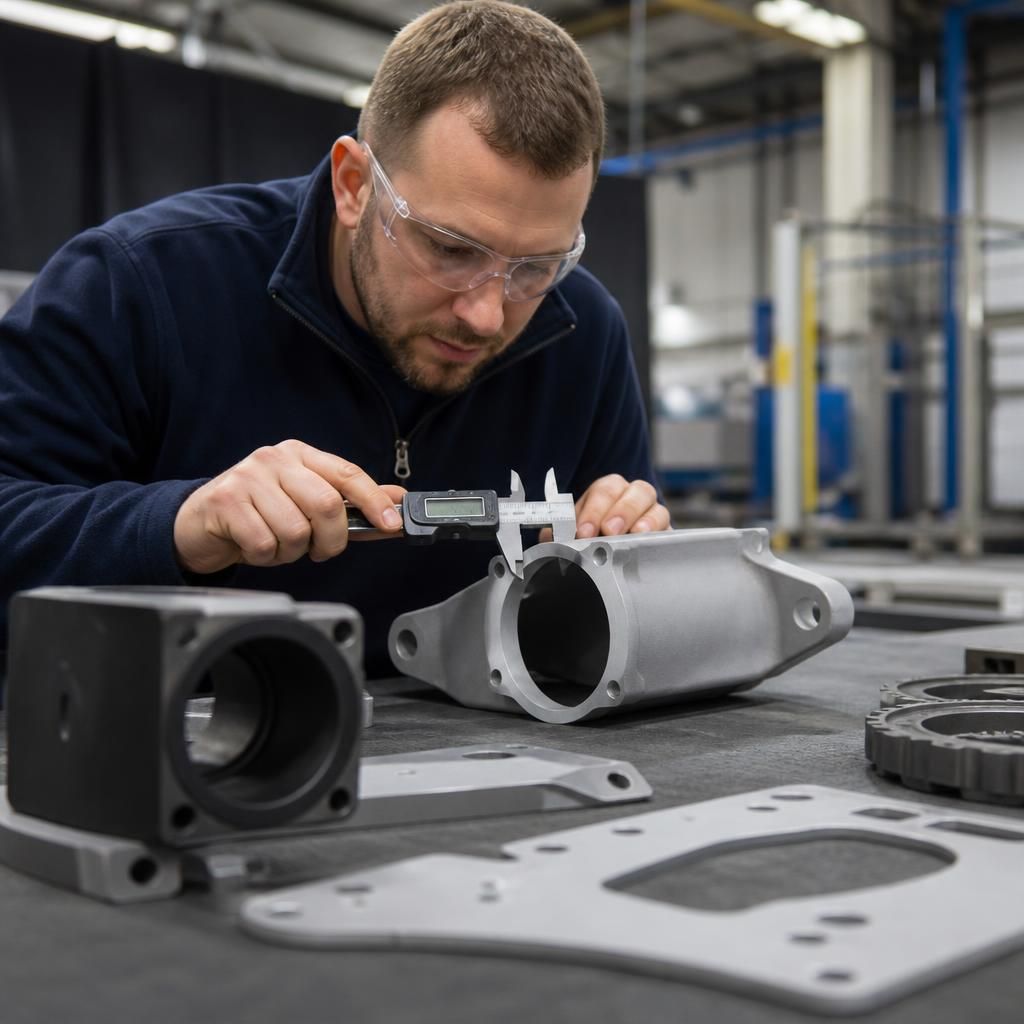
Hardness alone does not determine durability. Aluminium coating performance must also be judged by flexibility, impact resistance and adhesion. A finish that resists surface scratching may still fail prematurely if the component flexes, is repeatedly handled or experiences movement at joints and fixings.
This is why powder coating and wet paint should be compared as complete specifications rather than by appearance or hardness alone. The suitable option is the one whose film properties match the component’s movement, handling and exposure conditions, while maintaining reliable adhesion to the prepared aluminium.
Discuss the right aluminium coating system for your application
Discuss your aluminium components with Powder-coatings.co.uk to compare powder coating and wet paint against the required durability, exposure and environmental criteria. Share the component’s intended use and coating requirements to help identify a suitable specification.