

What preparation is necessary for aluminium surfaces before electrostatic powder spray coating to ensure optimal adherence and finish quality?
Aluminium should be thoroughly cleaned and degreased, with oils, dirt, oxidation and other contaminants removed before coating. The surface may then require suitable abrasion or chemical pretreatment, followed by complete drying and inspection, to provide a clean, stable key for the powder and support an even, durable finish.
Successful electrostatic powder coating of aluminium depends on more than making the surface visibly clean. The substrate must be assessed for its alloy, existing finish, porosity and condition; unsuitable previous coatings must be removed; the component must be correctly masked and supported; and any risks associated with casting, fabrication or heat must be addressed before spraying.
Assess the aluminium grade and condition
Aluminium alloys vary in composition and can respond differently to preparation and curing. Sheet, extrusion, fabricated sections and castings may therefore need different treatment decisions. The coating specification should identify whether the component is bare aluminium, anodised, previously painted or affected by welding, cutting fluids or fabrication residues. Welded areas, folded edges and machined sections deserve particular attention because their surface condition may differ from the main body of the part.
The component should also be checked for defects that powder coating will not correct. Deep scratches, sharp burrs, pits, weld spatter and poorly blended joints can remain visible through the finished coating or create weak points at edges. These defects should be rectified by the fabricator where appropriate, using methods that do not embed abrasive material or leave an unsuitable surface texture.
Deal with previous finishes and surface damage
Existing paint, lacquer, anodising or other coatings must be assessed before a new powder layer is specified. Powder should not be applied over a previous finish unless its compatibility, adhesion and heat resistance have been established. Stripping may be necessary, particularly where the old coating is lifting, contaminated, excessively thick or unable to withstand the curing cycle. After stripping, the aluminium should be checked for chemical attack, staining or uneven areas that could affect the appearance of the new finish.
Edges and transitions also require preparation. Very sharp edges provide less powder coverage than broad faces and can become vulnerable during service. Where the component design allows, edges should be suitably eased and welds blended. This improves coating continuity without relying on extra powder to compensate for poor geometry.
Control porosity in cast and fabricated parts
Porous castings can retain moisture, oils or process residues in cavities and release them during oven curing. This may cause pinholes, blisters or surface defects. Cast aluminium should therefore be examined for porosity and enclosed sections before coating. Hollow parts need suitable drainage and ventilation, while sealed cavities may be unsuitable unless the design is changed or the risk has been specifically evaluated.
Machined pockets, threaded holes and joints can retain preparation fluids or trapped air. Their condition should be considered before the component is presented for coating, particularly where the final part will be exposed to weather, chemicals or repeated handling.
Plan masking and electrical contact points
Areas that must remain uncoated, such as threads, bearing seats, earth points, mating faces and close-tolerance holes, should be identified on the drawing or job instructions. Masking materials must withstand the coating process and should not leave residue on adjacent surfaces. Masking should also account for powder build-up at edges, as excessive film in a mating area can affect assembly.
Electrostatic application requires a reliable electrical path to the component. Racking points should be selected on areas where a small contact mark will not affect function or appearance. Contact surfaces need to remain suitable for conducting the charge, and accumulated cured powder on hooks or fixtures must be controlled because it can reduce transfer efficiency and produce inconsistent coverage.
Prepare for the specified finish and service conditions
The required appearance and operating environment influence the preparation standard. A smooth architectural finish, a textured industrial finish and a component exposed to abrasion do not necessarily have identical substrate requirements. The specification should consider colour, gloss, texture, edge coverage, chemical exposure and outdoor use before the preparation route is selected.
Finally, prepared parts should be handled with suitable gloves and protected from contact with workshop dust, oils and moisture before spraying. The coater should receive information about the aluminium alloy, previous treatments, masking requirements, part orientation and any known casting or fabrication concerns. This documented handover helps the preparation process match the component’s design and the performance required from the finished powder coating.
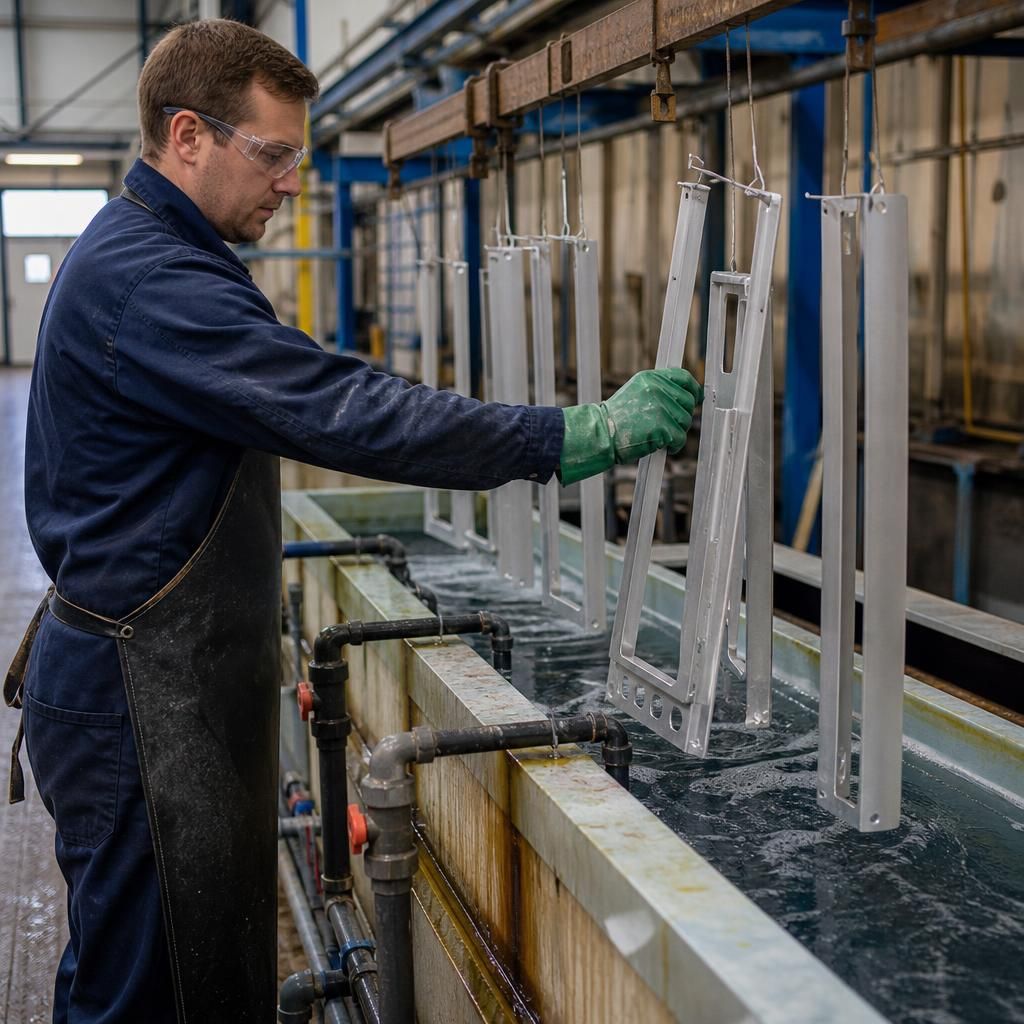
A suitable chemical pretreatment can improve the bond between aluminium and the powder film by creating a stable conversion layer on the metal. The treatment must match the aluminium alloy and the required service conditions; an unsuitable chemical process can leave residues, stain the surface or interfere with adhesion.
After treatment, controlled rinsing is important to remove process chemicals, followed by thorough drying before the powder is applied. Parts should then be inspected for water marks, residue or uneven treatment. This stage is particularly valuable where the finished component will face outdoor exposure, moisture or corrosive conditions, because surface preparation supports both coating adhesion and the protection of the aluminium beneath it.
Discuss your aluminium preparation requirements
Discuss your aluminium coating requirements with the powder-coating.co.uk team and provide the component details, finish specification and intended service conditions. This allows the appropriate preparation route to be considered before electrostatic powder spraying.