

What factors should be considered when selecting electrostatic aluminium powder spray for specialised industry applications?
Select electrostatic aluminium powder spray by assessing the aluminium grade and component geometry, required surface preparation, coating performance in the intended environment, finish and colour requirements, application thickness, production volume and specification compliance. The chosen process should also provide suitable control of coverage, adhesion and curing so that the finish remains consistent across the full batch and meets the component’s functional requirements.
Selecting electrostatic aluminium powder spray for a specialised industrial application means matching the coating system and application controls to the component’s function, dimensional limits, handling requirements and quality documentation. The best choice is not determined by colour alone; it depends on how the coated part will be assembled, used, inspected and maintained.
Define the component’s role. Establish whether the coating is primarily required for corrosion protection, abrasion resistance, chemical resistance, electrical insulation, appearance or a combination of these functions. Components exposed to outdoor conditions, industrial contaminants, oils or cleaning agents may require a different powder formulation from parts used indoors or enclosed within machinery. The intended service conditions should be documented before a coating system is selected.
Check aluminium conductivity and surface condition. Electrostatic spraying relies on the workpiece being suitably earthed so that charged powder is attracted to the metal surface. Poor earthing, oxide contamination, embedded lubricants or incompatible treatments can reduce transfer and create uneven deposition. The selection process should therefore consider the component’s existing condition, any anodising or conversion coating, and whether the proposed cleaning and pre-treatment sequence is compatible with the alloy.
Consider masking and assembly interfaces. Powder must not obstruct threaded holes, bearing seats, press-fit areas, electrical contact points or close-tolerance faces where the coating could interfere with assembly. Masking plugs, caps or bespoke fixtures may be needed for these areas. Their use should be agreed before production because masking can affect the application sequence, inspection method and achievable coverage. Parts that are assembled after coating should also be reviewed for edge damage caused by fitting or fastening.
Assess dimensional and thermal constraints. The coating adds a measurable layer to surfaces, which can matter where clearances are limited or components must fit within defined tolerances. Aluminium parts can also respond to the heat used during curing, particularly if they are thin, formed, joined or carrying inserts. The chosen process should be checked against the component’s dimensional drawings, joint construction and any temperature-sensitive materials attached to it.
Match the powder system to regulatory and technical requirements. A specialised application may require a defined product data sheet, restricted-substance declaration, test evidence or traceable batch information. Confirm which requirements apply to the finished component rather than assuming that a standard decorative powder is sufficient. Where the part forms part of a safety-related, structural or regulated product, coating records should align with the customer’s technical file and inspection plan.
Review the application equipment and part presentation. The gun type, voltage settings, powder delivery, booth arrangement and part movement all influence how effectively powder reaches the surface. Components should be presented so that the operator can maintain a stable spray distance and avoid excessive powder build-up at edges or recessed areas. Racking must provide reliable earthing without creating uncoated contact marks in visible or functional locations.
Plan the production route rather than assessing the spray stage in isolation. Consider how parts will be loaded, identified, transferred, cured, cooled, inspected and packed. Large or delicate aluminium components may need suitable supports to prevent distortion or handling damage. Mixed batches may require clear segregation by powder type, colour or specification to avoid misidentification and unintended contamination.
Specify acceptance criteria in advance. A useful specification should define the permitted appearance, coating continuity, adhesion result, coverage of critical areas and treatment of defects. It may also identify the inspection method, sampling approach and records required for each batch. Visual inspection alone may not detect every issue, so the control plan should use appropriate checks for the component’s purpose, such as thickness assessment, adhesion testing or cure verification where required.
Consider repair, rework and future maintenance. Ask how minor coating damage will be treated during assembly or service, whether local repair is acceptable, and whether recoating could affect tolerances or performance. The answer may influence the initial powder selection, masking strategy and documentation. For components that will be exposed to repeated cleaning or handling, the maintenance regime should be considered alongside the original coating specification.
In practice, the selection decision should be based on a written component specification covering service conditions, interfaces, tolerances, compliance needs, inspection requirements and production route. A representative sample or trial run can then be used to confirm that the selected powder and electrostatic settings produce the required result before the process is applied to the full production batch.
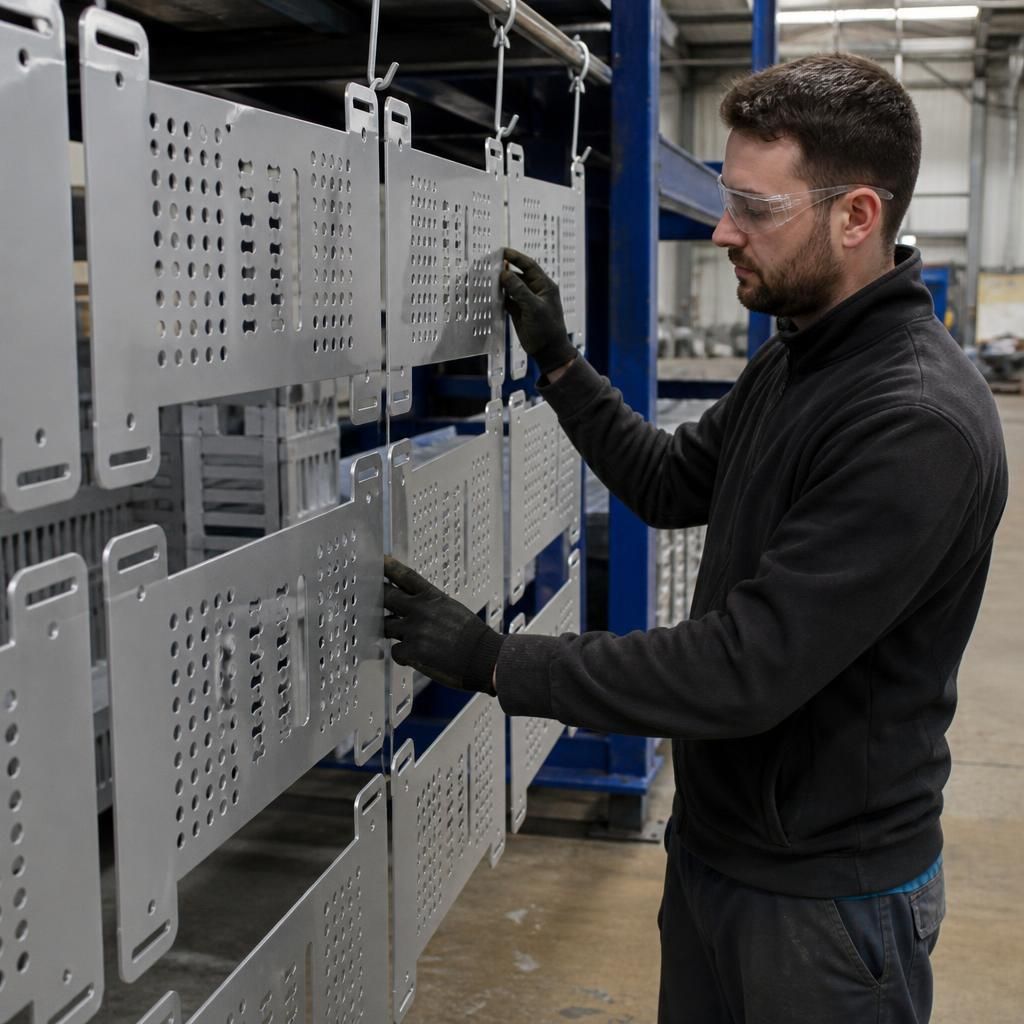
Downstream manufacturing operations are an important selection factor for electrostatic aluminium powder spray. Before approving a coating system, establish whether the finished component will be bonded, welded, machined, laser-marked, electrically connected or fitted with seals. Powder coating can alter the surface available for these operations, so the production sequence may need to leave defined areas untreated or complete certain processes before spraying.
Review the coating specification with the requirements of each subsequent operation. Adhesive bonding may require a controlled substrate condition, while welding and electrical connection may depend on clean, conductive contact points. Machining or drilling after curing can expose the aluminium and create areas requiring protection. Laser marking should also be assessed on the actual coated finish rather than assumed from colour or gloss alone.
Document these interfaces on the component drawing or process plan, including any masking, post-coating preparation and inspection needed. This prevents a powder selected for good general appearance from creating problems during assembly or finishing and helps ensure that the coating supports the complete manufacturing route.