

How does the electrostatic aluminium powder spray process reduce waste?
Electrostatic aluminium powder spray reduces waste by charging the powder so it is attracted to the earthed aluminium component, improving transfer to the target surface and limiting overspray. Unattached powder can often be collected for controlled reuse, while the dry process avoids liquid paint solvents and associated waste.
The electrostatic aluminium powder spray process reduces waste by controlling how much coating is applied, limiting rejected components and making the application process easier to manage. Waste reduction therefore involves more than unused powder: it also includes avoiding excessive film build, minimising rework, reducing discarded masking materials and preventing components from being rejected because of inconsistent coverage.
Correct application settings are central to this control. The coater can adjust factors such as powder flow, spray distance, gun movement and voltage to suit the geometry of the aluminium component. Applying the appropriate quantity helps prevent heavy areas, thin patches and excessive build-up around edges or recesses. Parts should also be positioned and hung so that the spray can reach the required faces without unnecessary passes. These measures reduce the risk of applying more material than the specification requires.
Component design and batch planning can affect waste as well. Similar parts can be grouped according to their finish, size and coating requirements, helping the operator establish a repeatable process rather than continually changing settings. Suitable racking and carefully positioned contact points reduce the need to handle parts again, while appropriate masking protects threads, bores, machined faces and other areas that must remain uncoated. Effective masking prevents avoidable stripping or reworking after curing.
Waste is also reduced when the coating system is managed to prevent defects before they occur. Clean equipment, correctly prepared aluminium and controlled curing conditions help avoid problems such as contamination, poor adhesion, pinholing and uneven appearance. A defective finish may require stripping and recoating, which uses additional powder, labour and preparation materials. Inspection during the process can identify a problem before an entire batch is completed, allowing the cause to be corrected at source.
Although powder coating is a dry process, its environmental performance still depends on responsible handling. Overspray and collected powder must be kept free from dust, moisture, oil, cleaning chemicals and other colours if it is to be considered for controlled reuse. Powder that is contaminated or unsuitable for recovery should be segregated and managed through the appropriate waste route rather than returned to the process. This distinction is important: not every residue can be reused safely or produce a predictable finish.
Preparation should be proportionate to the condition and intended use of the aluminium. Removing only the contamination, oxide, previous coating or surface defect that could affect adhesion avoids unnecessary processing. At the same time, insufficient preparation can create adhesion failures and increase waste through rework. The most efficient approach is therefore a defined preparation method based on the substrate, existing surface condition and performance requirements.
For a commercial coating project, useful questions about waste control include:
- How will the required coating thickness be controlled and checked?
- Which parts of each component need masking, and can the masking method be reused or reduced?
- How will contaminated, mixed or unsuitable powder be separated from material suitable for recovery?
- What checks will identify coating defects before a complete batch requires rework?
- Are the racking, spray settings and curing conditions appropriate for the component geometry and specification?
In practice, the greatest reduction comes from combining efficient powder application with accurate preparation, disciplined handling and early quality checks. This limits excess material and prevents avoidable reprocessing, while maintaining the finish and performance requirements of the aluminium component.
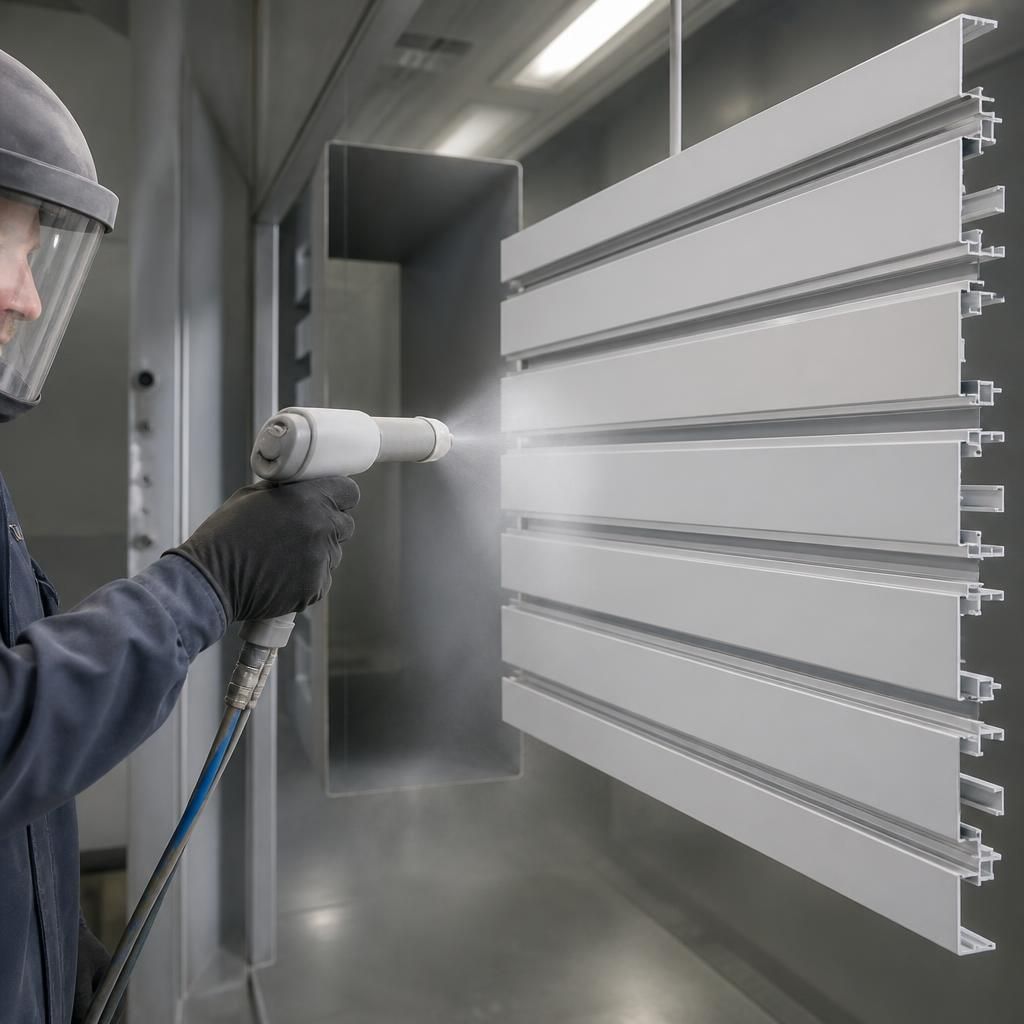
Electrostatic aluminium powder spray reduces waste because the coating material contains no liquid carrier that needs to evaporate during curing. The powder applied to the component is therefore intended to become part of the cured film, rather than being divided between a solid coating and a solvent or water component that is lost during drying.
This also makes material use easier to account for during production. Powder consumption can be assessed against the surface area, specified film thickness and batch size, helping identify unusual losses or inefficient application. The process still requires controlled handling and cleaning, particularly when changing colours or coating materials, but it avoids waste streams associated with liquid paint mixing, solvent dilution and containers holding unused wet coating.