

What role does pretreatment play in preventing corrosion on aluminium surfaces before powder coating?
Pretreatment prevents corrosion on aluminium by removing oil, dirt and surface contaminants, preparing the metal and reducing the risk of defects beneath the powder coating. A suitable chemical or mechanical process also promotes stronger coating adhesion, helping protect the aluminium from moisture and corrosion after curing.
Pretreatment prevents corrosion on aluminium by controlling the metal’s surface chemistry before powder is applied. It removes or stabilises reactive areas, limits contamination from handling and processing, and creates a more suitable base for the coating system. Without this control, corrosion can begin at exposed surface sites or beneath weak areas of the finish, where it may remain difficult to detect.
Aluminium naturally forms a thin oxide film when exposed to air. This film provides some protection, but it is not uniform on every component and can be disrupted by machining, abrasion, heat, alkaline residues, salts or contact with dissimilar metals. Pretreatment helps produce a consistent surface condition rather than relying on an irregular naturally formed oxide layer.
Chemical conversion is particularly important. A suitable conversion treatment reacts with the aluminium surface to form a controlled, corrosion-resistant layer. This layer helps reduce the activity of exposed aluminium and provides a more stable interface beneath the powder coating. The chemistry must be selected and controlled for aluminium, as an unsuitable treatment can etch the surface excessively, leave residues or contribute to later coating failure.
Mechanical preparation, including light blasting where appropriate, can remove tightly held oxide, scale or localised corrosion products. However, aluminium is relatively soft, so excessive blasting can distort edges, create an unnecessarily rough profile or embed abrasive particles. The process therefore needs to balance the removal of unstable material with preservation of the component’s shape and surface integrity.
Good corrosion prevention also depends on what happens after treatment. Components should be thoroughly rinsed where the process requires it, checked for retained chemical residues and dried before powder application. Moisture trapped in recesses, joints, holes or folded sections can remain a source of corrosion beneath the finish. Particular attention is needed around:
- machined edges and sharp corners, where the coating may be thinner;
- drainage holes, cavities and overlapping sections, where water or treatment residues can collect;
- welded or heat-affected areas, which may have different surface chemistry from the surrounding aluminium;
- interfaces with steel fixings or other dissimilar metals, where galvanic corrosion may occur if moisture reaches the contact area.
Pretreatment cannot compensate for poor component design or active corrosion hidden inside a joint. Aluminium parts should allow water to drain, avoid unnecessary crevices and be cleaned of corrosion products before entering the coating process. Where aluminium contacts another metal, the design and masking strategy should reduce the chance of a conductive, wet path forming between the two materials.
Inspection is used to confirm that the prepared surface is even, dry and free from visible residues, staining or remaining corrosion. Process controls may include checking treatment concentration, rinse quality, surface condition and the time between pretreatment and powder application. These checks matter because a chemically treated surface can lose some of its protective benefit if it is contaminated or left exposed to unsuitable conditions before coating.
The powder coating then acts as a continuous barrier that limits the access of water, oxygen and contaminants to the aluminium. Its corrosion performance depends on the complete system: component design, surface preparation, chemical treatment, powder application, curing and subsequent handling all contribute. A sound pretreatment process therefore does more than prepare aluminium for a finish; it reduces the likelihood that corrosion will start at the metal-coating boundary or spread from a damaged area.
For industrial aluminium components, the appropriate method should be chosen according to the alloy, existing surface condition, component geometry, intended environment and required coating system. This is especially relevant where parts will face outdoor exposure, condensation, road contaminants or aggressive industrial atmospheres. A specialist powder coater can assess these factors and specify a pretreatment route that supports the required level of corrosion protection.
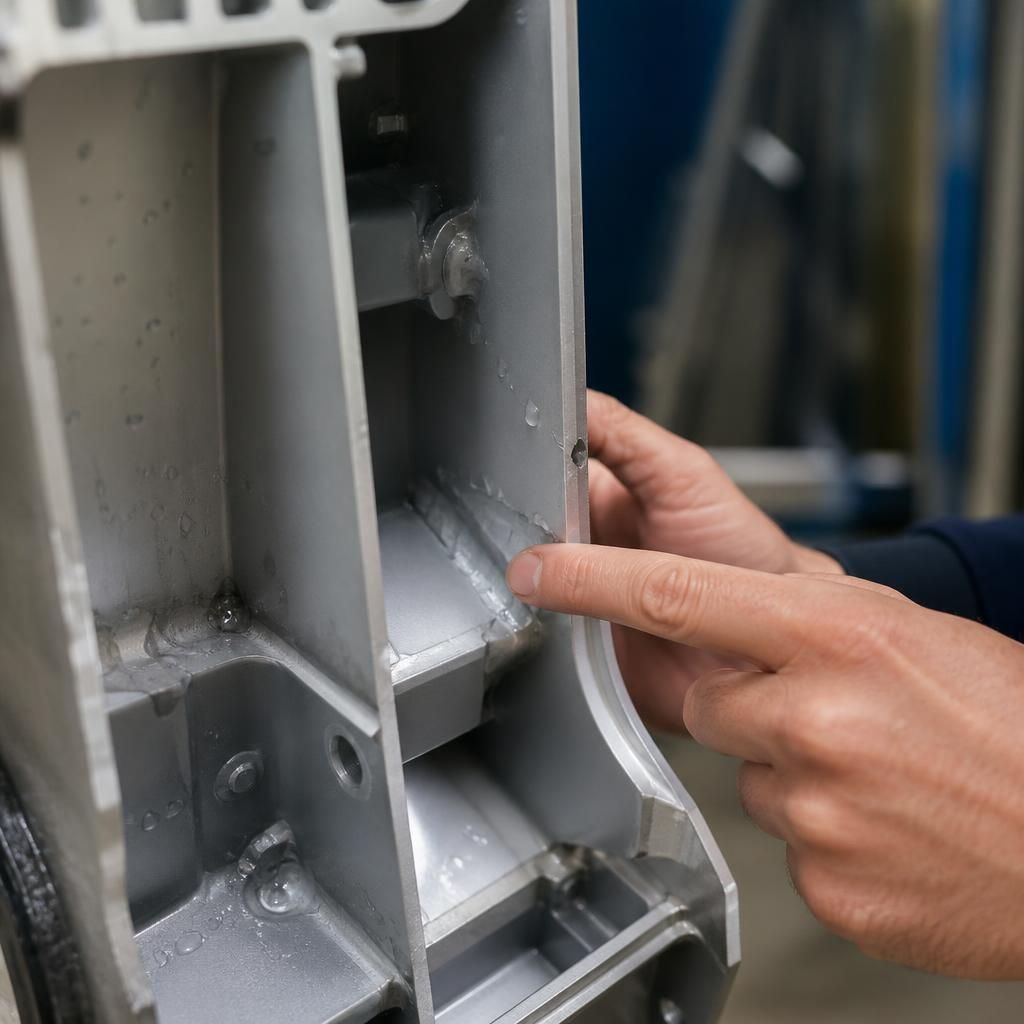
Pretreatment is particularly important at interfaces where aluminium meets other materials or where the surface contains small gaps and joints. These areas can retain moisture and create local electrochemical cells, allowing corrosion to develop beneath an otherwise sound powder coating. Preparing the aluminium consistently, and ensuring that treatment residues are removed from concealed areas, reduces the conditions that allow corrosion to remain active at these interfaces.
This is why corrosion protection should be assessed across the whole component rather than only on its most visible face. Edges, recesses, fixings and contact points need the same controlled surface preparation as open panels, with the finished part checked for complete drying before coating.
Discuss Aluminium Pretreatment for Corrosion Protection
If you are specifying powder coating for aluminium components, discuss the alloy, component design and service environment with Powder-coatings.co.uk to help identify a suitable corrosion-protection approach. You can also ask about collection and delivery options for your requirements.