

How does correct pretreatment improve the durability of powder coated aluminium?
Correct pretreatment improves powder coated aluminium durability by removing contaminants, preparing a consistent surface and promoting strong adhesion between the aluminium and powder coating. It also helps reduce the risk of corrosion developing beneath the coating, supporting a longer-lasting finish in demanding applications.
Correct pretreatment improves the durability of powder coated aluminium by creating a chemically stable and consistent surface for the coating system. Aluminium forms a natural oxide layer, but that layer can vary in thickness and condition across a component. A controlled pretreatment process replaces this variable surface with one that is better suited to the specified powder coating and the conditions in which the finished part will be used.
The durability benefit comes from controlling the complete surface condition, not from one operation in isolation. Depending on the alloy, contamination present and intended service environment, the process may include:
- Inspection for existing oxidation, machining residues, oils and embedded contaminants.
- Degreasing to remove handling marks, lubricants and processing residues.
- Deoxidising or light etching to condition the aluminium surface and remove unsuitable oxide or surface impurities.
- Application of a conversion treatment that forms a thin, adherent layer between the aluminium and the powder coating.
- Rinsing to remove chemical residues that could interfere with the coating system.
- Controlled drying and careful handling before powder application.
A conversion layer is particularly important because it provides a more stable interface than untreated aluminium alone. It helps the coating remain attached when the component is exposed to moisture, temperature changes, handling and normal service wear. The treatment must be compatible with both the aluminium alloy and the powder coating; an unsuitable chemical process, excessive treatment or inadequate rinsing can introduce its own adhesion and durability problems.
Correct pretreatment also reduces the likelihood of defects developing at vulnerable features. Recesses, joints, drilled holes, sharp edges and areas affected by fabrication can retain residues or receive treatment unevenly. If these areas are not properly conditioned and rinsed, moisture or contaminants may remain beneath the coating. Over time, this can contribute to blistering, flaking or corrosion spreading from localised defects. Treating the whole component consistently is therefore as important as achieving a suitable surface on its broad faces.
Mechanical preparation, including blasting where appropriate, can help produce a uniform profile and remove firmly attached material. On aluminium, however, the method must be controlled because excessive force or unsuitable media can mark the surface, embed particles or alter delicate profiles. Chemical pretreatment may then be used to condition the surface further. The correct balance depends on the component’s geometry, alloy, previous finish and required appearance.
The process also supports durability by reducing variation between batches. Consistent chemical concentration, contact conditions, rinsing, drying and handling help ensure that one area is not substantially different from another. This matters for fabricated assemblies and batch-produced components, where small differences in surface condition can otherwise lead to uneven coating performance.
Poor pretreatment can remain hidden until the coated aluminium encounters moisture or a demanding environment. A coating may look acceptable initially but later show loss of adhesion, edge deterioration, filiform corrosion or blistering if residues, unstable oxide or untreated areas were left beneath it. Powder coating cannot reliably correct a contaminated or unsuitable substrate, so pretreatment quality is a fundamental part of the finished system rather than a cosmetic preliminary step.
For that reason, an appropriate pretreatment specification should consider the aluminium alloy, fabrication processes, expected exposure, component design, powder coating type and required finish. Inspection of the prepared surface, control of the treatment stages and protection from contamination before coating all contribute to a more dependable result. When these factors are matched correctly, the powder coating is better supported throughout its service life and the risk of premature finish failure is reduced.
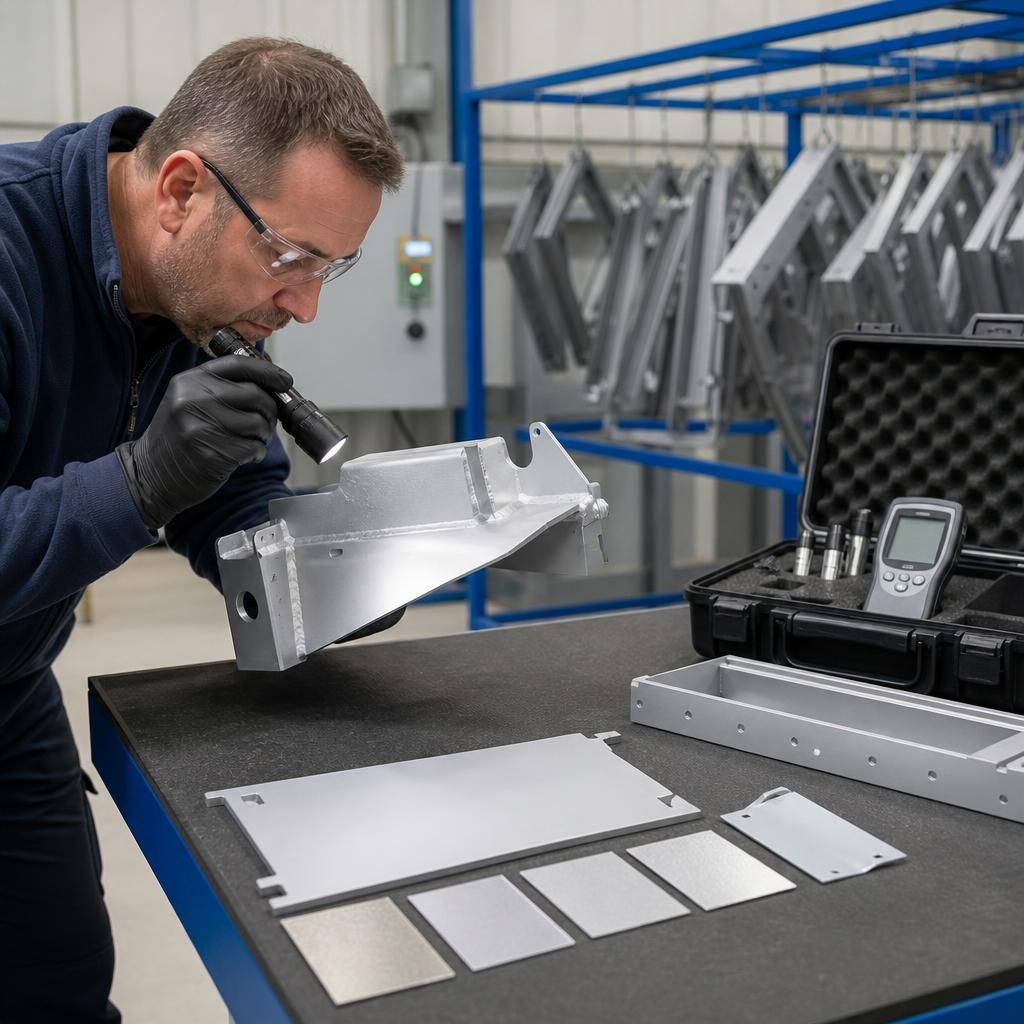
Correct pretreatment should be validated by checking the prepared surface and the finished coating, rather than judging durability by appearance alone. A coated aluminium component can look uniform while weak areas remain at edges, recesses or fabricated sections. Practical checks help identify incomplete cleaning, uneven conversion treatment or residues before the same issue affects a full production batch.
Validation should relate to the aluminium alloy, component design and intended exposure. Surface condition, coating appearance and adhesion can be assessed on representative parts or test panels, with any defects traced back to the relevant pretreatment stage. This allows treatment settings, rinsing and handling procedures to be corrected before coating larger quantities, helping ensure that the specified powder coating is supported by a repeatable and technically suitable surface.
Review Your Aluminium Pretreatment Requirements
Review your aluminium pretreatment requirements with our powder coating team, considering the alloy, fabrication history, component design and intended exposure. Share your component details to establish a suitable preparation and coating specification.