

What are the advantages of using aluminium powder coating over traditional paint for industrial applications?
Aluminium powder coating generally provides a tougher, more uniform and longer-lasting finish than traditional liquid paint for industrial components. It also applies without liquid solvents and forms a consistent protective layer that can improve resistance to wear, corrosion and weathering when the aluminium is correctly pretreated and cured.
Aluminium powder coating can provide a more efficient, controllable and lower-maintenance finish than traditional liquid paint for many industrial applications. The main advantages arise from the way dry powder is applied and bonded to the aluminium substrate, rather than from the aluminium itself. When the coating chemistry, preparation and curing schedule are matched to the component, the process can improve production consistency, material control and whole-life value.
Better material utilisation is an important industrial benefit. Powder that does not initially land on the component may be collected and reclaimed in suitable systems, subject to the powder manufacturer’s requirements and strict control of colour contamination. Liquid paint overspray generally requires more deliberate solvent and waste management. The result is that powder coating can make coating consumption more predictable, particularly where businesses process repeat batches of similar components.
Powder coating can also simplify production. A coating is applied as a dry film and then cured, removing several handling issues associated with liquid systems, such as solvent evaporation, wet-film flow and the need to protect freshly painted parts from dust or contact. This can help manufacturers plan racking, movement and inspection more consistently. The practical production benefit depends on the component size, coating specification, oven capacity and the quantities being processed, so it should be assessed as part of the full line layout rather than assumed for every job.
Industrial powder formulations offer a broad choice of surface appearance. Aluminium components can be specified in different colours, gloss levels and textures, allowing enclosures, frames, panels, profiles and fabricated parts to meet functional or visual requirements. Texture can also help disguise minor surface irregularities that would remain more noticeable beneath a smooth liquid coating. For repeat work, an agreed coating specification provides a useful reference for checking colour, gloss, film coverage and curing between batches.
The coating can also be selected for specific service conditions. Depending on the resin and formulation, powder systems may be specified for resistance to cleaning agents, oils, fuels, abrasion or elevated outdoor exposure. This is different from choosing a coating solely by colour. A component used in a plant, vehicle assembly environment or exposed construction application may need a different powder specification from an indoor architectural part, even when both are aluminium.
Whole-life maintenance can be lower where the coating is correctly specified. A sound finish is easier to clean than a damaged or poorly bonded film, and avoiding frequent stripping and recoating can reduce labour, handling and disruption. This benefit is most relevant to components that are difficult to remove after installation, or to production equipment where maintenance access is restricted. It should not be treated as an automatic result: sharp edges, poor design, aggressive chemicals, impact and unsuitable cleaning methods can still damage a coated surface.
Powder coating may also offer environmental and workplace advantages over conventional liquid paint because it avoids the same level of liquid solvent use during application. It can reduce solvent-related storage, handling and emissions controls, although the complete environmental impact still depends on energy used for curing, pretreatment, transport and waste management. Powder is therefore not automatically the best option on environmental grounds; the specification should consider the entire process.
Cost comparisons should include more than the initial coating charge. Relevant factors include:
- powder consumption and the potential for controlled recovery;
- preparation, masking, racking and inspection requirements;
- energy and handling associated with curing;
- rework caused by incorrect colour, contamination or inadequate coverage; and
- future cleaning, repair and recoating requirements.
For aluminium parts, the decision must also account for the substrate’s heat-transfer characteristics, component dimensions, assembled materials and any areas that must remain uncoated. Items containing seals, bearings, plastics or heat-sensitive fittings may require masking, disassembly or a different finishing method. Traditional liquid paint can remain more suitable for some site-applied repairs, very large fixed structures or components that cannot tolerate the selected curing conditions.
In practice, aluminium powder coating is most advantageous when a business has repeatable metal components, a defined finish specification and a service environment that suits a cured powder system. The comparison with traditional paint should therefore be based on the required performance, production method and lifetime maintenance burden—not simply on the coating’s appearance or initial price.
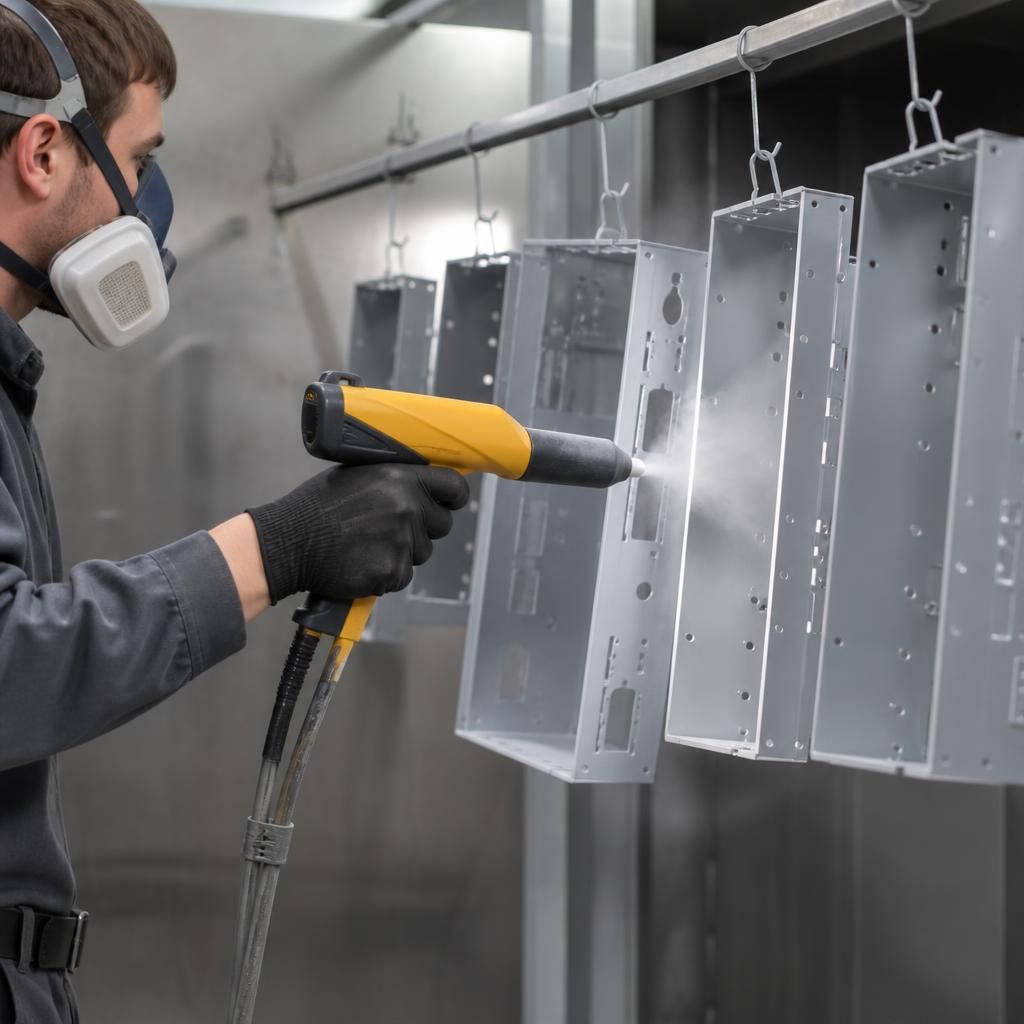
Aluminium powder coating can provide a functional electrical insulation layer as well as a decorative finish, provided the powder formulation and film specification are suitable. This can be useful for aluminium enclosures, guards and components where the coated surface must help separate the metal substrate from adjacent conductive parts. The coating does not replace earthing, clearance or insulation design requirements, so dielectric performance should be confirmed against the application and tested after curing.