

What specific advantages does aluminium powder coating offer compared to traditional painting methods, and how does this impact the pricing structure?
Aluminium powder coating provides a tougher, more uniform and more resistant finish than traditional liquid paint, with powder applied electrostatically and cured to form a durable surface. Pricing therefore reflects preparation, coating specification, colour, batch size and handling requirements rather than a simple paint-material cost, while the finish’s durability can support better long-term value.
Aluminium powder coating can offer better overall value than traditional liquid painting because it combines a solvent-free application process with a hard-wearing finish, efficient material use and repeatable production results. Its pricing is therefore based on the complete coating process, including preparation, application, curing, setup and handling, rather than on the paint material alone.
Key advantages compared with traditional painting include:
- Lower solvent content: Powder is applied as a dry coating, so the process does not rely on the evaporation of liquid solvents. This can simplify certain handling and extraction requirements compared with solvent-based painting, although the exact process depends on the coating specification and equipment.
- Efficient material use: Powder that does not adhere during application may be recoverable in suitable systems. This can reduce material wastage, particularly where the same colour and specification are used repeatedly.
- Consistent production quality: Controlled electrostatic application and oven curing support repeatable results across batches. This is particularly useful for manufacturers and fabricators supplying multiple matching aluminium components.
- Improved resistance to everyday handling: Once correctly cured, the coating is less vulnerable to many of the scuffs and minor impacts that can mark conventional painted surfaces. This can reduce the need for remedial work during handling, installation and service.
- Broad finish choice: Powder systems are available in different colours, gloss levels and textures. These options allow the appearance and functional specification to be selected together, although specialist finishes may affect the quoted cost.
The comparison is not simply a matter of powder coating being cheaper than liquid paint. A traditional paint system may have a lower apparent material cost for a small or one-off job, while powder coating can become more commercially attractive where parts are suitable for batch processing and require a consistent factory finish. Powder coating also requires access to application and curing equipment, so component dimensions, geometry and heat tolerance must be assessed before a price can be established.
For aluminium, preparation has a direct effect on both performance and cost. The surface normally needs to be clean and free from contaminants, with suitable pretreatment where the specification requires additional protection or improved adhesion. Complex shapes, recesses, previous coatings, oxidation or contamination can increase preparation time. These costs are separate from the powder itself because they involve labour, materials, masking and process control.
Pricing commonly reflects several stages:
- Assessment and preparation: Parts are checked for condition, contamination, existing finishes, dimensions and areas that must remain uncoated.
- Cleaning or pretreatment: The required preparation method is selected according to the aluminium substrate and the intended service conditions.
- Application: The coating specification, component geometry and required finish influence application time and powder consumption.
- Curing: The parts must pass through a controlled curing cycle, making oven capacity, component size and loading arrangements relevant to the quotation.
- Inspection and handling: Checking the finish, protecting coated surfaces and preparing the parts for collection or delivery add to the total service cost.
Batching can make the process more efficient because preparation, colour setup, masking and oven loading may be spread across a larger quantity of components. Conversely, small batches, mixed specifications or frequent colour changes can introduce setup and handling costs that are disproportionate to the amount of aluminium being coated. A clear enquiry should therefore include quantities, dimensions, drawings or photographs where useful, required finish, masking details and any quality requirements.
The long-term value should be assessed across the expected service life rather than by comparing the initial coating charge alone. A finish that needs fewer touch-ups, protects the substrate effectively and remains consistent across replacement or repeat components may reduce maintenance and reprocessing requirements. The actual outcome depends on correct pretreatment, coating selection, curing and the environment in which the aluminium will be used.
For an accurate comparison, request a quotation that separates preparation, coating, curing, inspection and logistics where possible. This makes it easier to identify whether a price difference arises from the coating material, the required finish, component complexity or the amount of process work involved.
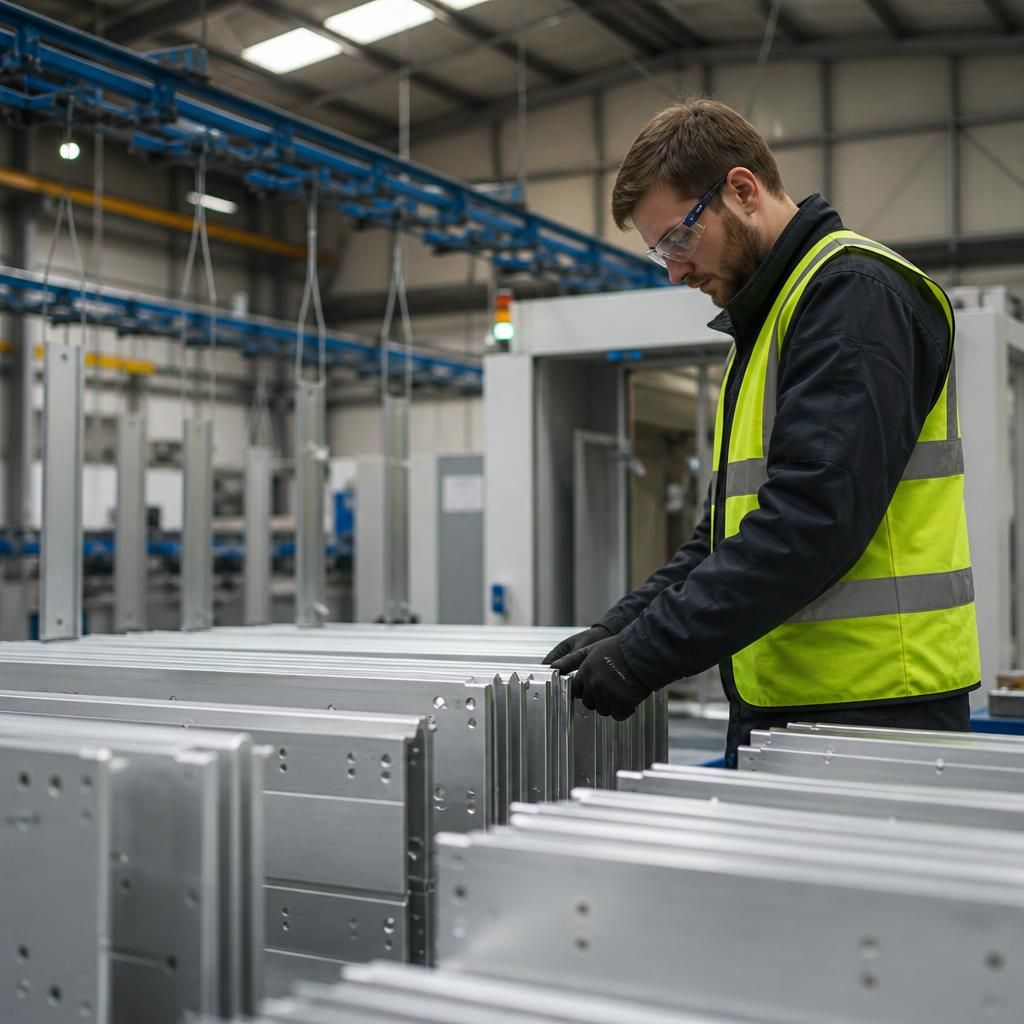
The main pricing difference is that powder coating concentrates more of the cost into a controlled production process, while traditional painting may spread labour across multiple coats, drying stages and touch-ups. For aluminium components, this means a powder-coating quotation can include a comparatively fixed element for preparing, loading and curing the parts, even when the powder material itself is a small part of the total.
This structure can favour repeatable batches of similar components, where the same process settings and loading arrangement can be used consistently. A one-off or unusually shaped item may show a different cost relationship because setup, masking and handling cannot be distributed across as many parts. Comparing the quoted process stages, rather than only the coating material, gives a more meaningful assessment of value against traditional painting.