

What logistical considerations should I factor in when assessing the cost and timelines of aluminium powder coating services?
When assessing aluminium powder coating costs and timelines, account for collection or delivery, component size and weight, packing requirements, batch readiness, transport access and any preparation needed before coating. These logistical details affect handling, scheduling and the amount of coating work required, so provide accurate part information and agree the movement of goods at the quotation stage.
When assessing the cost and timeline of aluminium powder coating, treat logistics as part of the production specification rather than as a separate transport issue. The information supplied, the way parts must be handled, the order in which batches are processed and the arrangements for inspection and return can all affect the quoted work and the date on which coated components are ready for use.
Provide a complete job schedule
A quotation is more reliable when it includes a clear schedule of parts rather than a general description of the project. List the component references, quantities, alloy where relevant, required colour and finish, critical faces, masking points and any surfaces that must remain free of coating. Include drawings or photographs for unusual profiles. This allows the coater to assess how the parts will be identified, suspended, processed and checked.
Changes made after work has been scheduled can create additional handling and administration. A revised colour, altered masking requirement or extra component reference may require the order to be re-planned, particularly where several parts are intended to be processed together. Confirming the specification before goods are moved helps prevent avoidable delays and additional charges.
Consider racking, fixtures and part presentation
Aluminium components need to be supported during coating without obstructing the surfaces that require coverage. The position of contact points, holes and hanging features therefore has a practical effect on both the process and the finished appearance. If suitable hanging points are not available, specialist fixtures or additional masking may be necessary. These items can add preparation, handling and removal work to the estimate.
Components should also be presented in a way that preserves their identity through the process. Mixed parts, loose fixings or unclear labelling can increase checking time and make it harder to confirm that the correct finish has been applied to each item. Use durable labels and a part schedule that links physical components to the drawing or purchase order.
Plan colour and batch sequencing
Where an order includes several colours or finishes, ask how the parts will be grouped for production. Consolidating compatible parts may reduce repeated setup and cleaning operations, while splitting a project into separate releases can create more handling and processing stages. Conversely, waiting to combine orders may not suit a construction or manufacturing programme. The most economical arrangement is usually the one that balances production efficiency with the date each group of components is needed.
State whether the order can be processed as one release or must be divided into phased consignments. A phased plan should identify which components are required first, how they will be distinguished and whether later batches need to match an approved sample. This is particularly important where coated aluminium will be installed alongside parts from different production runs.
Allow for inspection and approval
Inspection requirements should be agreed before coating begins. Specify which features require particular attention, such as visible faces, masking lines, threaded areas or fit-critical dimensions. If an approval sample, colour reference or written sign-off is needed, include this in the programme rather than treating it as an informal step after coating.
Where the finished parts will be assembled immediately, allow time for inspection before onward delivery. Any question about coverage, appearance, masking or fit may require the affected items to be assessed and, where appropriate, returned for further work. Building an approval stage into the plan is more realistic than scheduling installation immediately after processing.
Coordinate delivery with the next operation
Powder-coated aluminium should be moved and stored in a way that protects the finish and keeps parts identifiable. Tell the coater whether the components are going directly to assembly, a construction site, another manufacturer or a storage facility. The required delivery arrangement may differ if parts need to remain grouped by assembly sequence rather than simply by coating batch.
For projects with a fixed installation or manufacturing date, work backwards from the point at which the coated parts are needed. Allow time for final inspection, documentation, handling and any internal movement after coating. Avoid basing the programme solely on the coating process itself, because the surrounding stages can determine the practical completion date.
Identify cost items beyond the coating operation
Ask the quotation to distinguish the coating charge from logistical items that apply to the particular order. Depending on the job, these may include:
- specialist racks, hooks, plugs or other temporary fixtures;
- additional identification and sorting of mixed components;
- separate processing for different colours or finish specifications;
- multiple releases, consignments or delivery destinations;
- additional inspection, approval or documentation requirements; and
- handling associated with items that cannot be processed in the standard sequence.
Not every item will apply to every project, so the purpose of this breakdown is to make the basis of the quote clear. It also helps compare quotations on an equivalent scope rather than comparing a coating-only figure with a figure that includes more extensive handling.
Before placing the order, confirm the agreed specification, part identification, batch grouping, inspection arrangements and delivery sequence in writing. For businesses across the Midlands and surrounding areas, collection and delivery can be incorporated into that plan where required. A concise logistics brief gives the powder coater the information needed to schedule the work and gives the customer a clearer basis for assessing the total cost and practical timeline.
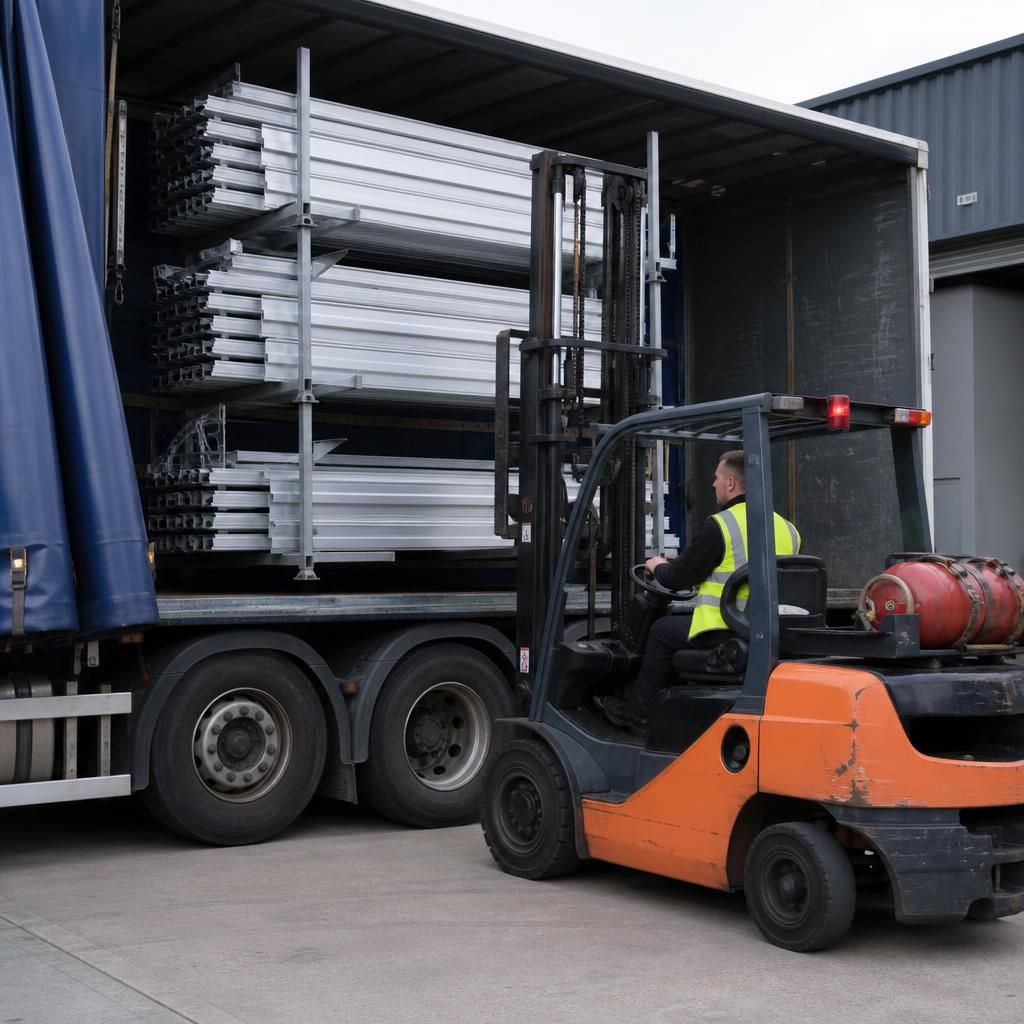
Check transport and loading constraints before agreeing the programme. Vehicle access, restricted entrances, loading-bay dimensions and the availability of suitable lifting equipment can affect how aluminium components are collected or delivered. Include the longest, widest and heaviest items in the job information, together with any requirements for a forklift, crane, tail lift or assisted unloading.
These details help identify whether parts need additional protection, separate handling or more than one consignment. They also reduce the risk of a vehicle arriving at a site where it cannot safely reach the loading point, which can lead to rehandling, extra transport arrangements or disruption to the planned coating sequence.