

How does the choice of coating type and colour impact the overall cost of aluminium powder coating?
The choice of coating type and colour affects aluminium powder coating costs through the powder material, finish specification and production requirements involved. Standard colours and finishes are generally simpler to price, while specialist coatings, unusual colours or tighter appearance requirements may require different materials, preparation or handling and therefore increase the quoted cost.
Coating type and colour influence the total cost of aluminium powder coating by determining the powder specification, application method, preparation requirements and amount of production handling needed. A straightforward, readily available coating in a standard colour is usually simpler to estimate than a performance-led coating, unusual colour or highly specified decorative finish.
Coating type is primarily a performance decision. The selected powder must suit the aluminium component’s intended environment and use. Factors such as outdoor exposure, ultraviolet light, moisture, chemicals, abrasion, impact and flexibility can make one coating system more appropriate than another. Where a basic decorative finish is sufficient, the material specification may be relatively uncomplicated. Where the part needs additional resistance or a specialist protective layer, the powder and application process may require more careful specification, which can increase the cost.
Specialist coatings, including nylon and other protective systems, should therefore be assessed against the operating conditions rather than selected solely on appearance. Their cost can reflect the particular powder material, the required film characteristics and the controls needed during application. A cheaper decorative specification may be unsuitable if the component will experience heavy wear or aggressive conditions, while an over-specified coating can add cost without a practical benefit.
Colour affects cost in several separate ways:
- Standard availability: commonly used colours are generally easier to source and incorporate into production planning. A less frequently requested colour may need special sourcing or additional confirmation before work begins.
- Colour matching: a requirement to match an existing frame, panel or corporate colour can involve a precise colour reference, a sample or an agreed tolerance. The more exact the match needs to be, the more important it is to confirm the specification before coating.
- Special effects: metallic, pearlescent, textured, translucent and other effect powders can require more controlled application than a plain colour. The visual result may also be more sensitive to gun settings, part orientation and film consistency.
- Colour changes: where different colours are included in one order, the coater may need to manage separate production runs and clean equipment between them. This adds handling and can affect how efficiently the work is processed.
- Future matching: if components will be coated at different times, selecting a recognised colour reference and recording the finish level helps reduce the risk of visible variation between batches.
The apparent colour is only one part of the finish specification. Gloss level, surface texture and visual uniformity can alter the work involved. A smooth gloss finish may reveal surface imperfections more readily, whereas a textured finish can produce a different appearance and may need close control to ensure it is consistent across the component. Matt and satin finishes likewise need to be specified clearly because similar colour names can look substantially different at different gloss levels.
Metallic and other directional finishes deserve particular attention on aluminium. Changes in part orientation, coating thickness or application conditions can affect how the effect is perceived across a run. If several components are intended to sit next to one another, consistency between them may be more important than the nominal colour name. This can add inspection and handling requirements to the quotation, particularly where the finished parts are prominent architectural, automotive or fabricated items.
Colour selection can also influence whether a coater recommends producing a sample or agreeing a reference panel before the main work. This is useful where the finished appearance is critical, where the powder has a special effect, or where the aluminium surface has different profiles or levels of reflectivity. Any sampling, colour approval or additional inspection should be treated as part of the specified job rather than assumed to be included in a basic coating price.
The most useful quotation request identifies the coating type, colour reference, gloss or texture requirement and intended service environment. It should also explain whether the parts need a visual match to existing items, whether several colours are involved and whether a particular protective performance is required. Drawings or photographs can help clarify masking areas, visible faces and the level of appearance expected.
For an accurate comparison between quotations, these details should be kept consistent. A quote for a standard polyester decorative finish is not directly comparable with one for a specialist protective coating, even if both use the same colour. Likewise, a plain colour and a metallic version with the same colour description may involve different production considerations. The lowest initial price may therefore reflect a less demanding specification rather than a like-for-like alternative.
In practice, the cost of aluminium powder coating is best assessed by considering the required performance and appearance together. Choosing a coating type that matches the component’s environment, then defining the colour, gloss, texture and matching requirements precisely, gives the coater enough information to price the materials and production work consistently.
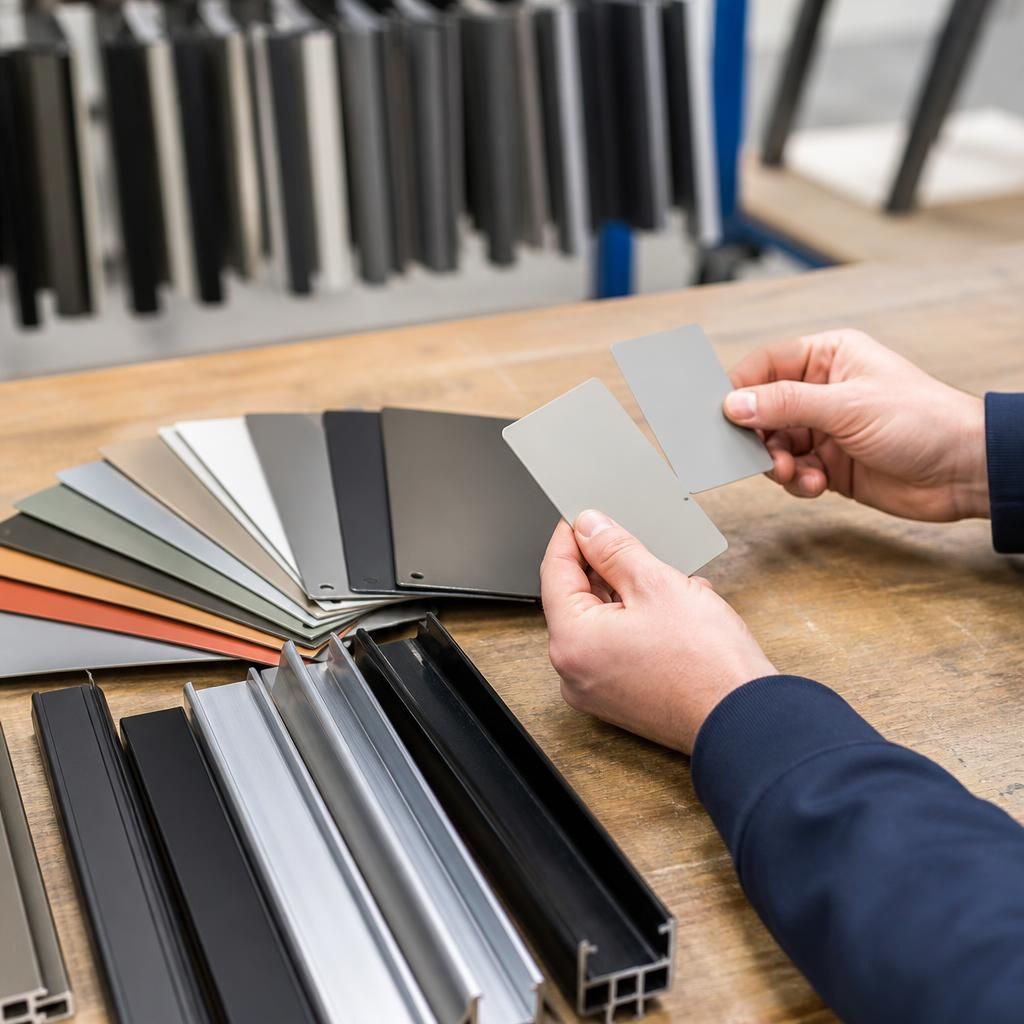
Colour does not determine the suitability of a powder coating on its own. The same-looking shade may be available in different coating chemistries, with different resistance to weathering, chemicals or wear. When comparing prices, check that the quoted coating type is suitable for the aluminium’s use rather than treating a lower-cost colour option as an equivalent substitute.
For a meaningful comparison, ask the quotation to identify the coating system separately from the colour specification. This makes it easier to see whether a price difference comes from the powder’s performance characteristics or from the additional requirements associated with the chosen appearance.