

How does our aluminium powder coating plant ensure both efficiency and the highest standards of finish for complex batch production?
Our aluminium powder coating plant supports complex batch production through repeatable processes and careful handling of varied metal components, helping maintain consistent coverage and finish across each batch. This combines efficient processing with the durable, high-quality results required by manufacturers and fabricators.
Our aluminium powder coating plant combines production planning, controlled preparation, accurate curing and structured inspection to process complex batches efficiently without compromising finish quality. Each job is assessed according to the aluminium component’s design, alloy, surface condition, required coating system and batch requirements, allowing the process to be organised around the parts rather than treated as a one-size-fits-all operation.
Batch planning begins before coating. Components are reviewed for dimensions, weight, apertures, edges, fixing points and areas that may be difficult to coat. This helps determine suitable hanging or racking arrangements, identify surfaces that must remain free of powder and establish how parts should be grouped through the plant. Components with compatible requirements can be processed together, while jobs requiring different preparation, colour or curing conditions are kept distinct. This reduces unnecessary handling and helps protect batch identity.
Efficient handling is particularly important for complex aluminium work. Correct positioning supports access to the exposed surfaces and reduces the risk of contact marks, shadowing or uneven powder deposition. Masking and plugging can be used where specified to protect threads, mating faces, drainage points and other functional areas. Careful loading also helps prevent parts from touching during processing, which is essential when the visible finish and dimensional fit are both important.
Surface preparation provides the foundation for finish quality. Aluminium must be suitably clean and prepared so that contaminants, residues and surface irregularities do not interfere with powder adhesion. The appropriate preparation route depends on the condition and intended use of the components. Controlling this stage helps reduce defects such as poor adhesion, contamination, pinholing or inconsistent appearance. It also ensures that the coating process begins with a surface capable of supporting the required performance.
Powder application and curing are controlled as connected stages. The powder must be deposited evenly across the component, including edges, recesses and other challenging features, while avoiding excessive build-up. The curing stage then needs to provide the conditions required for the selected powder system to develop its intended properties. Parts are assessed by their actual profile and loading arrangement rather than relying solely on nominal plant settings, because component thickness, density and positioning can affect how heat reaches the metal.
Quality checks are applied throughout the job rather than left until the end. Depending on the specification, checks may include:
- confirmation that the correct components, preparation route and coating requirements have been assigned to the batch;
- inspection of coverage on visible faces, edges, recesses and other difficult-to-reach areas;
- assessment of the appearance for issues such as runs, contamination, roughness, bare areas or inconsistent texture;
- checking that masked or uncoated functional areas remain suitable for assembly;
- review of coating thickness where the application requires controlled build; and
- final inspection against the agreed requirements before the batch is released.
These checks help separate cosmetic issues from functional concerns and identify any action needed before parts move to the next stage of manufacture. For repeat work, information from earlier batches can also support more consistent planning, including the most suitable loading arrangement and any component features that require particular attention.
Efficiency therefore comes from reducing avoidable rework, unnecessary movement and handling interruptions, not from removing essential quality controls. A structured approach allows batches to progress in a logical sequence while preserving the inspection points needed for a high-standard aluminium finish. Collection and delivery options can also support the wider production flow for businesses supplying components to the plant across the Midlands and surrounding areas.
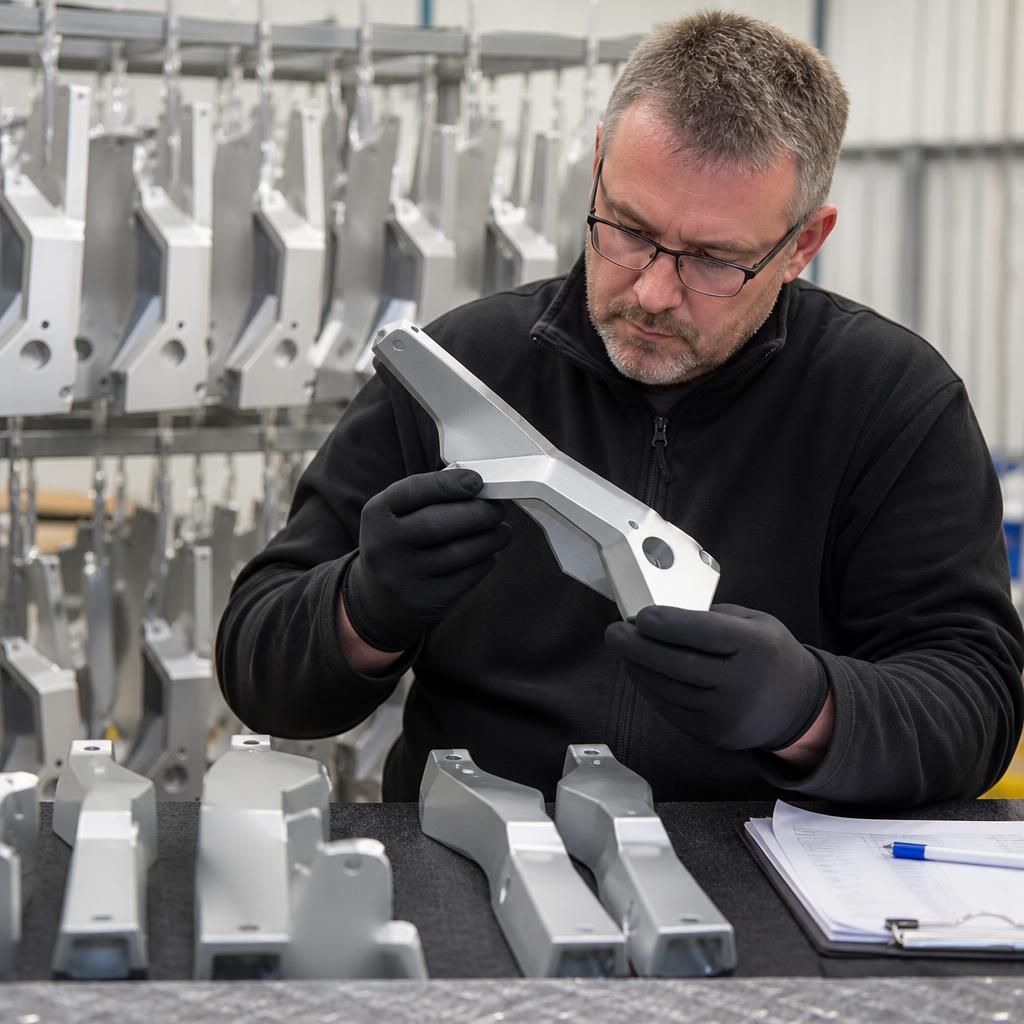
For complex aluminium batches, finish quality is more consistent when acceptance criteria are defined before production begins. The specification can identify the required colour, gloss level, texture, visible-face standard and any areas where minor variation is acceptable. This gives the coating team and the customer a shared reference rather than relying on subjective judgement after processing.
Appearance should be assessed on the surfaces that will remain visible in service, while functional areas are considered against their assembly requirements. Comparing representative parts with the agreed standard helps distinguish genuine coating defects from normal differences caused by component geometry or viewing angle. It also supports consistent decisions across repeat batches, reducing avoidable rework while keeping the required finish standard clear.