

What energy efficiency and environmental considerations should be evaluated when selecting a mini powder coating machine?
When selecting a mini powder coating machine, evaluate its electrical demand, curing efficiency, heat retention and control accuracy alongside its powder transfer efficiency and ability to minimise overspray and waste. Also consider the coating system’s environmental impact, including VOC emissions, powder recovery or reclaim options, filter disposal, ventilation requirements and the energy used during standby and batch operation.
Energy and environmental evaluation of a mini powder coating machine should cover its whole operating life, not just the power rating on the specification sheet. Assess how the machine fits the intended workload, how much supporting equipment it requires, the energy and materials consumed per usable coated part, and the environmental effects of manufacture, cleaning, maintenance and eventual disposal.
Start with the actual production profile. A small machine may be environmentally preferable for prototypes, repair work or short production runs because it avoids running a large system below its useful capacity. Conversely, a machine that is too small for the parts, batch sizes or required finish may require repeated cycles, additional handling and more frequent cleaning. Compare systems using the same practical output: the energy and consumables required to process a representative batch, rather than comparing quoted ratings in isolation.
- Identify the typical size, weight and geometry of the parts.
- Estimate the number of parts processed in a normal batch and over a typical production period.
- Check whether the working area accommodates the component without inefficient repositioning or repeat passes.
- Consider whether the machine can be used effectively at lower workloads without unnecessary preparation or auxiliary equipment.
Include all supporting loads in the assessment. The machine itself is only one part of the installation. Compressed air generation, air drying, extraction, lighting, control equipment and any dedicated pre-treatment or cleaning equipment can materially affect the overall environmental footprint. Ask for the operating requirements of each item and calculate the combined demand for a representative job. A machine with modest requirements can still have a high total impact if it depends on energy-intensive ancillary equipment.
Compressed air deserves particular attention. Compare the pressure and air volume required by the spray equipment, whether air quality treatment is needed, and whether the system has an effective way to prevent unnecessary air use when spraying is interrupted. Leaks, oversized compressors and poorly matched air treatment equipment can consume energy without improving coating quality.
Examine the heat source and operating cycle. Where the system incorporates an oven or other curing equipment, establish how heat is generated, how the chamber is loaded, and whether the process can be matched to the coating manufacturer’s specified cure schedule. Ask how the equipment limits unnecessary heating during loading, unloading and idle periods, without relying solely on headline temperature or wattage figures. The practical comparison is the energy used to complete a correctly cured batch, including warm-up and recovery, under the conditions in which the machine will actually be used.
Temperature measurement and recorded process data can also help identify under-curing, over-processing and inconsistent loading. Rejected or reworked parts represent additional materials, handling and energy, so process repeatability is an environmental consideration as well as a quality issue.
Review material use beyond powder application. Ask how much packaging arrives with the powder and other consumables, whether containers can be segregated for suitable recycling, and whether the machine’s design makes colour or material changes straightforward. Difficult cleaning procedures can increase the use of wipes, cleaning agents and disposable protective materials. A system that supports orderly changeovers and easy access to service points may reduce these secondary consumables over its working life.
Check the safety data and disposal requirements for any cleaning products, pretreatment chemicals and contaminated materials used alongside the machine. Powder itself should be handled according to the relevant product documentation, with waste kept separate where required. Environmental assessment should therefore include storage, spill prevention and the route used for controlled or general waste, rather than considering only the coating material.
Consider durability and lifecycle impact. A robust machine that remains serviceable for a long period may have a lower overall impact than a cheaper unit that needs early replacement. Compare:
- the expected service life and duty suitability;
- the availability of replacement wear parts and electrical components;
- the ease of repairing individual assemblies rather than replacing the complete machine;
- the manufacturer’s maintenance and refurbishment guidance; and
- the materials used in major components and how they can be separated at end of life.
Documentation is important here. Clear technical information, wiring diagrams and service instructions can support repair and reduce premature disposal. It is also reasonable to ask whether the supplier can identify recyclable materials, provide packaging information and explain how the equipment should be decommissioned.
Check noise, dust control and workplace impact. Environmental responsibility includes the conditions created for employees and neighbouring operations. Consider the noise produced by fans, compressors and other moving equipment, the location of those sources, and whether the proposed installation requires additional acoustic treatment. Check that dust control arrangements are appropriate for the powder being used and that cleaning methods do not simply transfer residue into drains or general waste.
Before choosing a machine, request operating instructions, technical data, maintenance requirements and information about consumables. Then compare complete operating scenarios using the same part, batch and finish. The most useful selection is normally the system that matches the workload without excessive capacity, uses manageable supporting equipment, avoids unnecessary rework and remains repairable throughout its service life.
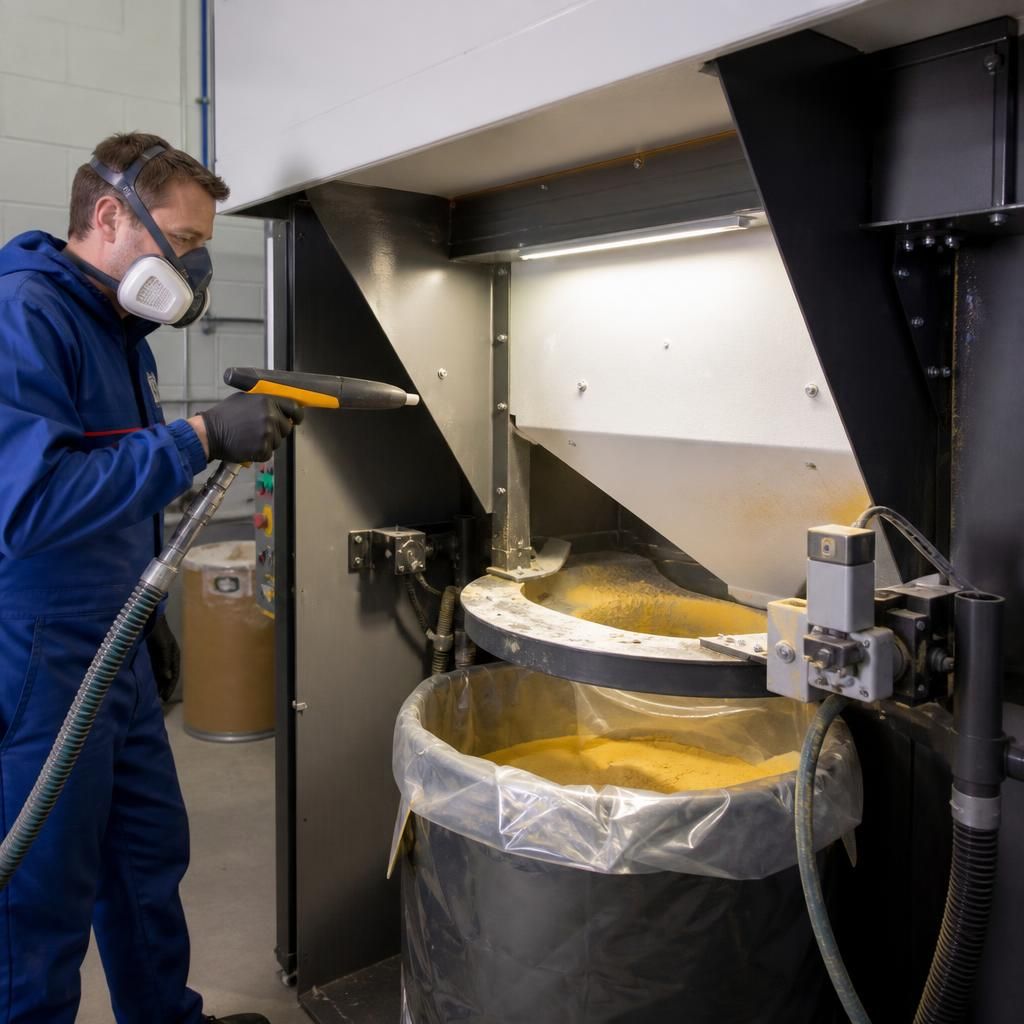
A powder recovery system should be assessed alongside colour-change frequency and finish requirements. Reclaimed powder is only useful when it can be collected cleanly and reused without compromising coating consistency. If frequent colour changes introduce contamination, the recovery process may create additional cleaning materials, waste handling and rework. Ask how recovered powder is segregated, identified and returned to the process, and whether the system allows unsuitable material to be isolated rather than mixed into usable stock.
This makes recovery efficiency a practical selection criterion rather than a headline feature. Compare the quantity of powder applied to the amount that becomes recoverable, unusable or requires controlled disposal during representative production work. The best arrangement is one that reduces avoidable waste while maintaining the specified finish and avoiding extra processing.