

How does the degreasing process enhance the longevity and performance of powder-coated metal components?
Degreasing removes oils, grease and other residues from metal before powder coating, allowing the powder to bond evenly to a clean surface. This reduces the risk of peeling, blistering and premature corrosion, helping the finished component retain its protective performance and appearance for longer.
Degreasing enhances the longevity and performance of powder-coated metal components by controlling the condition of the substrate before coating. It helps ensure that subsequent preparation, pretreatment, powder application and curing take place on a chemically suitable surface, reducing variables that can shorten service life or affect the component’s function.
Its value extends beyond removing visible dirt. Metal parts can carry machining fluids, handling residues, drawing compounds, polishing materials, adhesive traces and atmospheric deposits that are not always apparent during visual inspection. If these substances remain, they can interfere with later stages of preparation in different ways. For example, they may prevent a conversion coating or other pretreatment from forming consistently, or leave localised areas with different surface characteristics from the surrounding metal.
A controlled degreasing stage therefore promotes greater uniformity across the component. This is important for parts with corners, recesses, joints, drilled holes and fabricated sections, where residues can collect and where coating conditions may already be more difficult to control. Consistent preparation supports a more predictable powder film, which helps the finished part perform evenly rather than developing isolated weak areas.
Degreasing can also improve the effectiveness of the wider preparation sequence. The chosen process must be compatible with the metal substrate, any existing surface treatment and the powder system being applied. It should remove the relevant contamination without introducing a new problem, such as an incompatible residue or excessive attack on the substrate. Correct concentration, temperature, contact time and agitation are all relevant where wet chemical cleaning is used. Mechanical assistance or targeted treatment may be needed for complex geometries and heavily contaminated parts.
Rinsing and drying are equally important. Cleaning chemicals or loosened contaminants left on the surface can affect the next preparation stage, while trapped moisture in seams, cavities or threaded areas can create processing difficulties. A suitable inspection step should check that the component is visibly clean and dry and that areas likely to retain contamination have been addressed before powder application.
In service, a well-controlled preparation process helps the coating retain its intended protective and functional properties. Depending on the component and specification, those properties may include resistance to handling, abrasion, cleaning processes, weathering or exposure to industrial conditions. The benefit is not created by degreasing alone: it depends on the complete system, including substrate condition, pretreatment, powder selection, film thickness, curing and the environment in which the component will be used.
For batch and fabricated work, the process should be matched to the condition and geometry of the parts rather than treated as an identical operation for every job. Useful checks include:
- identifying the likely contaminants from forming, machining, storage and handling;
- selecting a cleaning method suitable for the substrate and the required finish;
- checking recesses, weld zones, overlaps and other areas where residues may remain;
- confirming that rinsing and drying have not left deposits or moisture; and
- recording preparation and coating conditions where repeatability between batches is important.
When these controls are applied, degreasing contributes to a more stable coating process and reduces avoidable variation between components. That supports reliable appearance and functional performance throughout the component’s intended service life, particularly when the preparation method is specified alongside the operating environment and the required level of protection.
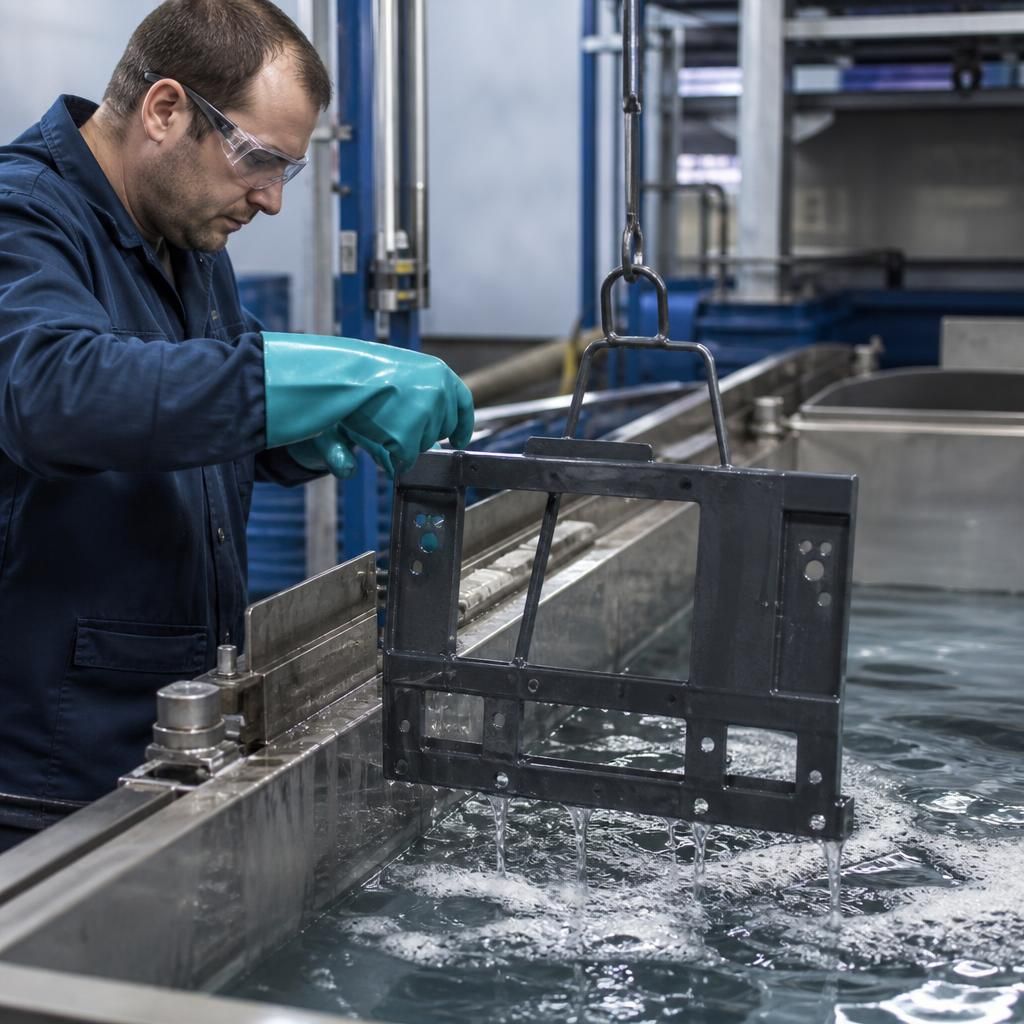
Degreasing enhances the longevity of powder-coated metal components by removing low-surface-energy films that can weaken the bond between the substrate and the cured coating. Oils and processing residues may not be visible, yet even thin deposits can create local adhesion differences across the same part.
This matters because coating thickness alone cannot compensate for a weak interface. Areas with poor adhesion are more vulnerable to lifting when exposed to impact, abrasion, moisture or repeated cleaning. If the coating separates locally, the exposed metal can become a starting point for corrosion, allowing damage to spread beyond the original defect.
Effective degreasing therefore helps the coating behave as a continuous protective layer rather than a film with isolated weak points. This supports more consistent performance on components subjected to handling, outdoor exposure or industrial use, provided the rest of the coating system is matched to the service conditions.
Discuss Degreasing Requirements for Your Components
Discuss your components with our powder coating team to establish the appropriate degreasing and preparation requirements for their material, geometry and operating conditions. This helps ensure the cleaning stage supports the performance expected from the finished coating.