

What specific steps are included in your metal substrate preparation to ensure it is perfectly ready for powder coating?
Metal substrate preparation typically includes inspection, removal of oil, grease, rust and existing coatings, followed by abrasive or chemical pre-treatment, thorough rinsing and drying. The surface is then checked for cleanliness, remaining defects and areas requiring masking or correction before powder is applied.
Metal substrate preparation is a controlled set of checks and corrective treatments that makes a component chemically clean, mechanically suitable and properly configured for powder coating. The aim is not simply to make the metal look clean; it is to create a consistent surface that allows the powder to bond, flow and cure without defects caused by the component itself.
1. Review the component and coating requirements
Preparation starts with understanding the component’s material, construction, intended use and required finish. Steel, galvanised steel, aluminium and other metals can respond differently to blasting, chemical treatment and heat. The preparation approach must also take account of the powder specification, service environment, dimensional tolerances and any areas that must remain uncoated.
This review identifies potential problems before processing begins. These can include dissimilar metals, threaded holes, close-fitting joints, folded sections, deep recesses, sharp edges, weld spatter and enclosed sections that may retain moisture or contaminants. The part’s hanging position and route through the preparation system are also considered so that all relevant surfaces can be reached and handled safely.
2. Assess welds, edges and manufactured features
Welded and fabricated components need particular attention because coating defects often originate from the way a part has been made rather than from the coating material. Weld spatter, slag, burrs and sharp projections can interfere with an even finish. Porous welds, lap joints and unsealed overlaps may release trapped gases during curing, causing pinholes or small blisters.
Where appropriate, preparation includes removing loose weld residue, smoothing unsuitable projections and identifying areas that may need fabrication correction or sealing before coating. Sharp edges may require suitable treatment because powder tends to pull away from an extreme edge during application, leaving reduced coverage at that point. The objective is to give the coating a sound, accessible surface rather than relying on powder to conceal manufacturing defects.
3. Select and control the mechanical treatment
Abrasive treatment is selected according to the metal type, existing condition and finish requirements. Its role is to remove firmly bonded surface material and provide an appropriate key for the powder coating. The treatment must be strong enough to produce a consistent surface without distorting thin sections, rounding important profiles or damaging machined areas.
Control of the abrasive process matters as much as the choice of method. Excessive treatment can alter dimensions or leave an unnecessarily coarse texture, while insufficient treatment may leave unstable material or an inconsistent key. Parts are therefore handled to achieve even exposure across accessible faces, recesses and edges, with care taken around precision features and areas protected from coating.
4. Deal with residues that can compromise adhesion
Preparation must account for less visible contaminants as well as obvious dirt. Cutting fluids, silicone-based products, fingerprints, marking substances, protective films and residues from earlier processes can interfere with wetting and adhesion. Some contaminants may also cause cratering, fisheyes or localised areas where the powder pulls back during curing.
Cleaning products and process stages need to be compatible with the substrate and with any subsequent pre-treatment. A treatment that leaves its own residue is not a solution. For this reason, the prepared surface is handled carefully, and contact with bare hands or unclean equipment is avoided wherever it could reintroduce contamination.
5. Manage galvanised and mixed-metal components correctly
Galvanised surfaces require a different approach from untreated mild steel because the zinc layer is part of the substrate and should not be removed unnecessarily. Preparation must preserve the protective layer while providing a suitable basis for the powder coating. The condition of the galvanising, including storage marks, white corrosion products and uneven areas, determines the appropriate treatment.
Components containing more than one metal also need careful assessment. Differences in surface chemistry, thermal expansion and electrical behaviour can affect pre-treatment and powder application. Isolating incompatible contact points, protecting functional surfaces and allowing for the behaviour of each metal helps prevent local adhesion problems and visible variation.
6. Prepare holes, recesses and enclosed sections
Drainage and ventilation are important design considerations. Holes, channels and enclosed sections need to allow treatment fluids to leave the component and air or gases to escape during heating. If liquid becomes trapped, it can emerge later and affect the coating. If air or vapour is trapped in a joint or cavity, it may expand during curing and produce pinholes or blistering.
Preparation therefore includes identifying unsuitable traps and confirming which openings must remain clear. Threads, bearing seats, electrical contact points and close-tolerance faces are protected with suitable masking or plugs. Masking is applied with the required coating thickness and later finishing operations in mind, rather than simply covering every area that appears difficult to reach.
7. Address outgassing risks before coating
Castings, porous welds, fabricated overlaps and previously coated components can hold air, moisture, oils or other volatile material within their structure. Heating may release these substances after the powder has begun to melt, leaving bubbles, pinholes or surface disruption. Where the component presents this risk, a suitable pre-heating or conditioning stage may be considered before final powder application.
This is not a substitute for proper cleaning or sound fabrication. It is a way of managing material that cannot be removed from the surface alone. The decision depends on the substrate, construction and required finish, and must be balanced against the component’s dimensional and metallurgical limitations.
8. Confirm the prepared condition before release to coating
The final check considers more than visual brightness. The surface should be free from loose material, visible residue and untreated areas, while the texture should be consistent with the selected coating system. The component is also checked for masking accuracy, blocked openings, damage caused during handling and any remaining fabrication issue that could show through the finished coating.
Parts are kept protected from moisture, dust and avoidable handling contamination between preparation and powder application. Where a job requires repeat batches, recording the relevant preparation method, substrate condition and masking arrangement helps maintain consistency from one component to the next. This controlled handover is what turns a prepared metal part into a reliable starting point for powder coating.
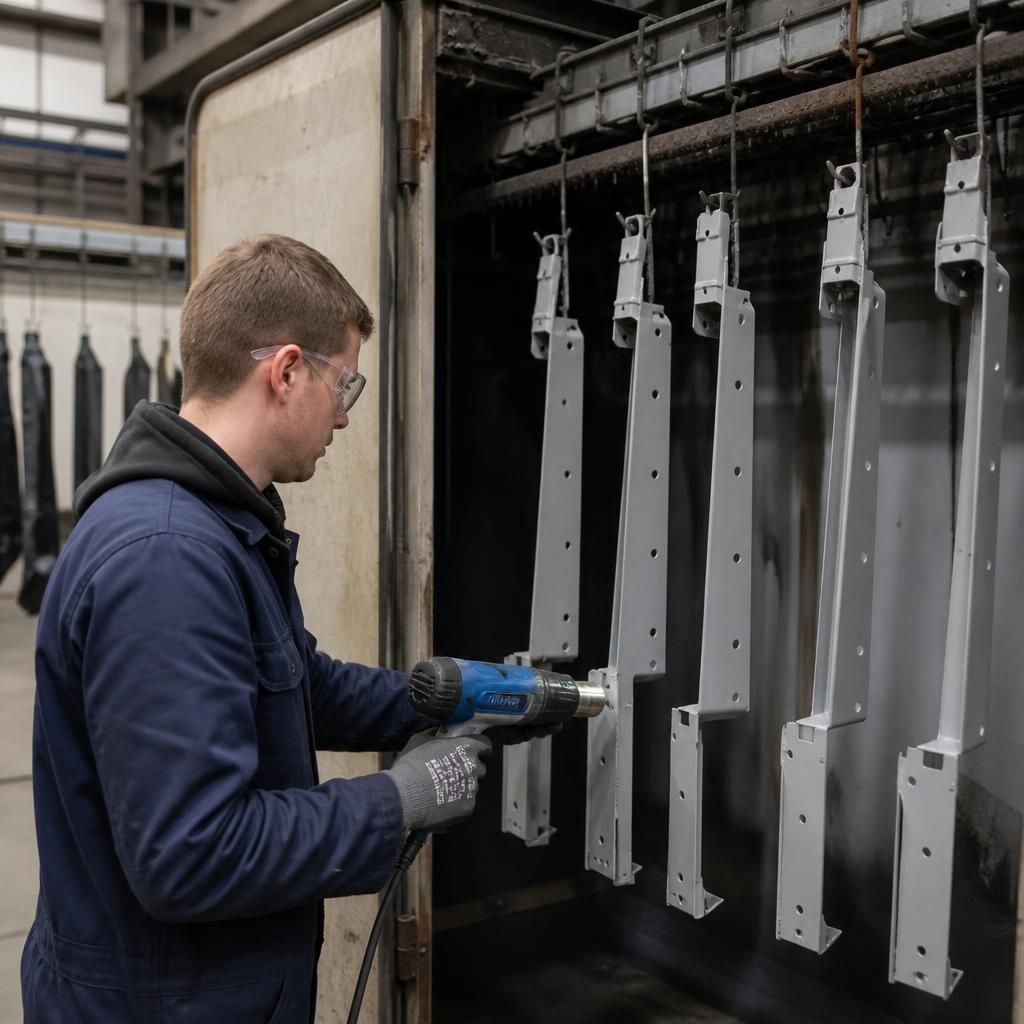
Drying is a distinct preparation stage, not simply the point at which visible water has disappeared. After cleaning or chemical pre-treatment, moisture and treatment residues must be removed from seams, folds, recesses and drilled holes so they cannot interfere with powder adhesion or produce corrosion beneath the coating.
The prepared component should be allowed to reach a suitable dry condition before it is transferred to coating. Particular attention is needed around joints and enclosed features, where liquid can remain hidden after the main surfaces appear dry. The final check should confirm that there are no damp areas, streaks, powdery deposits or signs of flash rust. This is especially important where prepared parts are stored or moved before powder application, because exposure to condensation, dust or handling can reduce the consistency achieved during earlier treatment.
Discuss your metal substrate preparation requirements
Discuss your metal substrate preparation requirements with the powder coating team, including the substrate type, component design, existing surface condition and areas that must remain uncoated. This information helps determine a suitable preparation approach before coating begins.