

How do I ensure that the metal protective coating spray adheres properly and provides maximum durability for my specific applications?
Proper adhesion and durability depend on selecting a coating suited to the metal and service conditions, then applying it to a thoroughly prepared, clean and correctly profiled surface. Consistent film coverage, suitable curing and checks on the finished coating help ensure the protective spray performs reliably in its specific application.
Maximum adhesion is achieved by controlling the complete coating system rather than relying on the spray material alone. The substrate, pre-treatment, component design, application settings, curing profile, handling method and service environment must all be compatible. For a specific application, define these factors before production and verify them on representative parts or test panels.
Start with the substrate and its previous history. Steel, galvanised steel, aluminium and cast metal can require different pre-treatment routes. Existing paint, oil, drawing compounds, weld residues, corrosion products and silicone contamination can interfere with bonding, even where the surface appears visually acceptable. Components that have previously been coated or used in service should therefore be assessed for residues and coating compatibility rather than treated as untreated metal.
Component manufacture can also affect adhesion. Welds, heat-affected areas, sharp edges, crevices, drilled holes and cast surfaces may respond differently from flat sheet. Weld spatter and rough projections can create weak points, while enclosed gaps may retain chemicals or moisture. Where the design is still being developed, avoid unnecessary crevices and provide drainage for hollow sections. Smooth transitions and suitable edge preparation help the coating form a continuous film instead of thinning or pulling away at vulnerable areas.
Use a pre-treatment route appropriate to the metal. This may involve cleaning, conversion treatment or another controlled surface treatment selected for the substrate and the intended service conditions. Galvanised and zinc-coated parts need particular attention because the surface chemistry differs from that of mild steel. Aluminium and castings may also require a process designed for their oxide layer or porosity. The treatment should be consistent across the whole component, with treated parts protected from recontamination before spraying.
Masking is part of adhesion control, not merely an appearance requirement. Threads, earth points, bearing seats, machined faces and electrical contact areas may need to remain free of coating. Use suitable masking materials and define the required uncoated areas clearly. Poorly positioned masking can leave contamination at the coating boundary or create a sharp edge where lifting begins.
Match application settings to the component. Electrostatic spray performance can be affected by the part’s size, shape, electrical conductivity, recesses and distance from the spray equipment. Deep corners and Faraday-cage areas may receive less material than exposed faces, while excessive deposition can affect appearance and mechanical performance. Coating technicians should adjust gun movement, charging conditions and part earthing to achieve an even deposit without relying on excessive build to compensate for difficult geometry.
Powder storage and handling also influence the result. Material should be kept dry and protected from contamination, with the specified product used for the required metal and environment. Mixing different products or using material that has been exposed to unsuitable conditions can alter application behaviour and final film properties. Colour changes, reclaimed material and batch changes should be controlled so that any variation can be identified and assessed.
Curing must be based on the component’s actual metal temperature. The oven setting alone does not confirm that a heavy bracket, thick fabrication or densely loaded batch has received the same thermal treatment as a light section. Under-curing can leave the film short of its intended properties, while excessive heat can damage the finish or substrate. A production specification should therefore identify the coating manufacturer’s required time and temperature range, with the process checked on the most demanding component geometry.
Allow coated parts to cool in a controlled manner and prevent contact damage during unloading, stacking and transport. Freshly coated surfaces can be marked by straps, hooks, packaging or metal-to-metal contact before they have reached handling condition. Use suitable supports and protect finished faces, particularly on large fabricated items with long edges or projecting features.
Validate the coating against the real service conditions. Adhesion alone is not enough if the component will experience impact, abrasion, chemicals, moisture, outdoor exposure, temperature changes or repeated flexing. Specify the likely loads and contaminants, then select the coating system and film build accordingly. Areas subject to fastener tightening, sliding contact or repeated impact may need a different finish or deliberate exclusion of coating.
A practical approval process can include:
- Recording the metal type, manufacturing route, previous surface treatment and areas that must remain uncoated.
- Agreeing the pre-treatment and coating specification before batch production.
- Running representative parts that include welds, edges, recesses and the thickest sections.
- Checking the finished film for continuity, coverage, finish and defects using methods appropriate to the specification.
- Carrying out adhesion and other performance tests on representative samples where the application risk justifies them.
- Documenting the approved settings and identifying any change in material, substrate, geometry or production sequence that requires reassessment.
For complex or high-value metalwork, provide the coater with drawings, substrate details, masking requirements, expected service conditions and any relevant test standard. This allows the process to be designed around the finished component rather than applying a generic coating approach. A Midlands powder-coating specialist can also advise on collection and delivery arrangements for batches or large fabrications while keeping the agreed coating specification attached to the job.
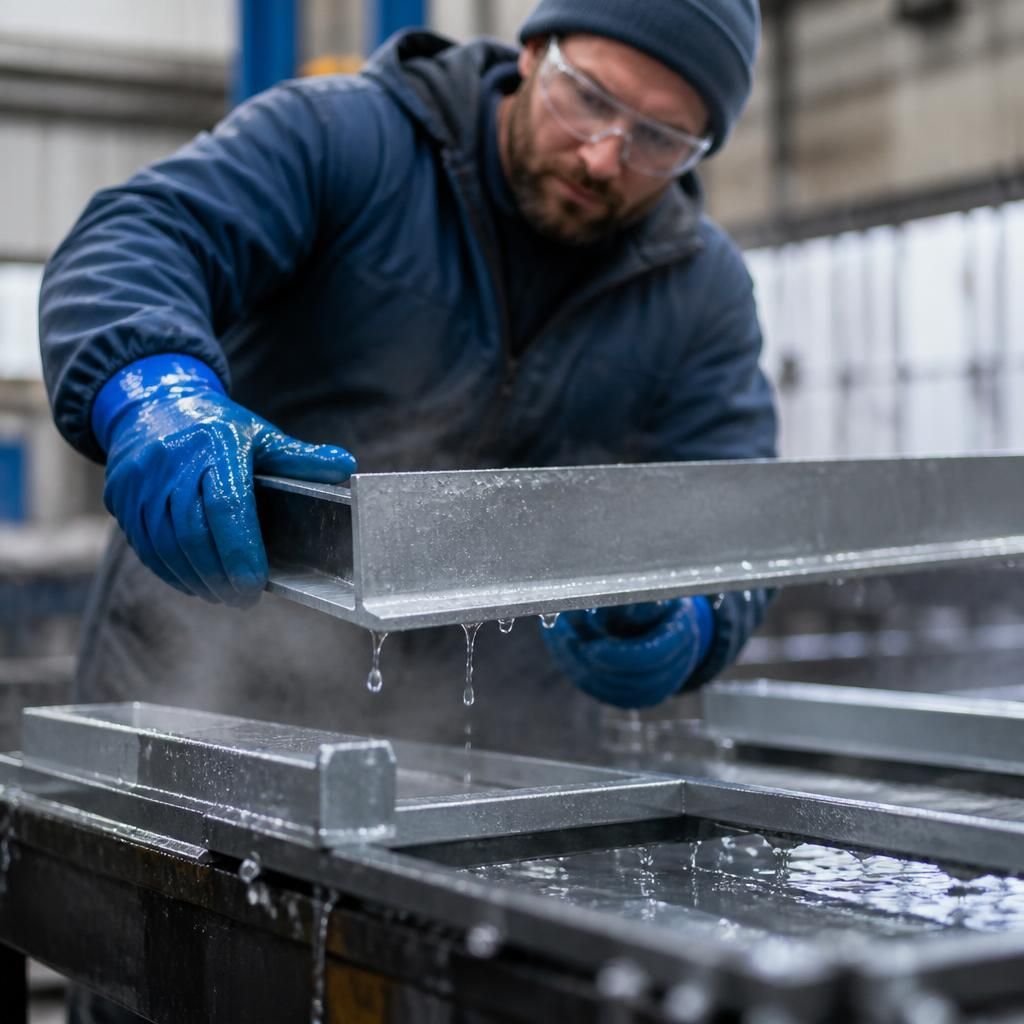
Moisture control is essential because condensation between the metal and the protective coating can prevent proper bonding and encourage corrosion beneath the film. After cleaning or pre-treatment, components should be thoroughly dried and protected from humid conditions, rain, condensation and handling contamination before spraying.
Particular care is needed when metal moves between colder and warmer environments. Allowing the component to reach a suitable, stable temperature before application helps prevent an invisible moisture film forming on the surface. Hollow sections, recesses and joints should also be checked for trapped water or treatment residues, as these areas can lead to localised adhesion failure even when the exposed faces appear sound.
Discuss Your Metal Protective Coating Spray Requirements
Discuss your metal protective coating spray requirements with our Midlands powder-coating specialists, including the substrate, component design and service conditions. We can review the application details and advise on a suitable coating approach for your parts or batch.