

What are the key operational practices that ensure the effectiveness and consistency of zinc phosphate spray pretreatment?
Effective, consistent zinc phosphate spray pretreatment depends on controlling bath chemistry, temperature, spray pressure and contact time within defined operating limits. Thorough rinsing, regular solution checks and consistent loading and drainage practices help ensure an even conversion coating that supports reliable powder-coating adhesion and corrosion protection.
Effective and consistent zinc phosphate spray pretreatment depends on a controlled process from component identification through to post-treatment handling. The most important practices are to standardise each stage, prevent contamination, maintain the equipment in good condition, verify the conversion coating, and record enough information to trace and correct variation.
Define the process for each component type. Different steels, fabrication methods and levels of surface contamination can respond differently to pretreatment. Before production, establish the required sequence for the component, including cleaning, activation where applicable, zinc phosphate treatment, rinsing, drying and transfer to powder coating. Welds, laser-cut edges, punched areas, mill scale, heat tint and heavily oxidised surfaces may need particular attention because they can react differently from clean, uniform sheet.
Parts should be assessed for oil, grease, marking fluids, storage residues and corrosion before they enter the line. Pretreatment cannot reliably compensate for unsuitable base-metal preparation. Components with unusual materials, coatings or contamination should be tested through the agreed process rather than added to a standard production route without verification.
Keep the equipment clean and mechanically consistent. Spray tanks, filters, pumps, pipework and nozzles should be included in a planned maintenance routine. Accumulated sludge, blocked nozzles and worn spray components can create localised differences in treatment, even when the solution itself is within specification. Nozzle alignment and coverage should be checked so that recessed faces, internal corners and other difficult areas receive the intended treatment rather than relying on incidental spray.
Conveyors, hooks and racks also require attention. Contact points should be arranged to limit masking and allow the solution to reach the required surfaces. Racks must support components securely without causing damage or allowing parts to swing into one another. Their condition matters as well: residual coating, corrosion or process deposits can introduce contamination and reduce repeatability.
Control contamination between stages. Carry-over from one tank to the next can alter the performance of the following stage and increase unwanted deposits. Good component orientation, suitable spacing and adequate drainage during transfer help reduce this risk without changing the defined treatment cycle. The line should also be protected from avoidable sources of contamination, including dirty handling equipment, unclean floors near the process and unsuitable storage of chemicals or parts.
Standardise handling after treatment. Once the conversion coating has formed, treated metal should be handled with clean equipment and protected from fingerprints, oil and abrasion. Components need to drain and dry in a manner that avoids trapped liquid in joints, folds, tubes and recesses. Any delay or exposure that allows flash rust, dust deposition or renewed contamination should be investigated, because the powder coating is applied over the condition of the surface at that point rather than over the condition immediately after treatment.
Use defined inspection and testing methods. Visual inspection can identify uneven colour, bare areas, staining, powdery deposits, water marks and signs of corrosion, but it should form part of a broader verification system. Depending on the specification, checks may include coating-weight assessment, adhesion testing after powder coating, corrosion testing or examination of representative test panels. The method, sampling approach and acceptance criteria should be agreed before production so that results are comparable rather than based on subjective judgement.
Inspection should cover representative parts, including difficult geometries and locations most likely to receive reduced treatment. A visually acceptable flat surface does not prove that enclosed sections, weld zones or edges have received equivalent protection. When a result falls outside the agreed limits, affected work should be identified and held for assessment instead of being passed forward automatically.
Maintain records and act on trends. A useful process record links the component or batch to the treatment route, operator, equipment condition, test results and any corrective action. Recording isolated results is less informative than reviewing them over time. Gradual changes in appearance, increased deposits, recurring defects in one part of the line or repeated problems on a particular component can indicate developing equipment or material issues.
Corrective action should address the cause rather than simply adjusting the next batch. This may involve cleaning equipment, replacing a filter or nozzle, reviewing component orientation, requalifying a difficult substrate or checking whether incoming material has changed. After intervention, a follow-up inspection should confirm that the process has returned to the defined condition.
Train operators against written procedures. Operators should understand the purpose of each stage, the approved component route, the handling restrictions and the actions required when an abnormal condition is found. Clear instructions reduce variation caused by individual judgement, while refresher training helps maintain consistency when products, fixtures or line conditions change. Any process change should be assessed and documented before it becomes part of routine production.
These practices make zinc phosphate spray pretreatment a controlled manufacturing operation rather than a single chemical step. Consistent preparation, clean and maintained equipment, disciplined handling, objective inspection and traceable records provide the basis for a conversion coating that can support dependable powder-coating performance.
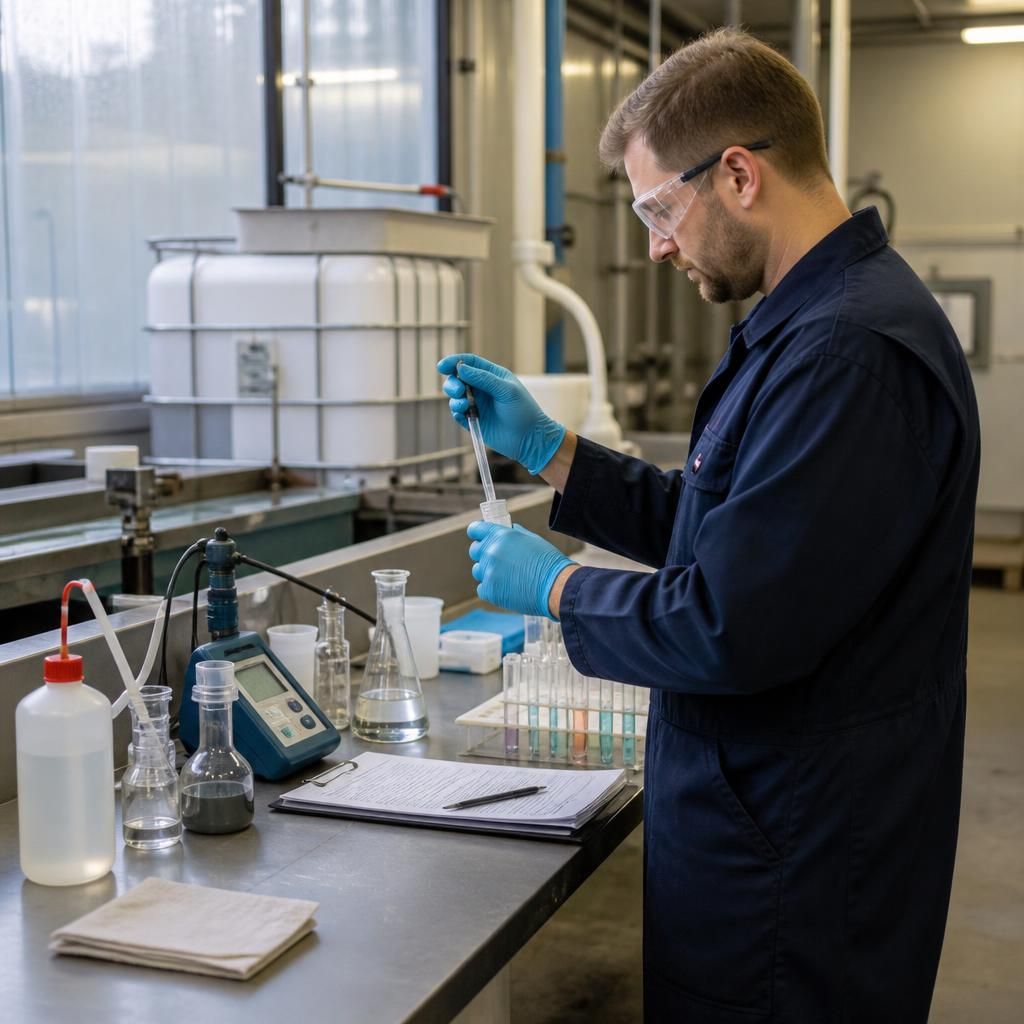
Bath control is the practice of keeping the zinc phosphate solution within its defined chemical operating range throughout production. Concentration, acidity, accelerator balance and temperature can affect the formation and uniformity of the conversion coating, so the solution should be assessed using the specified test methods rather than judged by appearance alone.
Testing should be carried out at an established frequency and whenever there is a significant change in production conditions. Results should be compared with the process limits, with additions made in a controlled manner where required. Over-correction can be as disruptive as depletion, making it important to allow additions to mix properly before taking a further reading.
Bath volume and water quality also need consideration. Evaporation, drag-out and replenishment can change the solution balance, while accumulated sludge may reduce effective working volume or interfere with circulation. Removing deposits and maintaining suitable liquid levels helps the measured chemistry represent the conditions reaching the components. This gives the spray stage a more stable basis for producing a consistent phosphate coating.
Discuss Your Zinc Phosphate Spray Pretreatment Requirements
Discuss your zinc phosphate spray pretreatment requirements with the team, including component materials, geometry and the required powder-coated finish. Providing drawings or batch details can help establish a suitable treatment route for assessment.