

How can stainless steel shot blasting media enhance the lifespan and performance of powder-coated metal components in industrial applications?
Stainless steel shot blasting media prepares metal components by removing contaminants and creating a consistent surface profile for powder to bond to. This helps reduce coating defects, supports better adhesion and corrosion protection, and can extend the service life of powder-coated parts in demanding industrial applications.
Stainless steel shot blasting media can extend the working life of powder-coated metal components by providing a controlled, repeatable preparation process that supports coating integrity during service. Its main contribution is not the powder coating itself, but the condition it creates before coating, the reduction of contamination risk and the consistency it can maintain over repeated production batches.
For industrial components, coating life depends on more than initial adhesion. The finished system must withstand handling, vibration, impact, abrasion, moisture and temperature changes without allowing local damage to develop into broader coating failure. Stainless steel shot helps by producing a uniform surface condition across the component, including areas where residues, scale or previous surface treatments could otherwise create weak points. A more consistent substrate gives the powder coating a better basis for resisting mechanical and environmental stresses.
One important advantage is the reduced risk of ferrous contamination. Conventional steel media can transfer iron particles to certain substrates if the blasting process is poorly controlled or the media becomes contaminated. Those particles may later oxidise beneath or around a coating, creating staining, blistering or localised corrosion. Properly selected stainless steel shot is useful where maintaining the substrate’s corrosion-resistant characteristics is important, particularly when preparing stainless steel and other components where embedded iron would be undesirable.
The media also contributes to process stability. Stainless steel shot is durable and can be reused when it is correctly recovered, cleaned and separated from waste. Its resistance to rapid breakdown helps the blasting mix retain more predictable characteristics than a media that fractures quickly. This matters because changes in particle condition can alter impact energy and surface texture from one batch to the next. Stable media behaviour makes it easier to keep preparation parameters consistent, reducing variation in the finished coating system.
Surface preparation should be matched to the component and the powder specification rather than treated as a one-size-fits-all operation. Shot size, blasting pressure, stand-off distance, exposure time and the angle of impact all affect the result. Excessive impact can round edges, alter fine details, damage thin sections or produce a surface profile that is unsuitable for the selected powder. Insufficient treatment may leave residues or an uneven surface condition. Trial work and inspection are therefore important for complex, thin-walled or precision-finished parts.
- Component geometry: Recesses, corners, welds and narrow sections may need nozzle access or process adjustments to achieve an even treatment.
- Substrate condition: Mill scale, oxidation, weld discolouration, oil and existing coatings may require different preparation stages or media settings.
- Required finish: The surface texture must support the coating system without creating an unnecessarily coarse or visually inconsistent result.
- Dimensional sensitivity: Parts with close tolerances should be assessed for possible edge rounding, peening or distortion.
- Media control: Reclaim systems, separators and storage arrangements should prevent the stainless shot from becoming mixed with incompatible media or contaminants.
Improved durability also depends on what happens immediately after blasting. Prepared components should be kept free from handling residues, moisture and workshop contamination before powder application. Suitable cleaning, controlled handling and prompt transfer to the coating stage help preserve the prepared condition. If the surface is touched with contaminated equipment or exposed to unsuitable conditions, the benefits of the blasting process can be reduced before the powder is applied.
After coating, the curing schedule must be appropriate for the powder and the actual metal temperature reached by the component. Under-curing can leave the film with inadequate mechanical and chemical performance, while unsuitable curing can affect appearance and film properties. Stainless steel shot cannot compensate for an incorrect powder choice, insufficient film coverage, poor masking or an unsuitable cure. Long service life is achieved through the combination of compatible materials, controlled preparation, correct application and verified curing.
For large or repeated production runs, the condition of the blasting equipment is equally significant. Worn nozzles, inconsistent air pressure, blocked recovery equipment or an imbalanced media mix can change the treatment delivered to each part. Routine checks should cover media cleanliness, particle size distribution, blast pattern, equipment wear and dust removal. These controls help ensure that the prepared surface remains consistent enough for the powder coating process to deliver repeatable performance.
In practical terms, stainless steel shot is most valuable when the application requires reliable preparation of components that will face demanding service conditions or where ferrous transfer must be controlled. It improves the likelihood of a durable powder-coated system by supporting substrate cleanliness, process repeatability and suitable surface condition; the final lifespan still depends on selecting and controlling the complete coating specification for the component’s operating environment.
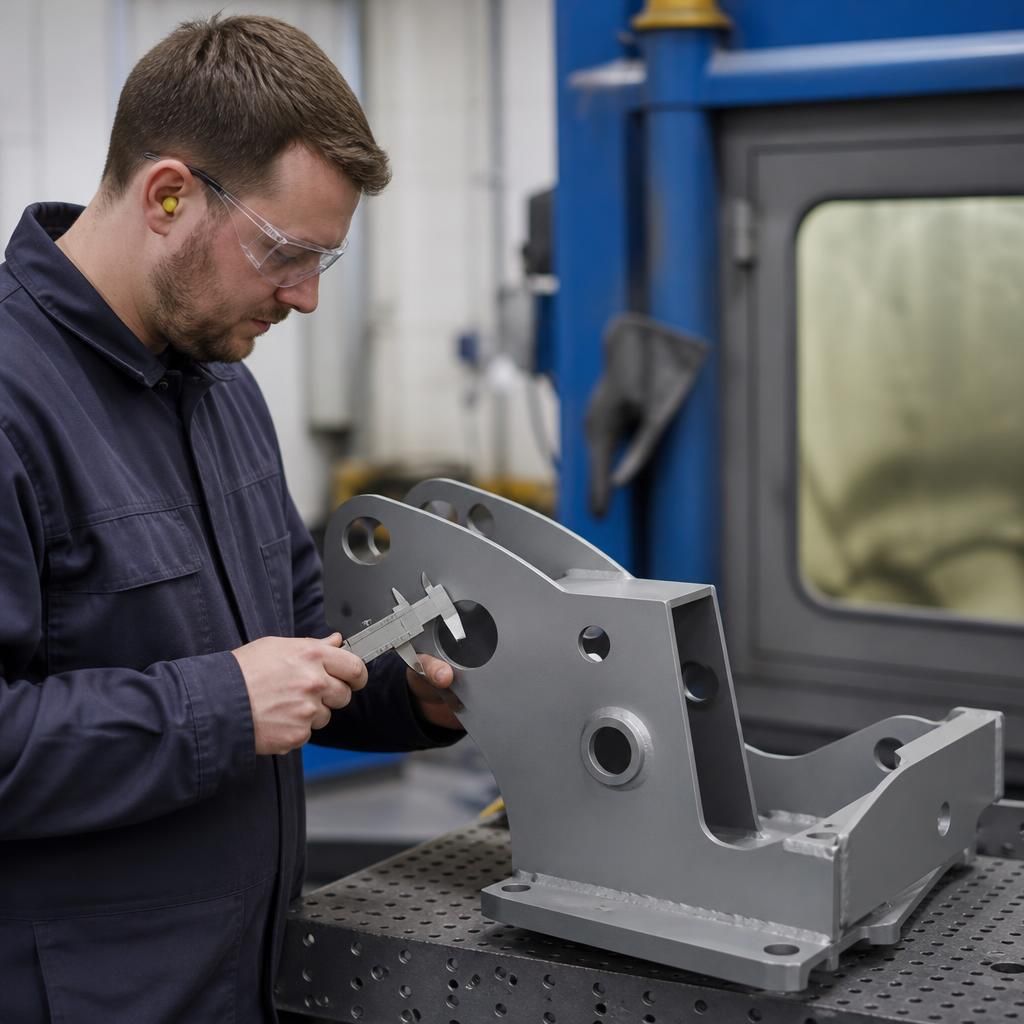
Stainless steel shot blasting can also improve coating reliability by exposing substrate defects before powder is applied. Removing scale, oxidation and surface residue makes issues such as weld spatter, sharp projections, pits or localised damage easier to identify and correct. This matters because powder coating can cover a defect without removing the cause, allowing a weak point to remain beneath the finished film.
Using blasting as part of a pre-coating inspection process helps separate surface-preparation problems from defects in the component itself. Parts can then be repaired, reworked or rejected before coating, rather than allowing an avoidable flaw to compromise protection during service. This supports more dependable performance where metal components are exposed to handling, vibration, abrasion or moisture.
Discuss Stainless Steel Shot Blasting for Durable Powder Coatings
If you are assessing stainless steel shot blasting for a specific component, discuss the substrate, geometry, service environment and powder specification with the powder-coating.co.uk team to establish a suitable preparation approach.