

What criteria should be used to determine the most effective shot blasting media for removing specific types of coatings from metal surfaces?
Determine the most effective shot blasting media by assessing the coating’s type, thickness and adhesion alongside the metal substrate’s hardness and the required surface profile. Then match the media’s hardness, shape and size to the removal task, balancing effective stripping against the risk of embedding particles, distorting the component or creating an unsuitable surface for subsequent coating.
The most effective shot blasting media is determined by how the coating breaks down under impact, the level of removal required, the component’s geometry and the capabilities of the blasting equipment. The correct choice should remove the coating to the specified endpoint without damaging edges, blocking apertures, contaminating the surface or creating excessive waste. Media selection is therefore a process decision rather than a simple choice based on abrasive strength alone.
Start by defining the required removal endpoint. Complete stripping back to clean metal requires a different approach from removing loose layers, keying an existing finish or clearing localised corrosion and coating failure. The specification should state whether staining, tightly bonded residue, oxide or previous coating remnants are acceptable. It should also identify any areas that must remain protected, such as machined faces, threads, bearing seats, sealing surfaces, thin edges and accurately formed holes.
The coating’s failure behaviour is an important practical consideration. Brittle films may fracture under sharp, angular impact, whereas tough or elastic films can absorb impact and remain attached. Some coatings soften or smear when heat builds up, causing the abrasive to become less effective and potentially obstructing the surface. Multi-layer systems may also need a staged approach: a more productive medium for the outer layer followed by a less aggressive medium for residual material or sensitive areas.
Media shape influences the way energy is transferred. Angular grit cuts into and fractures material, making it suitable where a coating needs to be broken apart or where residues must be removed from a sound metal surface. Spherical shot delivers a more rounded impact and is generally associated with peening or cleaning rather than maximum cutting action. Rounded glass media can clean and brighten certain surfaces, but may be less productive for removing strongly bonded, heavy coatings. Plastic, plant-based and other relatively soft media can be appropriate where the underlying component or adjacent finish must be preserved.
Media density also affects productivity, surface impact and equipment settings. Dense metallic or mineral abrasives carry substantial energy and can remove stubborn material efficiently, but they demand careful control around thin sections and delicate features. Lower-density alternatives may reduce the risk of distortion or unacceptable marking, although they can require more passes or different operating conditions. The best choice is the least aggressive medium that achieves the specified result within the available process limits.
Consider the component’s geometry before approving a media. Flat, open sections are comparatively straightforward, while recesses, internal corners, tubes, mesh, folded edges and intricate fabrications can create shadowed areas. A coarse medium may not reach narrow features effectively, and larger particles can become trapped in cavities. Conversely, very fine media may enter joints or apertures and increase cleaning requirements. The selection should be tested against the actual component, including its least accessible areas, rather than a representative flat coupon alone.
The blasting plant must be matched to the abrasive. Relevant factors include:
- Whether the equipment is a pressure blast, suction blast, wheel blast or automated system.
- The nozzle or wheel configuration and the range of operating pressures or speeds available.
- Media flow control, extraction capacity and the effectiveness of abrasive separation.
- Whether the system can recover, screen and reuse the chosen medium without carrying coating debris back onto the work.
- The available working envelope and whether the component can be positioned to expose all required faces.
Abrasive breakdown and contamination should be included in the assessment. Media that fractures quickly can create fines, increase dust and alter the cutting behaviour during a run. Reusable media can become contaminated with removed coating, oil, rust or previous process residues, reducing consistency and potentially transferring unwanted material to later work. Screening, replenishment and segregation procedures are particularly important where the stripped surface will subsequently receive powder coating or another protective finish.
Surface cleanliness after blasting is another selection criterion. Some media leave a clean, receptive surface but may introduce particles into pores, weld irregularities or crevices. Others can leave dust or residues that must be removed before pretreatment or coating. The process should specify how abrasive remnants will be extracted, brushed, blown off or otherwise removed, and how cleanliness will be checked. Particular care is needed with threaded parts, enclosed sections and components that cannot be fully inspected internally.
Process testing should establish the combination of media, equipment settings and handling method before full production. A trial should use the actual coating system and a component with comparable geometry. Inspect the result for remaining film, embedded particles, excessive roughening, edge rounding, distortion, heat effects and inaccessible residue. If the coating is removed but the surface no longer meets the requirements of the following treatment, the media or operating method is not suitable.
Testing should also assess how consistently the result can be reproduced. A medium that performs well only at a narrow setting may be unsuitable for batch work, particularly where component sizes and coating conditions vary. Record the selected abrasive, condition of the media, equipment settings, nozzle distance, travel pattern and inspection findings. This creates a repeatable process and makes it easier to identify whether a later variation is caused by the abrasive, the equipment or the incoming parts.
Health, environmental and housekeeping requirements can further influence the decision. The assessment should cover dust generation, collection arrangements, disposal of removed coating, potential hazardous constituents and the possibility of abrasive being recycled. Media containing or generating harmful dust requires suitable extraction and control measures. Waste should be handled according to the materials removed from the component, not simply according to the original abrasive used.
In practice, the preferred media is the one that meets four conditions: it removes the intended coating to the agreed endpoint, reaches the relevant features, leaves a surface compatible with the next treatment and can be controlled safely and consistently by the available plant. Where the result is uncertain, a controlled trial and inspection are more reliable than selecting an abrasive solely from a general media chart.
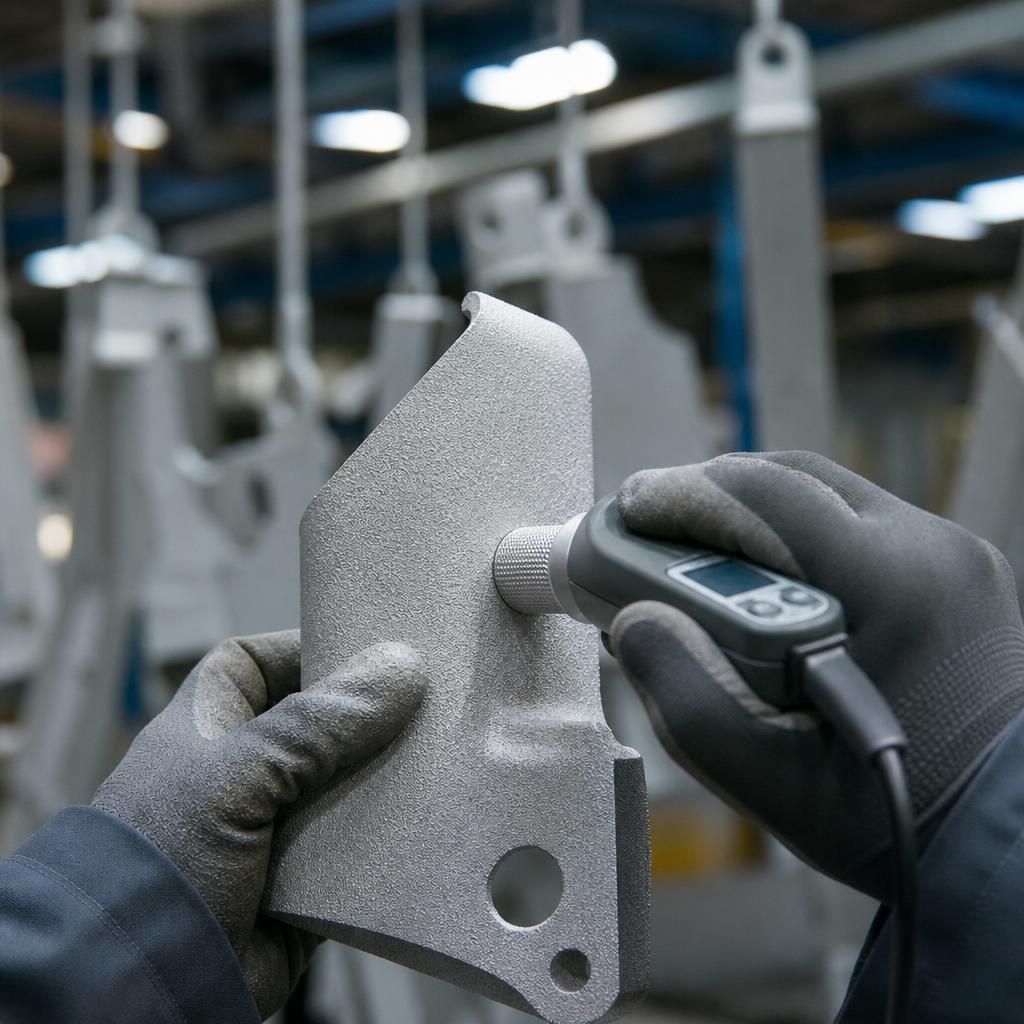
A key criterion is the surface profile left after coating removal, not simply whether the old film has been eliminated. The abrasive should produce a consistent texture that is suitable for the next finish. A profile that is too shallow may provide insufficient mechanical key, while an excessively rough profile can leave sharp peaks, retain residue in valleys and make the surface unsuitable for the specified coating system.
Profile requirements should therefore be agreed before selecting the media and checked on the blasted component, using the inspection method specified for the project. Compare the result across flat areas, welds, edges and previously coated sections, since these may respond differently. If the coating has been removed but the profile is outside the required range, changing the media grade, impact conditions or blasting sequence may be more appropriate than simply increasing cleaning intensity.