

How does the choice of cleaning solvents or solutions affect the powder coating preparation process?
The choice of cleaning solvent affects how effectively oils, grease, dirt and other contaminants are removed before powder coating. A suitable solution should clean the metal without leaving residue or damaging the surface, helping the powder adhere properly and reducing the risk of finish defects or premature coating failure.
The cleaning solution determines which contaminants are removed, how the metal surface is left for subsequent preparation, and whether residues interfere with powder coating. Solvent-based cleaners dissolve oil-based contamination, while aqueous alkaline, acidic or emulsifying solutions rely on chemical action, heat, agitation and rinsing. The correct choice depends on the metal substrate, the type and age of the contamination, the required pretreatment and the way the component will be dried.
Contaminant type is the first consideration. Cutting oils, forming lubricants, grease, waxes, silicone-based products and adhesive residues do not all respond equally to the same cleaner. A solvent may dissolve a particular oil quickly but have little effect on dried salts, abrasive dust or corrosion products. Conversely, an alkaline detergent can be effective against oils and general workshop soil but may require thorough rinsing to remove its own residues. Where several contaminants are present, preparation may need a staged process rather than reliance on one product.
- Solvent cleaners are commonly selected for targeted removal of oils, grease and some organic residues. They can be useful for localised cleaning, but the solvent must evaporate cleanly and must not redistribute contamination across the component.
- Alkaline cleaners chemically break down many oils and workshop deposits. Their concentration, temperature and contact time need control, particularly on aluminium, zinc-coated steel and other substrates that may be attacked by excessive alkalinity.
- Acidic cleaners can help remove oxides, scale or inorganic contamination, but they are normally part of a controlled pretreatment sequence rather than a general-purpose degreasing step. Inadequate rinsing can leave acidic residues and contribute to later corrosion.
- Emulsifying or surfactant-based solutions suspend loosened contamination so that it can be rinsed away. If the rinse stage is incomplete, surfactant films can remain on the surface and affect coating adhesion.
Substrate compatibility also controls the choice. A cleaner that is acceptable for mild steel may stain, etch or darken aluminium, zinc-coated components or cast metal. Strong chemicals can alter the surface profile, attack sharp edges or create deposits in recesses and joints. Solvents may also soften masking materials, sealants, plastics or existing finishes attached to the metal. The full component should therefore be considered, not just the principal metal grade.
The physical properties of a solution affect the effectiveness of the cleaning operation. Viscosity, evaporation rate and surface tension influence whether the cleaner reaches holes, folded sections, welds and enclosed areas. A fast-evaporating solvent may appear to clean the outside of a part while leaving contamination in crevices. A slower-drying solution may provide more contact time but increase the need for drainage and drying. Agitation, spraying, immersion or wiping should be selected to suit the component’s shape and the quantity of contamination.
Residue control is particularly important. The cleaner itself can leave oils, inhibitors, salts, surfactants or other substances if it is unsuitable, becomes contaminated or is not removed correctly. These residues may produce craters, fisheyes, pinholes, uneven gloss or localised loss of adhesion after curing. A component can look visually clean while still carrying a thin chemical film, so visual inspection alone is not a complete assessment.
For aqueous systems, rinsing quality is as important as the cleaning stage. Rinse water must remove dissolved soil and chemical carryover from the surface, including from joints and blind holes. Components then need to be dried fully before powder application. Trapped moisture can cause blistering, flash rusting on susceptible steel or defects around seams. Drying conditions should avoid recontaminating the part with oil vapour, dirty air or handling marks.
The preparation sequence should be tested rather than selected by product name alone. A practical assessment normally considers:
- What contaminants are present and whether they are fresh, baked on or chemically changed.
- Whether the solution is compatible with the substrate and any attached non-metallic materials.
- What temperature, concentration, contact time and application method the cleaner requires.
- How the solution will be rinsed, drained and dried, including inside recesses.
- Whether the resulting surface is suitable for the planned pretreatment and powder system.
Small-area trials can reveal staining, etching, residue or poor wetting before the process is applied to a complete batch. A clean surface should accept the next preparation stage consistently rather than showing patches where liquid retracts or contamination remains. Process checks may include inspection under suitable lighting, a water-break observation for rinsed metal, and adhesion or coating trials on representative parts.
Health, safety and environmental controls are part of solvent selection. Safety data, ventilation, personal protective equipment, flammability, storage, exposure risks and waste disposal requirements all need consideration. Solvent vapours and contaminated wipes must be managed appropriately, while spent aqueous cleaners and rinse water may require controlled treatment or disposal. The most effective technical option is therefore not automatically the most appropriate overall option.
In practice, the best cleaning solution is the one that removes the known contamination without damaging the substrate, fits the rest of the preparation sequence and can be rinsed or evaporated in a controlled way. Consistent cleaning conditions are essential because variation between batches can lead to differences in adhesion, appearance and long-term coating performance.
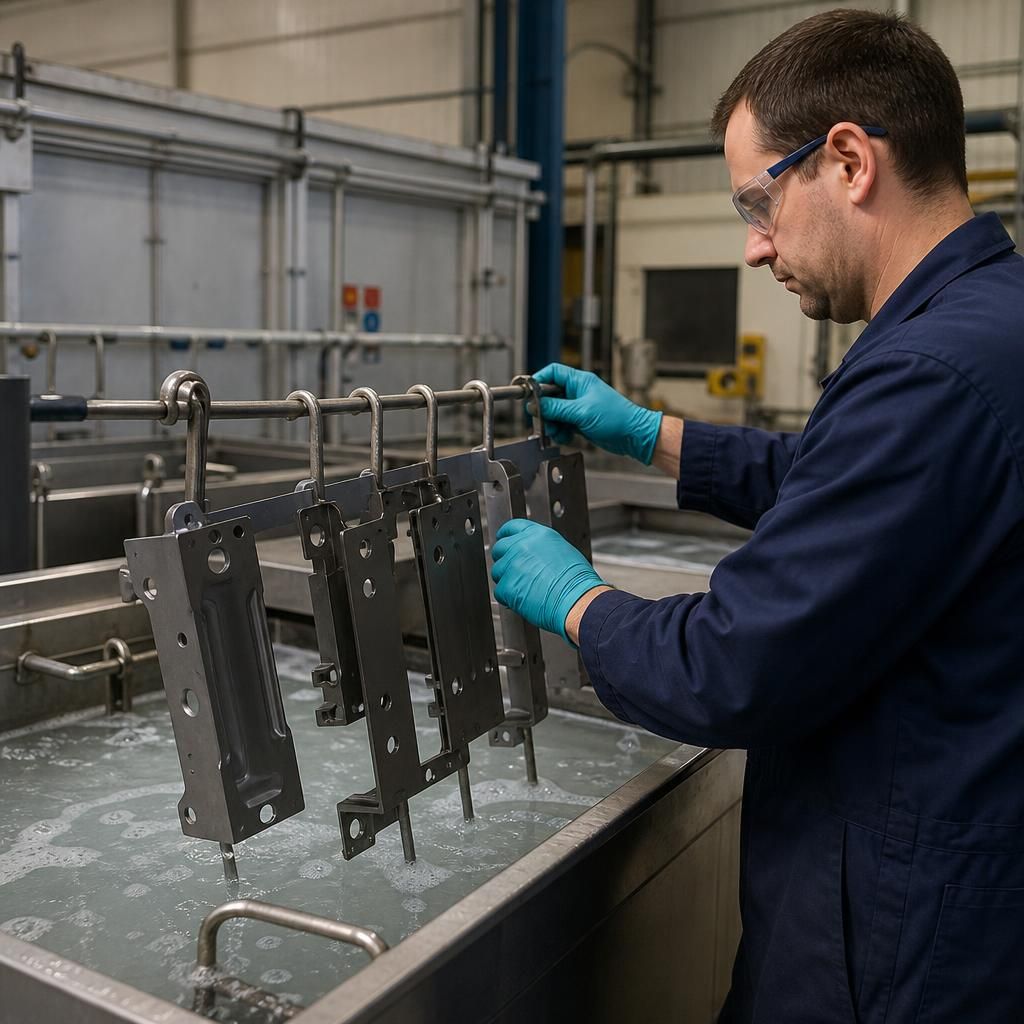
Cleaning chemistry also affects how well the subsequent pretreatment develops on the metal. If alkaline cleaner, solvent, surfactant or rinse-water carryover remains on the surface, it can interfere with the wetting and chemical reaction required for a uniform conversion layer. The result may be uneven pretreatment, with weaker corrosion protection or less consistent powder adhesion in affected areas.
For this reason, the cleaning stage should be assessed as part of the complete preparation system rather than in isolation. A suitable solution leaves the substrate chemically receptive to the selected pretreatment, while the rinse and drying stages prevent carryover between process steps. This is particularly important where components have joints, recesses or mixed metal surfaces that may retain process liquids.
Discuss cleaning solvent selection for powder coating preparation
If you are unsure which cleaning system suits your metal components, discuss the substrate, contamination and intended powder coating process with the powder-coating.co.uk team before preparation begins. This helps identify a suitable preparation approach for your project.