

What specific environmental factors can affect the performance and durability of black powder coated metal products, and how can these be mitigated?
Weathering, ultraviolet (UV) exposure, moisture, chemicals, temperature changes and mechanical abrasion can affect the appearance, adhesion and corrosion protection of black powder coated metal products. These risks can be mitigated through suitable pretreatment and coating selection, adequate film coverage, protected design and installation, and maintenance suited to the product’s operating environment.
The durability of black powder coated metal depends on the complete coating system, the surrounding exposure and the way the component is designed and installed. Black colour alone does not determine service life: the substrate, pretreatment, powder chemistry, coating thickness, joint details and the likelihood of contamination or water retention all influence whether the finish remains protective and visually uniform.
Atmospheric pollution and industrial deposits
Industrial atmospheres can deposit soot, acidic residues, salts and other contaminants on the coating. These deposits may discolour the surface, create localised staining or retain contaminants against the metal. Areas close to manufacturing processes, roads, combustion sources or agricultural activity can therefore be more demanding than a clean internal environment, even where the component is not directly exposed to process chemicals.
Risk can be reduced by specifying a coating system appropriate to the site classification and by preventing ledges, recesses and horizontal surfaces from collecting deposits. Components should be positioned so that contaminants can be removed rather than trapped. Regular washing with clean water and a mild, coating-compatible detergent helps remove surface deposits before they become difficult to dislodge. Abrasive pads, aggressive solvents and unsuitable alkaline or acidic cleaners can damage the finish and should not be used without confirmation of compatibility.
Marine and salt-laden environments
Coastal air and spray introduce chloride deposits, which are particularly challenging for metal protection. Salt can accumulate around edges, fixings, joints and concealed faces, making small defects more significant and increasing the likelihood of corrosion beneath a damaged area. A component that is only occasionally exposed to sea air may still require more robust protection if salt deposits cannot be washed away naturally.
Mitigation involves selecting a system tested or specified for the intended corrosivity category, ensuring all faces and edges receive suitable coverage, and designing the assembly to avoid salt traps. Stainless or suitably protected fixings may be considered where dissimilar metals are in contact. After installation, inspection should concentrate on cut edges, fastener locations, seams and areas where deposits collect.
Water retention, immersion and concealed interfaces
Powder coating is not automatically suitable for permanent immersion or continuously wet conditions. Water held in seams, box sections, unsealed joints or poorly drained cavities can create an aggressive local environment even when the visible face appears intact. Capillary gaps between overlapping parts may also retain water and contaminants, while unsealed hollow sections can collect condensation internally.
Good design provides drainage and ventilation, avoids unnecessary overlaps and prevents water from being directed towards vulnerable joints. Hollow sections may need appropriate drainage holes and sealing, depending on fabrication and finishing requirements. Where a product will be immersed, frequently washed, buried or exposed to persistent condensation, the coating specification should be checked for that use rather than assumed to be suitable because it is intended for exterior service.
Substrate condition and galvanic interaction
The coating cannot compensate for corrosion, mill scale, oil, weld residue or other contamination left on the substrate. Defects in the base metal may become visible through the finish or provide a route for corrosion to spread beneath it. Welds, cut edges and heat-affected areas can behave differently from flat sheet or sound sections and need particular attention during preparation.
Contact between dissimilar metals can also create galvanic corrosion where an electrolyte is present. This is relevant to assemblies using aluminium, steel, galvanised parts, stainless steel or mixed-metal fixings. Designers can reduce the risk by selecting compatible materials, isolating dissimilar metals where appropriate and avoiding details that concentrate water at the interface.
Solar heating and uneven exposure
Black surfaces absorb more solar energy than pale finishes, so a black component can reach a higher operating temperature in direct sunlight. This matters where the product is mounted beside heat-sensitive materials, encloses temperature-sensitive equipment or is joined to materials with different rates of thermal movement. Uneven heating may also occur between exposed and shaded faces, placing stress on joints, seals and connected components.
Allowances for thermal movement, suitable clearances and compatible sealants help prevent the surrounding assembly from transferring excessive stress to the coated part. If the component will operate at an elevated temperature, the powder system should be selected and validated for the actual service temperature rather than for ambient exposure alone.
Biological growth and organic contamination
Leaves, soil, bird deposits, algae and other organic matter can hold contaminants against the surface and keep local areas damp. This is most common on sheltered, shaded or poorly ventilated parts. The immediate concern is often not the coating itself but the concentration of moisture and contamination at joints, drainage points and contact areas.
Design should allow access for cleaning and should avoid contact with soil or vegetation where practical. Deposits should be removed using non-abrasive methods, particularly before they harden. Any coating damage found beneath accumulated contamination should be assessed and repaired using a compatible repair procedure.
Specification and inspection controls
Environmental durability is best managed before manufacture by recording the exposure conditions, substrate, fabrication method, cleaning regime and expected service temperature. The specification should identify the required powder type, colour and gloss level, pretreatment, coverage of difficult areas and any restrictions on immersion, chemicals or cleaning products. A sample or agreed colour standard is useful where uniform appearance across batches matters, because black finishes can show differences in gloss, texture and surface contamination readily.
Inspection should cover the complete part rather than only the most visible face. Check edges, corners, welds, recesses, holes, undersides and fixing points for incomplete coverage, pinholes, contamination, impact damage or early corrosion. Small defects are easier to isolate and repair before they allow corrosion to spread beneath the surrounding coating. Where conditions are unusually severe or the consequence of failure is high, periodic documented inspections provide better control than relying on appearance alone.
For industrial components, the most reliable approach is to match the coating system and component design to the actual exposure, then support that choice with suitable cleaning, drainage, inspection and repair practices. This avoids treating black powder coating as a single universal specification and helps maintain both corrosion protection and appearance throughout the product’s intended use.
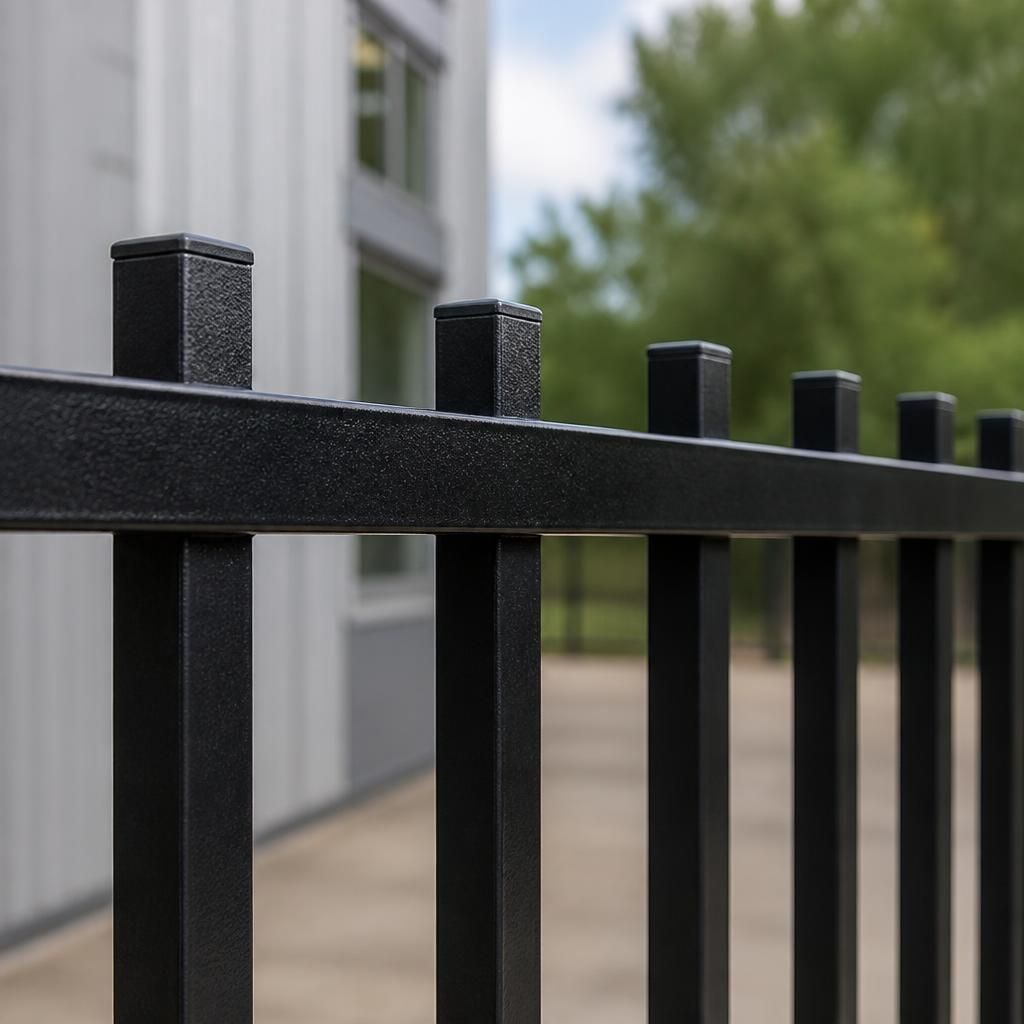
Ultraviolet (UV) radiation can gradually alter the appearance of black powder coated metal, particularly on components exposed to direct sunlight. The finish may lose gloss, show uneven fading or develop a chalky surface as the coating binder weathers. This is mainly an appearance issue at first, but prolonged degradation can make the surface less uniform and may indicate that the coating system is not suited to the exposure.
Mitigation starts with selecting a powder chemistry and finish specified for the expected level of exterior UV exposure, rather than choosing solely by colour. The component’s orientation, surrounding buildings and periods of shade should be considered because adjacent surfaces may weather at different rates. Where colour consistency is important across multiple parts, retain an agreed reference sample and assess exposed components against it during inspection. Cleaning should remove airborne deposits without adding abrasion, which can make UV-related changes more noticeable and accelerate surface wear.