

What are the maintenance requirements for black powder coated metal sheets to ensure long-term durability and performance?
Maintain black powder coated metal sheets by cleaning them with a mild detergent and soft cloth or sponge, then rinsing and drying thoroughly to remove dirt and contaminants. Inspect the coating regularly for scratches, chips, corrosion or residue, avoid abrasive tools and harsh chemicals, and repair damaged areas promptly to prevent deterioration of the finish and underlying metal.
Long-term maintenance of black powder coated metal sheets is primarily a matter of preventing mechanical, chemical and moisture-related damage. The coating should be supported by suitable storage, careful installation, compatible surrounding materials and a maintenance plan matched to the sheet’s operating environment. A powder coating is durable, but it is not a substitute for good detailing or protection from conditions that can undermine the coating system.
Store and handle the sheets correctly
- Keep sheets dry, clean and separated during storage so moisture cannot become trapped between surfaces.
- Use non-abrasive separators and avoid placing contaminated packaging, metal swarf or building materials directly against the finish.
- Do not drag sheets across one another or over rough surfaces. Lifting and positioning methods should prevent edge impact, scraping and localised pressure.
- Remove temporary protective materials in accordance with the coating supplier’s guidance. Leaving adhesive films or packaging exposed to heat and sunlight for too long can make removal more difficult and may affect the finish.
Prevent moisture traps during installation
Good drainage and ventilation are essential, particularly where sheets are used externally or in areas exposed to condensation. Details that allow water to sit behind overlaps, folds, brackets or trims can create a more aggressive local environment than the surrounding air. Joints, laps and support points should therefore be designed to shed water rather than retain it. Cut edges, drilled holes and other areas where the original coating has been interrupted should receive an appropriate compatible protection system, especially where the substrate could corrode.
Sealants, gaskets, washers and bedding materials should also be checked for compatibility with the powder coating. Some construction products release chemicals as they cure, while others can retain moisture against the sheet. Compatibility should be confirmed before installation rather than assumed from the product’s appearance or intended use.
Control contact with incompatible materials
Contact between dissimilar metals can contribute to galvanic corrosion when moisture is present. Fixings and brackets should be selected as part of the complete coating and substrate system, with suitable separation where required. Avoid leaving steel filings, swarf, welding residue, cement dust or other contaminants on the surface, as these can stain the finish or initiate corrosion at vulnerable points.
Particular care is needed near swimming pools, coastal locations, industrial emissions, road-treatment salts and manufacturing processes that release solvents, acids or alkaline substances. In these settings, maintenance should be based on the actual contaminants and exposure conditions. A coating suitable for a general indoor application may require a different specification or more closely managed maintenance regime in a chemically aggressive environment.
Manage heat and exposure conditions
Black finishes absorb more solar radiation than lighter colours, so the metal can reach higher temperatures in direct sunlight. This should be considered where sheets are installed beside heat-producing equipment, behind glazing or in poorly ventilated enclosures. The substrate, fixings, joints and surrounding sealants must all accommodate the expected temperature changes. Repeated expansion and contraction can place stress on joints and may open routes for moisture if the installation has not been detailed accordingly.
Ultraviolet exposure can gradually alter the appearance of a black finish, even where the coating remains protective. For external applications, the coating specification should be selected for the expected level of sunlight and weathering. Appearance-sensitive installations may need a defined acceptance standard that distinguishes normal colour change from coating failure.
Use a planned maintenance record
Record the sheet material, coating specification, installation location, surrounding exposure and any compatible products used during installation. This information helps future maintenance teams identify whether a change is caused by environmental exposure, incompatible materials, impact or a problem with the supporting structure. Maintenance findings should be recorded by location so recurring issues, such as water retention at a particular joint or corrosion around a fixing, can be addressed at source rather than treated as isolated defects.
Where the sheets form part of an enclosure, façade, machine guard or fabricated assembly, maintenance should include the adjacent structure and fixings rather than the visible face alone. Movement, failed seals, blocked drainage paths and corrosion in supports can all place additional stress on the powder-coated metal. If coating breakdown is extensive, the correct remedial approach depends on the substrate, remaining coating adhesion, contamination and service environment; a coating specialist can assess the system before any recoating or replacement work is specified.
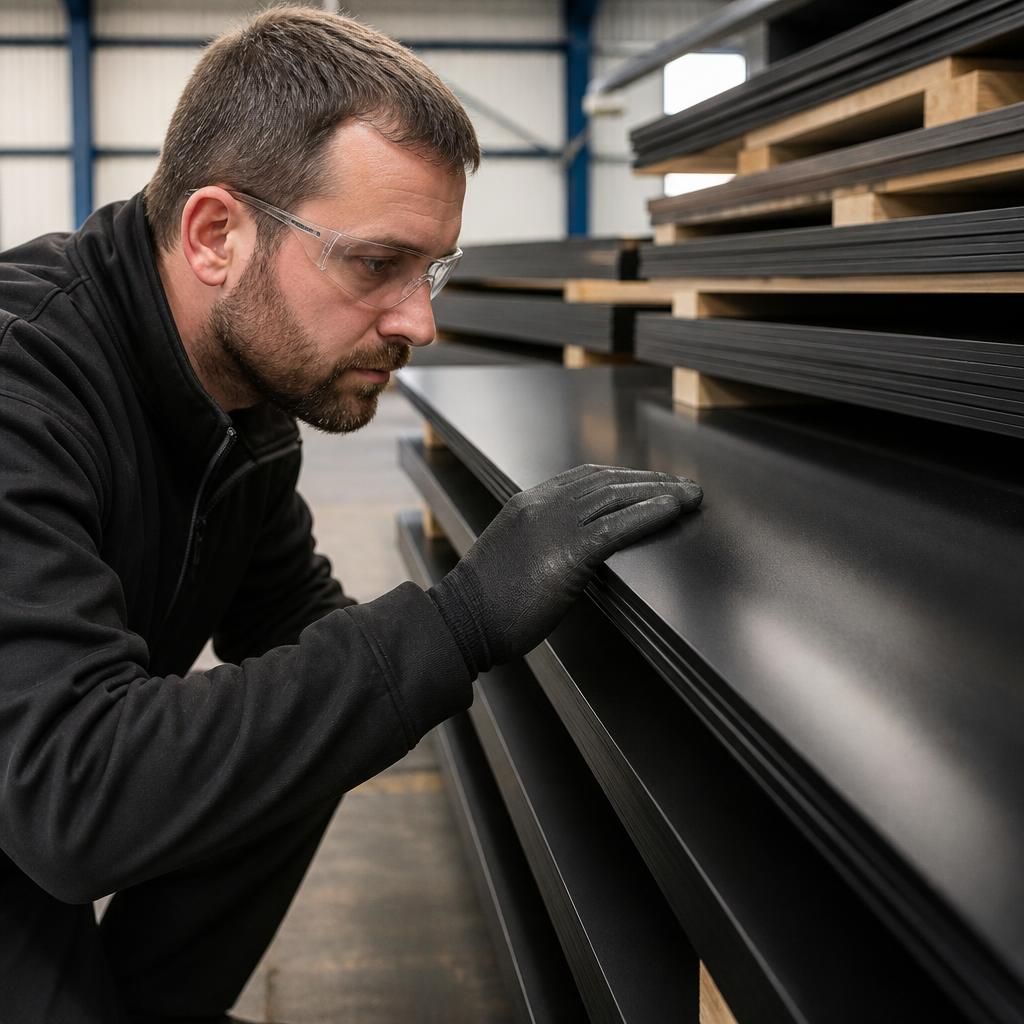
Inspection should distinguish surface contamination from coating failure. A change in gloss or colour may indicate weathering, while blistering, peeling, exposed substrate, rust staining or corrosion around edges and fixings requires investigation rather than routine cleaning alone. Pay particular attention to cut edges, drilled holes, joints and contact points, where the coating system is more vulnerable.
Do not apply an unspecified touch-up paint over damaged powder coating. The repair method should suit the substrate, existing coating, level of corrosion and surrounding exposure. Damaged areas may need controlled preparation and removal of loose material before a compatible protective system is applied. Where adhesion is poor or corrosion extends beneath the coating, assessment by a coating specialist is preferable to treating only the visible mark.
Need advice on maintaining black powder coated metal sheets?
If you need to confirm the most suitable maintenance or remedial approach for black powder coated metal sheets, speak to a coating specialist about the substrate, existing finish and service conditions. This assessment can help establish whether local repair, recoating or replacement is appropriate.