

What safety measures are implemented during the powder coating process to protect both the integrity of the panels and the wellbeing of technicians involved?
Safety measures combine controlled panel handling, clean preparation and monitored curing with suitable extraction, personal protective equipment and safe equipment procedures for technicians. These controls help prevent contamination, coating defects and accidental damage while reducing exposure to powder, fumes and other process-related hazards.
Powder coating safety measures are a combination of engineering controls, operating procedures and quality checks that manage risks at each stage, from receiving steel panels through to finished-part inspection. The same controls protect technicians from airborne powder, heat, moving equipment and manual-handling hazards while protecting panels from impact, contamination, incorrect application and curing defects.
Before coating begins, the work is assessed for both product and operator risks. Panel dimensions, weight, geometry, existing treatments and the specified coating system affect how the item can be supported, moved and processed. Suitable lifting arrangements, stable storage and clear routes reduce the chance of panels falling, becoming distorted or striking nearby equipment. Components are also checked for sharp edges, trapped moisture, residues or features that could create a problem during coating or curing.
Powder application areas require controlled airflow and effective segregation. Extraction equipment is used to capture airborne material at source, while the booth and surrounding area are kept organised to limit powder migration. Keeping incompatible powders and process materials separate reduces the risk of cross-contamination and unintended colour or performance changes. Dust deposits are managed through suitable cleaning methods rather than actions that could disperse powder into the air.
Fire and ignition risks are controlled through equipment design and housekeeping. Powder suspended in air can present a combustible-dust hazard, so application equipment, extraction arrangements and electrical components need to be suitable for the process. Earthing and bonding help prevent static discharge, and ignition sources are kept away from areas where powder may accumulate. Deposits are not allowed to build up on floors, ledges, ducting or machinery, and maintenance procedures address filters, hoses and collection points before they become unsafe.
Technicians use task-appropriate protective equipment in addition to the booth’s built-in controls. Depending on the activity, this can include protective clothing, gloves, eye protection, hearing protection and respiratory protection selected through the relevant risk assessment. Protective equipment is maintained, stored correctly and replaced when damaged or unsuitable. It is not treated as a substitute for extraction, safe powder handling or properly maintained machinery.
Application equipment is checked before use and operated within its intended settings. Spray guns, hoses, powder feed systems and control units are inspected for damage, secure connections and unwanted powder build-up. Earthing continuity is important because it supports safe electrostatic operation and helps the powder transfer consistently to the panel. Faults are isolated and reported rather than being bypassed, and cleaning or adjustment is carried out using the equipment’s safe isolation procedure.
The curing stage is managed as a controlled thermal process. Technicians are protected from hot surfaces and heated air by guarding, suitable access arrangements and clear procedures for loading and unloading. Temperature controls and monitoring help ensure that panels receive the required cure without overheating, under-curing or damaging the substrate. Panels are allowed to reach a safe handling condition before further inspection or packing, with care taken to avoid contact damage while the finish is still vulnerable.
Quality checks provide an additional safety barrier for panel integrity. After coating, panels can be examined for coverage, visible contamination, edge damage, pinholes, runs and other signs that the process has not performed as intended. Areas that do not meet the agreed specification are identified and segregated so that they are not dispatched or incorporated into a larger assembly without review. Recording relevant batch, material and process information also supports investigation if a defect or deviation is found.
Safe working depends on competent people and maintained equipment. Technicians need instruction on the coating system, emergency arrangements, manual handling, powder exposure, electrostatic equipment and the curing equipment used in the facility. Regular inspections and planned maintenance cover extraction, booth components, lifting equipment, spray equipment, electrical connections and oven controls. Waste powder, used consumables and contaminated cleaning materials are contained and disposed of in accordance with the applicable site procedures.
For manufacturers, fabricators and other businesses sending steel panels for coating, useful information includes panel weight, dimensions, substrate condition, masking requirements, coating specification and any handling restrictions. Providing these details before processing allows the coating method, support points and inspection requirements to be considered together, reducing avoidable risks to both the technicians handling the work and the finished panels.
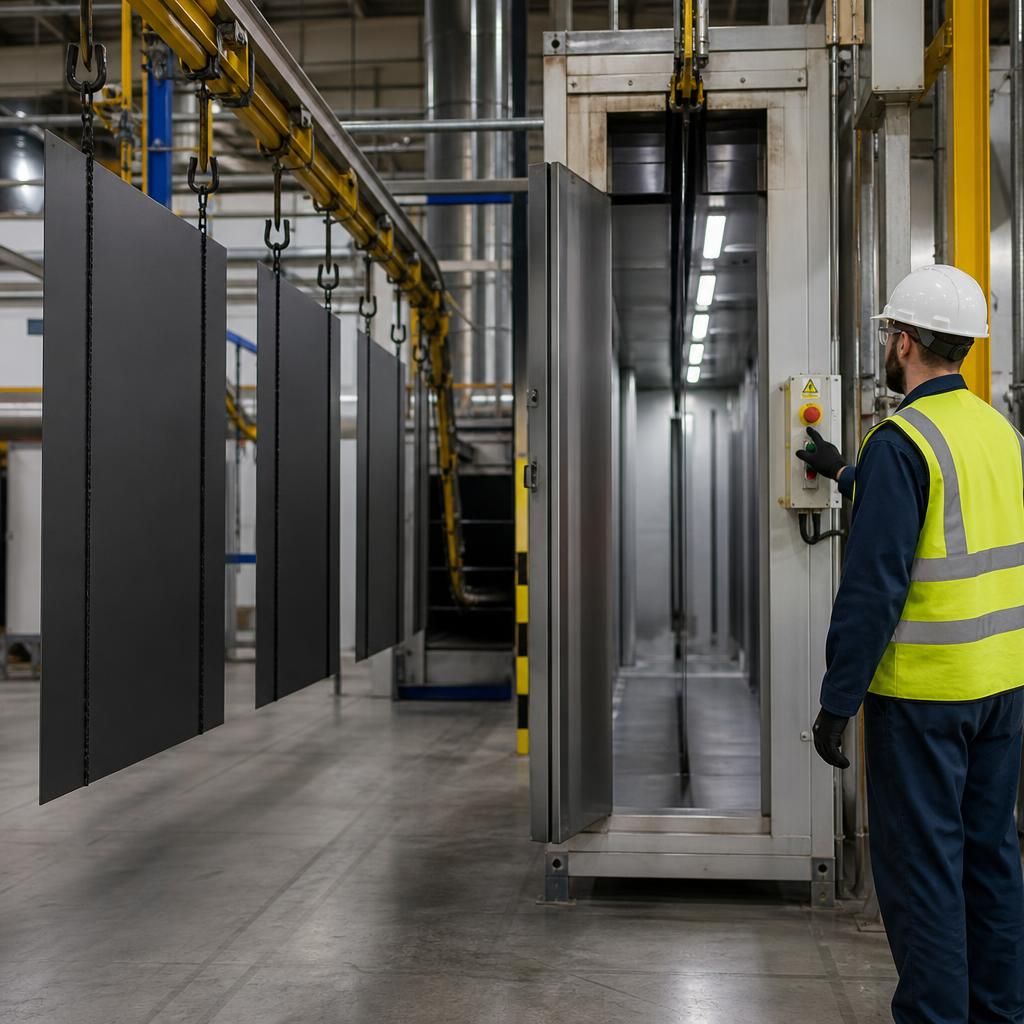
Safety interlocks and controlled access help separate technicians from active coating equipment. Booth doors, oven access points and guarded machinery should prevent operation when a person could be exposed to moving parts, electrical systems or curing heat. Clearly identified emergency-stop controls allow the process to be halted if an unsafe condition develops, while isolation procedures prevent equipment being restarted during inspection, cleaning or maintenance.
These controls also protect panel integrity. A sudden interruption can leave a panel incompletely coated or partially cured, so the affected batch is identified and assessed before processing resumes. Restricting access to authorised personnel reduces accidental contact with wet or hot surfaces, prevents contamination and keeps handling activity away from panels while the coating is developing its final properties.
Discuss Safe Powder Coating for Your Steel Panels
Contact the powder coating team to discuss your steel panel specification, handling requirements and any site-specific safety considerations before processing. This allows the proposed coating approach to be reviewed against the needs of your project.