

What steps should be taken to ensure the effective application of stainless steel electrostatic coating for optimal durability?
For durable stainless steel electrostatic coating, the component should be thoroughly cleaned and prepared, correctly grounded and masked, then coated with an even powder layer using suitable application settings. The finish must be cured to the powder manufacturer’s specification and inspected for coverage, adhesion and surface defects before the part is released.
Durable stainless steel electrostatic coating depends on controlling the complete process, not simply applying powder to the metal. The specification, stainless steel condition, pretreatment, application setup, part handling, curing profile and quality checks must all be matched to the component’s operating environment and design.
1. Define the performance requirements first. Establish where the coated component will be used and what the finish must withstand. External exposure, moisture, chemicals, abrasion, temperature changes and handling can each affect the choice of powder and the required film performance. The specification should also state the acceptable colour, gloss, texture, coating thickness, edge coverage and any dimensional limits, particularly where parts must assemble with other components.
2. Assess the stainless steel and component design. Stainless steel forms a passive oxide layer that can influence coating adhesion, and different grades, weld areas and surface finishes may respond differently to treatment. Welds, crevices, sharp edges, recesses and joints should be reviewed because they can create uneven powder deposition or areas where moisture and contaminants remain trapped. Components should also be designed or positioned so that drainage and ventilation are possible during processing. Contact with carbon-steel tooling or contaminated handling equipment should be avoided, as embedded iron particles can later cause staining or corrosion at the surface.
3. Select a compatible pretreatment system. The pretreatment must be suitable for stainless steel, the chosen powder and the intended service conditions. Its purpose is to remove contaminants and provide a stable surface for adhesion without damaging the substrate. Rinsing quality is important: residues, salts or cleaning chemicals left on the metal can interfere with adhesion and may contribute to corrosion beneath the coating. The process should be controlled consistently across the full component, including welds, folds and recessed areas.
4. Control the powder and application equipment. Powder should be stored and handled in accordance with its technical requirements so that moisture, contamination and agglomeration do not affect transfer or surface appearance. The spray equipment should be set up for the component’s size, geometry and powder type. Voltage, current, powder output, air flow, gun distance and gun movement all influence deposition. Excessive charge can cause back-ionisation or uneven build, while insufficient charge can reduce transfer efficiency. Recesses and corners may require an adjusted approach because of the Faraday cage effect, where the electrostatic field makes it harder for powder to reach enclosed areas.
5. Plan racking and part movement carefully. Racks and hooks should provide reliable electrical contact without creating avoidable bare areas or heavy build-up around contact points. Parts should be positioned to minimise shadowing and allow the operator or automatic equipment to reach all relevant surfaces. Large, deep or irregular components may need more than one hanging orientation. Once treated, the parts should be handled in a way that prevents impact, contamination and contact damage before the powder has formed its final film.
6. Match the oven cycle to the metal temperature. Powder manufacturers specify a curing window based on the temperature reached by the component, rather than simply the displayed air temperature in the oven. The required cycle therefore depends on part thickness, mass, loading density, rack arrangement and oven airflow. A process check should confirm that the coldest or slowest-heating areas reach the necessary cure conditions. Under-curing can leave the coating with inadequate hardness, adhesion or chemical resistance; excessive heat or time can affect colour, gloss and other finish properties.
7. Verify the finished coating against the specification. Quality checks should be proportionate to the component’s use and may include visual assessment, dry-film thickness measurement, adhesion testing and confirmation of cure. Particular attention should be given to edges, corners, recesses, welds and areas near rack contact points. Results should be recorded against the powder batch, process settings and oven conditions so that any variation can be traced and corrected rather than treated as an isolated cosmetic issue.
8. Protect the process from avoidable contamination. The spray area, racks, handling tools and oven should be kept suitable for the powder being applied. Dust, oil, silicone, incompatible powder residues and loose fibres can create defects or reduce adhesion. Where colour or powder changes occur, equipment and surrounding areas need appropriate cleaning to prevent cross-contamination. Good housekeeping is particularly important for stainless steel, where surface marks or foreign-metal contamination may become visible after coating.
For industrial work, the most reliable approach is to document the coating specification and process controls before production, then use representative parts to confirm that the selected powder, pretreatment and cure cycle meet the required performance. This is especially important for batch work or complex stainless steel fabrications, where part geometry and thermal mass can produce different results within the same load.
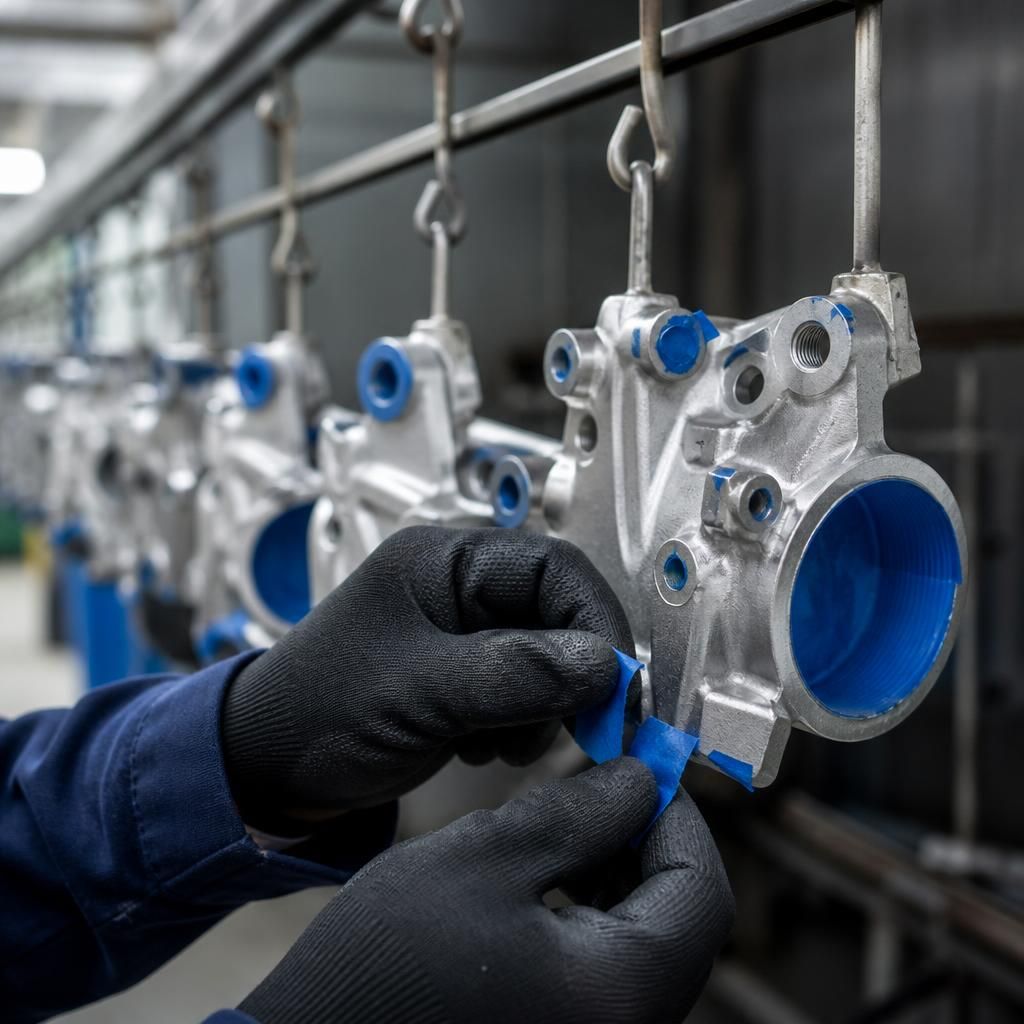
Effective stainless steel electrostatic coating must preserve the component’s functional surfaces as well as protect its exposed metal. Threaded holes, bearing seats, hinge points, mating faces, drain holes and other close-tolerance areas may need to remain free of powder because even a sound, cured film can affect fit, movement or assembly.
Mask these areas before spraying with heat-resistant plugs, caps or tape that remain secure through handling and curing. Masking should follow the required finished boundary rather than simply covering visible openings, since powder can build up at edges or bridge narrow gaps. After curing, remove the masking carefully and check that no residue, loose coating or unwanted overspray remains. Confirm that threads, bores and mating surfaces remain within the agreed dimensional tolerance before the component enters assembly.
Discuss your stainless steel electrostatic coating requirements
Discuss your stainless steel electrostatic coating requirements with the team, including the component’s use, finish specification and any areas that must remain uncoated. This allows the appropriate coating process to be considered for your parts.