

What are the benefits of using low-temperature cure powder coatings for steel components in various industrial applications?
Low-temperature cure powder coatings cure steel components at reduced oven temperatures, helping to lower energy use and limit thermal exposure during finishing. They can still provide the durable, consistent surface protection required for steel used in manufacturing, construction and automotive applications.
Low-temperature cure powder coatings are powder formulations designed to achieve the required film properties at a lower metal temperature than conventional systems. For steel components, their main advantage is that they widen the range of parts that can be powder coated while helping the finisher manage heat-sensitive designs, mixed-material assemblies and components where dimensional accuracy matters.
Suitability for complex steel components
Steel parts do not all respond to oven heat in the same way. Thin sections reach curing temperature quickly, while heavy fabrications and assemblies heat more slowly. A low-temperature system can be useful where a component includes a combination of thick and thin sections, close tolerances, pressed features or welded areas that may be vulnerable to uneven heating. Reducing the required cure temperature can help limit heat-related movement and make it easier to retain the intended shape of the finished part.
This can be particularly relevant for fabricated enclosures, brackets, frames, panels, cabinets and engineered assemblies. It may also assist where steel is combined with materials such as seals, adhesives, plastics or pre-installed components that have a lower temperature tolerance. However, the suitability of the complete assembly must be confirmed before coating, since every attached material has its own heat limitations.
Protection of component properties
Some steel components have been manufactured to close dimensional tolerances or have undergone processes that give them specific mechanical properties. Excessive or poorly controlled heating can affect shape, fit or the condition of heat-sensitive elements. A low-temperature cure can reduce this risk, although it does not eliminate the need for a suitable cure schedule. The coating specification should take account of the steel grade, section thickness, component design and any previous treatment.
For assemblies containing bearings, inserts, threaded parts or other sensitive features, the preferred approach may still be to mask, remove or install those items after coating. Low-temperature curing is a way of reducing thermal demand, not a substitute for checking the temperature limits of every part.
Consistent film formation
When correctly specified and applied, low-temperature powder coatings can produce an even film across the steel surface, including flat areas, edges and formed profiles. Consistency depends on more than the powder formulation. Surface preparation, gun settings, film thickness, earthing, part positioning and oven control all influence the result.
The cure must be assessed against the temperature actually reached by the steel rather than relying only on the oven’s displayed air temperature. This is important for large or heavy components, which may take longer to reach the required metal temperature. If the coating is under-cured, it may not develop its intended adhesion, hardness or chemical resistance. Excessive exposure can also affect appearance and coating performance. Trial work or process validation is therefore appropriate for unfamiliar component designs or coating specifications.
Fewer restrictions during design and production
A lower cure requirement can make powder coating a practical option for steel parts that would otherwise be difficult to process because of their size, construction or attached materials. It may reduce the need to redesign a component solely to withstand a conventional cure cycle. For manufacturers and fabricators, this can support a wider choice of part geometry and assembly sequence, provided the coating applicator confirms that the component can be handled and cured correctly.
It can also be useful where different steel components in one project have different thermal characteristics. The parts still need to be grouped sensibly by coating type, colour, gloss and cure requirements; low-temperature capability does not mean that every product can be processed under one universal setting.
Industrial application considerations
Low-temperature cure powder coatings may be considered for steel used in equipment housings, fabricated machinery, electrical enclosures, architectural metalwork, transport-related components and general industrial assemblies. The right choice depends on the service environment as well as the curing temperature. Outdoor exposure, contact with cleaning chemicals, abrasion, moisture, heat and specialist operating conditions may require different resin chemistries or topcoat specifications.
Colour and finish selection also needs attention. A low-temperature formulation should be matched to the required appearance and performance rather than chosen on cure temperature alone. The specification should identify the intended substrate, pre-treatment, coating system, film thickness, finish and curing conditions.
What to confirm before use
- Whether the product is approved for the particular steel substrate and intended service environment.
- The required metal-temperature range and minimum cure time, rather than just the oven air setting.
- Whether the component’s thickest sections will reach the specified cure condition.
- The temperature limits of seals, plastics, adhesives, inserts and other attached materials.
- Compatibility with the selected pre-treatment and any existing coating.
- Whether sample parts or a production trial are needed to verify adhesion, appearance and cure.
In summary, the benefit of low-temperature cure powder coating is greater process flexibility for steel components that are sensitive to heat, dimensionally demanding or assembled from mixed materials. It should be selected as part of a complete coating specification, with the cure schedule validated on the actual component rather than assumed from the powder’s nominal temperature.
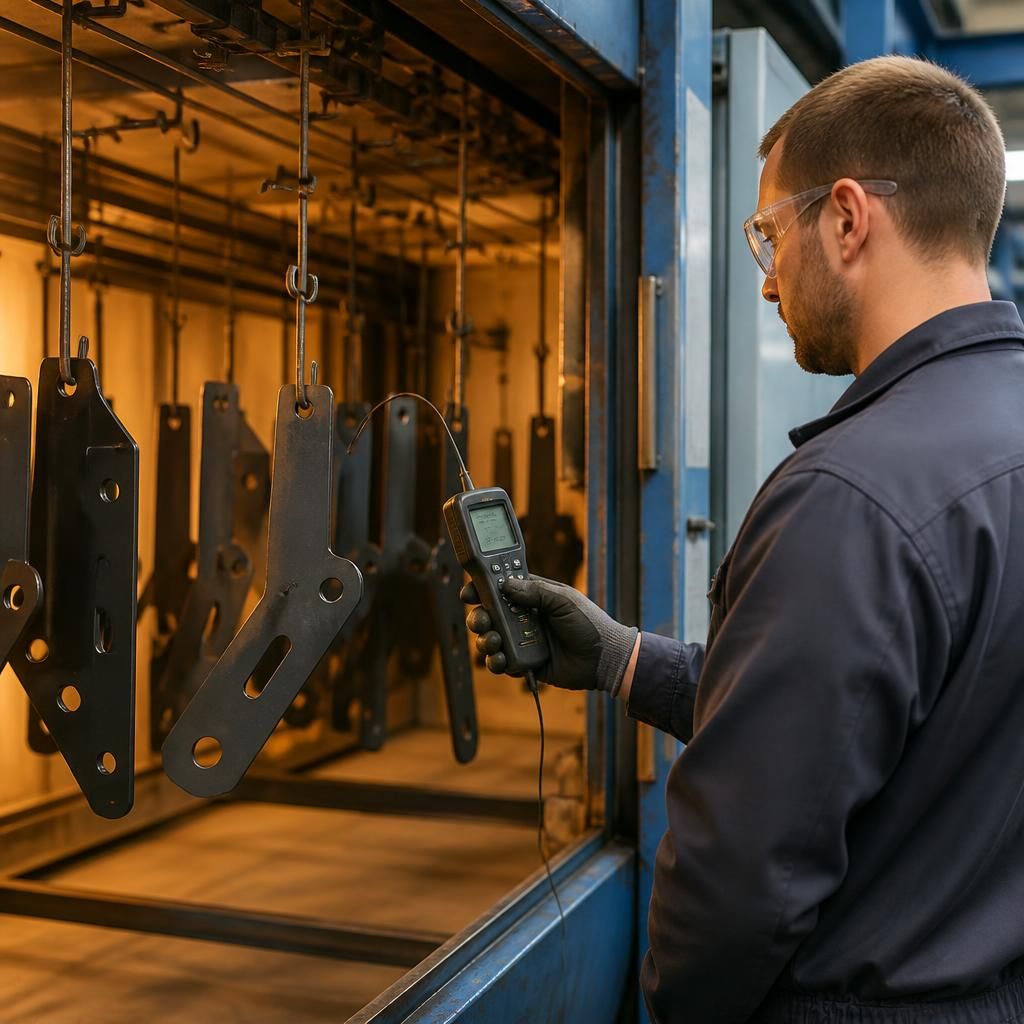
Low-temperature cure powder coatings can reduce the thermal energy required during finishing because the steel does not need to reach the same temperature as it would with a conventional cure system. The overall energy benefit depends on the oven design, loading pattern, component mass, insulation and time required to bring the steel to its specified cure condition.
For this reason, energy performance should be assessed alongside coating quality. A coating that reaches its required cure on the actual component can provide the intended durability without unnecessary heating, while under-curing may compromise adhesion, hardness and chemical resistance. Process trials and recorded metal temperatures help establish whether the selected system delivers both efficient curing and the required protection.