

How do environmental regulations affect the wrought iron sandblasting preparation process?
Environmental regulations influence how wrought iron is prepared, requiring controlled abrasive blasting to minimise dust and prevent contamination of surrounding areas. They also affect the handling, storage and disposal of spent abrasive, removed coatings and other potentially hazardous waste, so the process must be planned with suitable containment and waste controls.
Environmental regulations affect wrought iron sandblasting preparation by determining how the work is assessed, authorised, carried out and documented. In the UK, the required controls depend on the existing coating, the abrasive and equipment used, the location of the work, and whether the activity could release substances harmful to people or the environment.
The existing coating must be assessed before blasting. Older wrought iron may have been painted with products containing lead, chromium compounds, zinc or other substances requiring specific controls. The coating should therefore be identified as far as reasonably practicable before preparation begins. If its composition is uncertain, a competent assessment or suitable testing may be needed. This affects the choice of respiratory protection, enclosure, extraction, cleaning method and waste classification.
Work involving hazardous substances is generally planned under the principles of the Control of Substances Hazardous to Health Regulations (COSHH). The assessment should consider exposure to coating residues, abrasive particles and airborne contaminants, rather than treating the work as ordinary surface cleaning. It should identify who may be exposed, including blasting operatives, other workers, visitors and nearby occupants, and specify the controls required to reduce that exposure.
Environmental requirements can also affect where and how blasting takes place. A suitable setup may require an enclosed blast room, temporary sheeting, local extraction, filtered ventilation or sealed equipment, depending on the component and the coating being removed. The arrangement should prevent residues from reaching soil, drains, watercourses or adjoining work areas. Outdoor blasting is not automatically acceptable simply because the item is large; the site conditions and the risk of escape must be considered first.
Abrasive selection is partly an environmental decision. The media must be appropriate for the wrought iron and the required surface profile, but it should also be evaluated for dust generation, possible contamination and how it will be managed after use. Reusable media may reduce material consumption in a controlled installation, while a disposable medium may be more suitable for a particular contamination risk. The correct choice depends on the coating and the recovery system, not on cleaning performance alone.
Regulation may influence the blasting equipment and operating method. Enclosed systems and recovery equipment can reduce the release of fine particles, while suitable extraction and filtration help maintain controlled airflow. Nozzle pressure, blasting distance and the amount of exposed surface should be selected to remove the coating without unnecessarily damaging the iron or generating avoidable debris. Equipment should be inspected and maintained so that containment and extraction continue to work as intended.
Where the removed coating or abrasive is hazardous, the material must be kept separate from ordinary waste and handled according to its classification. The responsible business should establish:
- what material has been removed from the wrought iron;
- whether the used abrasive has become contaminated;
- how the material will be packaged and labelled;
- which records or transfer documentation are required; and
- which appropriately authorised waste route is suitable.
Waste classification should not be guessed from the appearance of the residue. A visually ordinary paint flake can require different treatment from clean spent abrasive, particularly where older coatings are involved. The party arranging disposal remains responsible for providing accurate information to the waste carrier or facility and retaining the relevant documentation.
Environmental permitting requirements may apply to certain installations or processes, particularly where activities could release emissions to air, land or water. Whether a permit, exemption or other regulatory arrangement is needed depends on the equipment, scale, site and materials involved. A professional preparation plan should confirm the applicable requirements with the relevant regulator or site authority instead of assuming that a small component or temporary setup is exempt.
Water use creates a separate consideration where wet blasting, washing or rinsing is proposed. Run-off should not be allowed to enter surface-water drainage without confirming that it is permitted and suitably controlled. Water contaminated with paint residues, metals or abrasive particles may need collection, testing or specialist disposal. Dry blasting is not automatically preferable in every case, but it can avoid creating a contaminated liquid waste stream when the process is properly contained.
Regulatory compliance also affects records and handover information. A project file may include the pre-work coating assessment, method statement, COSHH assessment, equipment checks, inspection records, waste classification, transfer notes and details of any incidents or corrective actions. These records help demonstrate that the preparation method was selected deliberately and that environmental risks were considered before work began.
For a B2B project, the customer should provide information about previous coatings, site restrictions and any known contamination. The blasting contractor should then confirm the proposed preparation method, controls, waste arrangements and any information needed before accepting the component. This is particularly important where wrought iron forms part of a larger structure or where other trades are working nearby.
In practical terms, environmental regulation does not prevent wrought iron from being sandblasted. It makes the process more controlled: the coating is assessed first, the method and abrasive are selected with contamination risks in mind, the work area and equipment are configured to contain emissions, and the resulting residues are managed through an appropriate documented route.
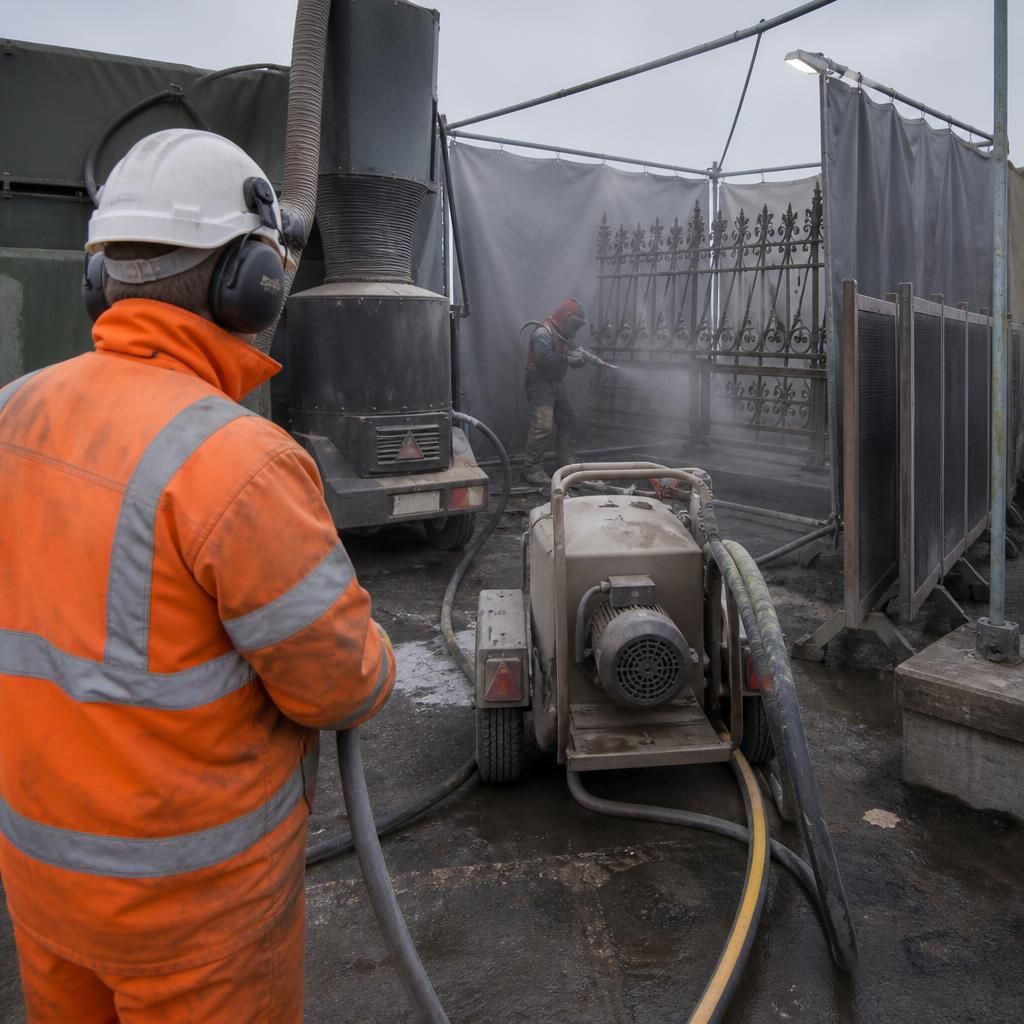
Environmental controls for wrought iron sandblasting can also include noise and nuisance management, not just dust and waste. Compressors, extraction units, recovery systems and the blasting operation itself may affect neighbouring premises, particularly where preparation is carried out on an active industrial or construction site.
This can influence the location of the equipment, the use of an enclosed blasting area, acoustic screening and the timing or sequencing of noisy activities where site rules or local authority requirements apply. A suitable method statement should consider nearby businesses, workers and members of the public, while identifying practical measures to keep noise and vibration within acceptable limits.