

What environmental considerations should be taken into account when selecting surface preparation techniques for powder coating?
Environmental considerations when selecting powder coating surface preparation techniques include chemical use, wastewater and waste disposal, abrasive consumption, energy demand and potential air emissions. The preferred method is one that achieves the required cleanliness and adhesion while minimising hazardous substances, material waste and unnecessary resource use.
The most environmentally responsible surface preparation technique is the one that delivers the required cleanliness and coating adhesion with the fewest lifecycle impacts. Selection should therefore consider the condition and material of the component, the controls needed to operate the process safely, the possibility of reusing or recycling process materials, and how preparation quality affects the service life of the finished coating.
Assess the substrate before choosing the process. A method suited to lightly contaminated steel may be unnecessary or unsuitable for aluminium, galvanised steel, castings or previously coated components. Over-processing uses resources without improving the result, while under-processing can cause coating failure and premature rework. Identifying the existing coating, corrosion level, contaminants and required surface profile helps select a proportionate treatment.
- Mechanical preparation can be appropriate where local corrosion, weld residue or old coating needs to be removed. It should be carried out with suitable containment and extraction to control dust, noise and vibration, particularly in enclosed or populated areas.
- Wet preparation can provide consistent treatment for batches, but its environmental suitability depends on controlled chemical dosing, rinse management, storage arrangements and compliant handling of residues. The process should be designed to prevent accidental releases and avoid unnecessary treatment stages.
- Thermal or specialist removal methods may be useful for certain heavily coated components, but they require careful assessment of fumes, residues, substrate distortion and the controls needed to protect surrounding air and surfaces.
Consider the whole lifecycle rather than preparation alone. A preparation method that produces a sound, well-adhered finish may have a lower overall impact than a superficially simpler method that leads to blistering, corrosion, delamination or early recoating. The specification should match the component’s exposure conditions, handling requirements and expected service life. Durable preparation can reduce the need for replacement, stripping and repeat coating over the product’s working life.
Environmental assessment should also include the site infrastructure required by each technique. Relevant questions include whether the process needs enclosed areas, extraction, bunded storage, filtration, process monitoring or specialist waste handling; whether those controls are available; and whether they can be maintained consistently. A technique is not environmentally preferable merely because it uses less of one material if it creates uncontrolled dust, contaminated surfaces or difficult-to-manage residues.
Material recovery and reuse should be considered during process selection. Where a preparation medium, rinse stream or removable coating can be segregated and recovered, this may reduce the use of virgin materials and simplify downstream handling. Segregation is important because mixed residues are generally more difficult to classify, recover or recycle. Records of material use, maintenance, collection and disposal support traceability and help identify avoidable losses.
Noise, dust and local nuisance are also environmental factors. Blasting, grinding and other mechanical processes can affect neighbouring work areas even when the resulting finish is technically acceptable. Enclosures, extraction, filtration, housekeeping and suitable scheduling within the site can reduce these effects. The chosen technique should be assessed against the surrounding premises and the potential for dust or residue to migrate beyond the preparation area.
Transport should form part of the comparison when components, preparation media or residues must travel between locations. Collection and delivery arrangements, load consolidation and the distance to specialist treatment or disposal facilities can influence the overall environmental profile. For Midlands manufacturers, fabricators, construction firms and automotive businesses, a regional provider with collection and delivery options may help simplify this assessment, although the technical suitability of the preparation method remains the primary consideration.
Before approving a process, request clear information on:
- the preparation standard and surface condition required before coating;
- the materials and auxiliary products used during preparation;
- the controls for dust, fumes, noise, spills and residue;
- how recoverable materials and unavoidable residues are separated and handled;
- the records available for process monitoring and environmental compliance; and
- how the method supports the intended durability and future maintenance of the component.
In practice, the strongest choice is rarely the technique with the lowest impact in one isolated category. It is the method that is proportionate to the substrate, controlled throughout operation, capable of producing a reliable coating foundation and supported by responsible handling of materials from preparation through to end-of-life.
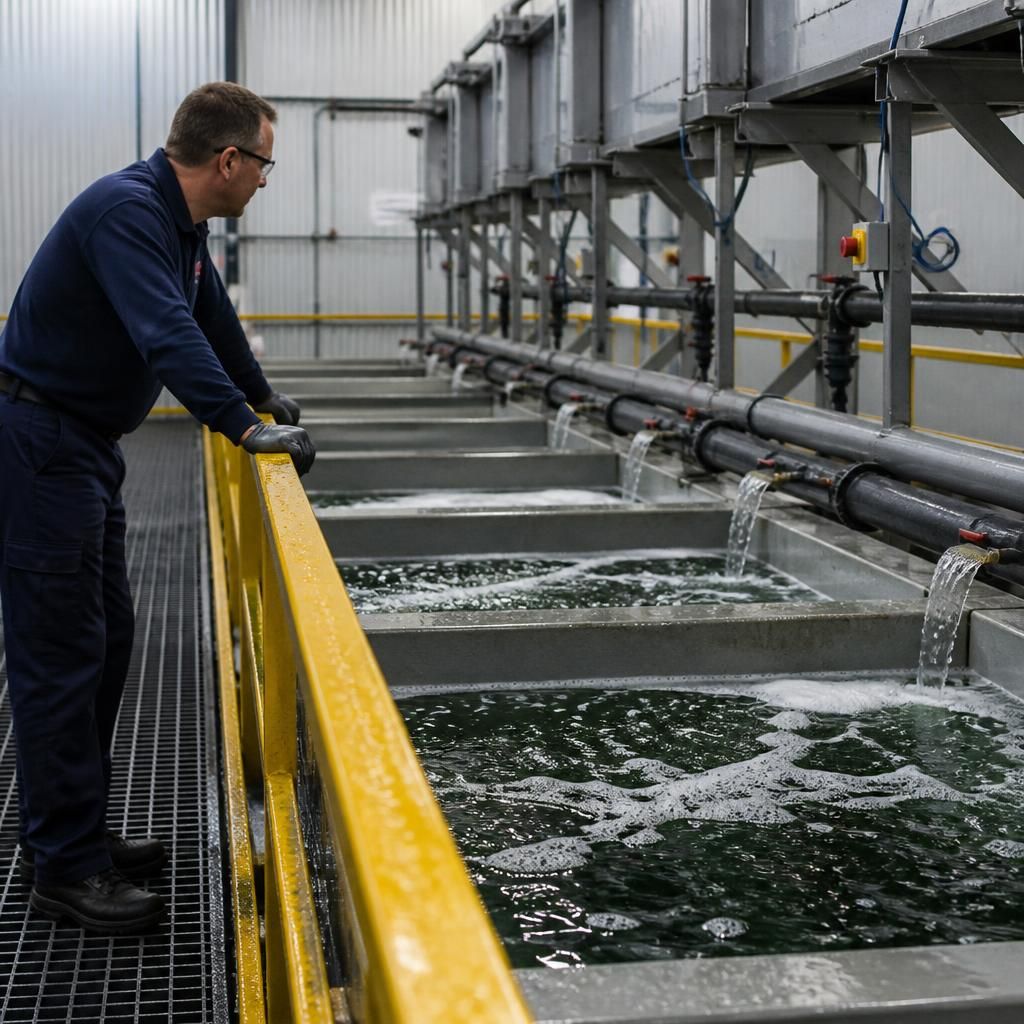
Water consumption is an important environmental consideration when comparing wet surface preparation techniques. Cleaning, rinsing and treatment stages can generate contaminated water containing oils, metal residues or process chemicals, so the assessment should consider both the volume used and the arrangements for controlling it.
Where wet preparation is selected, systems such as staged or counter-current rinsing, filtration and controlled water replacement may reduce unnecessary consumption, provided they are suitable for the required surface condition. Any opportunity to reuse process water should be evaluated alongside contamination levels and treatment requirements. Dry methods can avoid wastewater, but may transfer the environmental burden to dust extraction, filtration and solid residue handling. The most appropriate option is therefore the one that manages its main waste stream effectively rather than simply replacing one type of waste with another.