

What maintenance strategies should be implemented to ensure the longevity of zinc epoxy primer applications in industrial settings?
Maintain zinc epoxy primer applications through scheduled inspections, prompt repair of scratches or exposed metal, and removal of dirt, salts, moisture and chemical residues that can undermine the coating. Recoat areas when deterioration is identified, using compatible preparation and application methods specified for the coating system, while addressing the source of recurring corrosion or mechanical damage.
Effective maintenance of zinc epoxy primer applications combines coating-system control, environmental management, condition monitoring and disciplined repair procedures. The objective is to preserve the primer’s adhesion, zinc-based corrosion protection and compatibility with any subsequent topcoat, while preventing design or operating conditions from repeatedly damaging the protected metal.
Establish a baseline after application. Record the primer and topcoat specifications, surface-preparation standard, application conditions, dry-film thickness readings, repair locations and any areas requiring special attention. Photographs and marked-up drawings are useful for identifying welds, edges, bolted joints, lifting points and other vulnerable details. This information provides a reference for distinguishing normal ageing from new coating failure and helps ensure that future maintenance uses the same or a technically compatible system.
Control the exposure environment. Zinc epoxy coatings are affected by the conditions surrounding the component, not only by their initial application. Persistent condensation, immersion, salt deposits, process chemicals, acidic or alkaline vapours and abrasive dust can accelerate degradation. Where practical, improve drainage and ventilation, prevent water from collecting at horizontal interfaces, and shield coated parts from direct chemical discharge or repeated splash. If the operating environment changes, the coating specification should be reviewed rather than assuming that the original system remains suitable.
Give particular attention to design details. Coating breakdown commonly begins at sharp edges, cut-outs, weld spatter, crevices, incomplete welds, fasteners and contact points where application may have been uneven. During planned maintenance, check whether these details are allowing water or contaminants to remain trapped. Sealing suitable crevices, correcting poor drainage and removing weld irregularities can reduce recurrent corrosion more effectively than repeatedly applying paint over the same defect. Any design modification should preserve access for preparation and coating.
Manage mechanical damage at its source. Impacts from handling equipment, vibration, abrasion, thermal movement and contact with adjacent components can fracture a coating that is chemically sound. Use protective packing or suitable handling methods where components are moved, and review supports, clamps and contact surfaces that rub against the coating. Where damage is associated with vibration or movement, correcting the mechanical cause is necessary before carrying out a coating repair.
Maintain the complete coating system. Zinc epoxy primer is normally one layer within a specified system, so maintenance decisions must consider the intermediate and finishing coats as well as the primer. Check for loss of gloss, chalking, blistering, cracking, delamination, underfilm corrosion and changes around joints or edges. A topcoat that has deteriorated may expose the primer to conditions for which it was not intended, while applying an incompatible material can reduce adhesion or trap defects. Follow the original system documentation or obtain technical confirmation before overcoating.
Use controlled repair methods. Repairs should be limited to sound boundaries, with damaged coating removed sufficiently to provide a stable edge and a suitable surface for the repair material. The prepared area must be dry and free from residues that could interfere with adhesion. Apply the specified zinc epoxy primer at the required film build, allow the correct curing period, and reinstate any compatible intermediate or topcoat layers. Feathering the repair into sound coating and checking the finished film helps prevent a thin perimeter from becoming the next failure point.
Verify coating condition without unnecessary disruption. Non-destructive checks such as visual assessment, dry-film thickness measurement, adhesion screening where appropriate and holiday detection for relevant systems can provide useful evidence of performance. The method should suit the substrate, coating thickness and service environment; unsuitable testing can damage an otherwise sound finish. Results should be recorded by component or area, alongside the defect type and likely cause, so maintenance priorities are based on degradation patterns rather than appearance alone.
Manage interfaces and dissimilar metals. Bolted joints, weld zones and connections between different metals can create localised corrosion risks if moisture, electrical contact or incompatible materials are present. Confirm that joint sealing, isolation components and coating continuity remain intact. Pay attention to areas where the zinc-rich primer may be covered, removed or electrically isolated, because its protective action depends on the formulation and the way the coating system is applied to the metal.
Keep maintenance decisions evidence-based. Define condition categories, escalation points and responsibilities in the asset maintenance plan. Minor cosmetic changes may require recording and observation, whereas blistering, exposed substrate, underfilm corrosion, widespread adhesion loss or contamination from an aggressive process may require a wider engineering review. Trend records by asset and location to identify recurring problems, then adjust cleaning methods, handling controls, drainage, sealing or the coating specification where appropriate.
For industrial assets with demanding exposure, the most reliable approach is therefore lifecycle management rather than periodic repainting alone: preserve the surrounding conditions, protect vulnerable details, verify the coating system, and correct the physical or chemical cause of deterioration before renewing the finish.
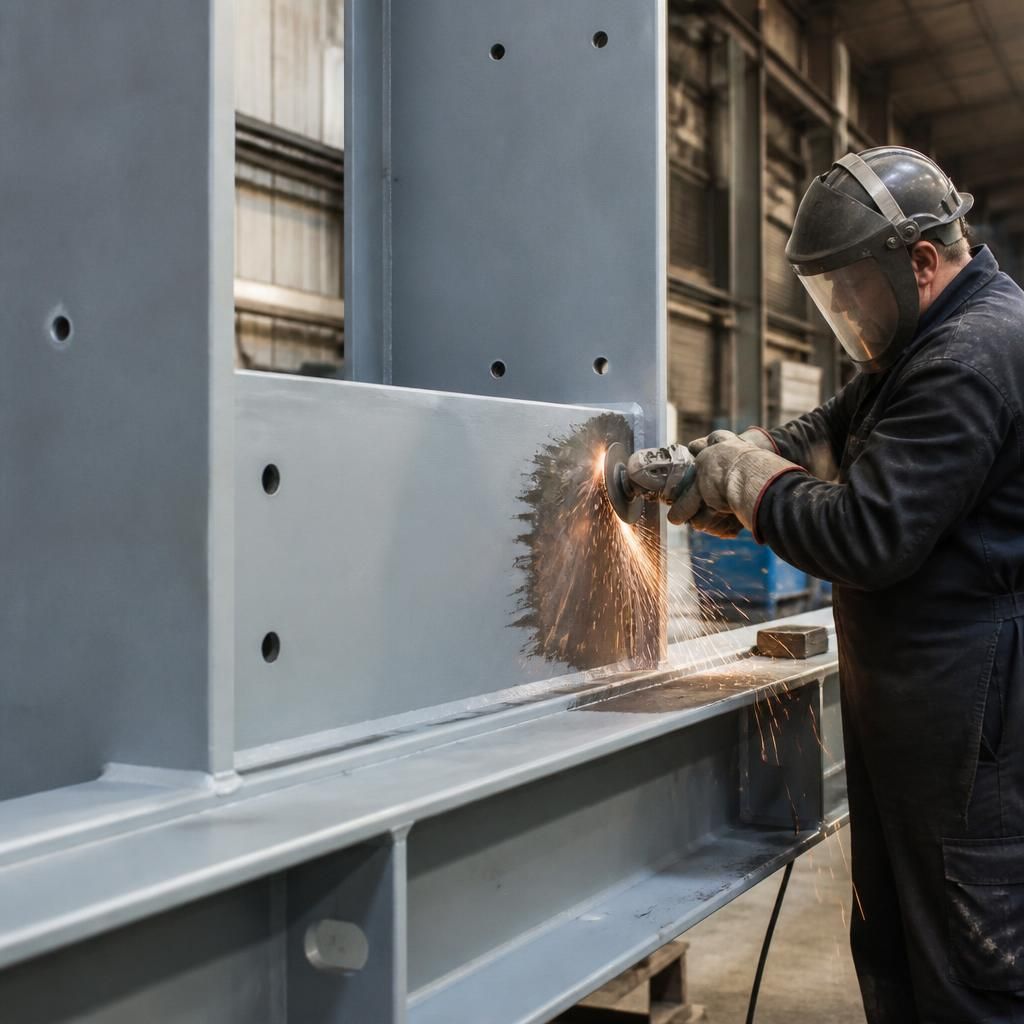
Longevity maintenance also depends on controlling work carried out around coated components. Welding, cutting, grinding, drilling, lifting and installation activities can burn, abrade or contaminate zinc epoxy primer even when the coating itself is suitable for the service environment.
Before adjoining work begins, identify coated areas that need protection or temporary removal in line with the relevant work and coating procedures. Use suitable covers, masking and handling controls to limit sparks, debris, impact and contact with tools. After the work, remove residues, inspect the affected area and repair any damaged coating before the component returns to service. This prevents routine plant activities from creating isolated defects that can develop into broader corrosion points.
Discuss Zinc Epoxy Primer Maintenance for Your Industrial Components
For practical advice on maintaining or renewing zinc epoxy primer applications, discuss your component requirements with Powder-coatings.co.uk. Their industrial powder coating team can help assess the required preparation, repair and compatible finishing approach for your metalwork.