

Are there specific anti-corrosion coatings that enhance the longevity of steel under high-temperature conditions?
Yes. Steel exposed to elevated temperatures can be protected with high-temperature powder coatings or specialist heat-resistant protective systems, selected according to the continuous and peak operating temperatures, corrosion exposure and required finish. Correct surface preparation and application are essential for the coating to remain effective in service.
Specific high-temperature coating systems can extend the service life of steel by limiting oxidation, moisture ingress and chemical attack when ordinary anti-corrosion coatings would soften, blister or lose adhesion. The appropriate choice depends on the steel’s actual surface temperature, the surrounding atmosphere and whether the component experiences continuous heat, repeated heating and cooling, or short peak-temperature exposure.
Common high-temperature options include:
- Silicone-resin coatings: Silicone-modified systems retain flexibility and adhesion at temperatures that can damage conventional epoxy or polyester coatings. They are commonly considered for heated housings, exhaust-related components, process equipment and other steelwork exposed to dry heat.
- Inorganic or ceramic-based coatings: These systems can provide strong resistance to oxidation, abrasion and chemical exposure at elevated temperatures. They are often selected where the coating must remain stable in demanding industrial environments, although application and curing requirements need careful control.
- Aluminium-pigmented heat-resistant coatings: Aluminium pigmentation can help protect steel from oxidation and may reflect some radiant heat. These finishes are used where a metallic appearance and resistance to dry heat are required, subject to the coating manufacturer’s temperature and service limitations.
- Specialist high-temperature powder coatings: Certain powder formulations, including silicone-modified systems, are designed for applications where powder application is preferred. They can offer a consistent, durable finish, but the specified temperature range must be checked rather than assumed from the fact that the coating is powder applied.
Temperature capability is not determined by the coating name alone. A system may have one limit for continuous exposure and another for short-term peaks. Its performance can also change in the presence of steam, salt, acids, solvents, combustion gases or abrasive particles. A coating suitable for dry heat may therefore be unsuitable inside a process vessel, near a flue, or in a humid area that repeatedly cools below the dew point.
Thermal cycling is a particularly important consideration. Steel expands as it heats and contracts as it cools, while the coating may respond at a different rate. Repeated cycling can create internal stress, microcracking, loss of adhesion and pathways for corrosion. A system selected for a component that remains hot may not be the best choice for one that is frequently switched on and off. The design temperature profile should include normal operating temperature, start-up and shutdown conditions, accidental overheating and the duration of each exposure.
Surface preparation remains fundamental. Steel should be free from mill scale, rust, oil, salts and other contaminants before coating. The required preparation method and surface profile depend on the coating system. If an existing coating is present, its adhesion and compatibility must be assessed rather than simply overcoated. Any weld spatter, sharp edges, crevices or areas where water can collect may require particular attention because they can become early points of coating breakdown.
For steel exposed to severe corrosion as well as heat, a single decorative heat-resistant layer may not provide sufficient protection. A compatible primer and topcoat arrangement, or a specialised multi-layer system, may be more appropriate. However, not every conventional anti-corrosion primer can withstand elevated temperatures, and some systems lose adhesion or release degradation products when overheated. Compatibility between layers, the substrate and the operating environment should be confirmed in the technical documentation.
High-temperature coatings also need to be matched to the way the steel is used. Key questions include:
- What are the minimum, normal, maximum and accidental surface temperatures?
- Is the exposure continuous, cyclic or intermittent?
- Will the steel encounter water, condensation, salt, chemicals, fumes or abrasive dust?
- Is corrosion expected beneath insulation, around joints or in areas with restricted drainage?
- Will the finished part be exposed to impact, friction or handling after coating?
- Does the specified finish need to retain colour, gloss or a particular appearance at operating temperature?
Application conditions matter as much as the selected formulation. Coating thickness, curing temperature, curing time and handling before full cure must follow the system specification. Excessive thickness can increase stress during thermal cycling, while insufficient coverage can leave steel vulnerable at edges and recesses. Where powder coating is used, the part must be able to tolerate the required bake cycle, and the coating process must achieve an even cure across different section thicknesses.
Inspection should focus on adhesion, coverage, edge protection, pinholes, blisters, cracking and areas showing early oxidation or discolouration. Any damage should be repaired with a compatible high-temperature product after removing loose coating and corrosion. If the component operates in a particularly aggressive environment, the coating specification should be reviewed alongside the equipment’s operating conditions rather than relying only on visual appearance.
For a steel component requiring a durable finish, a coating specialist can assess the temperature profile, corrosion exposure, preparation standard and production method before recommending a suitable system. Powder-coating services for industrial components can include consideration of specialist heat-resistant finishes where the part’s dimensions, material and intended service conditions make them appropriate.
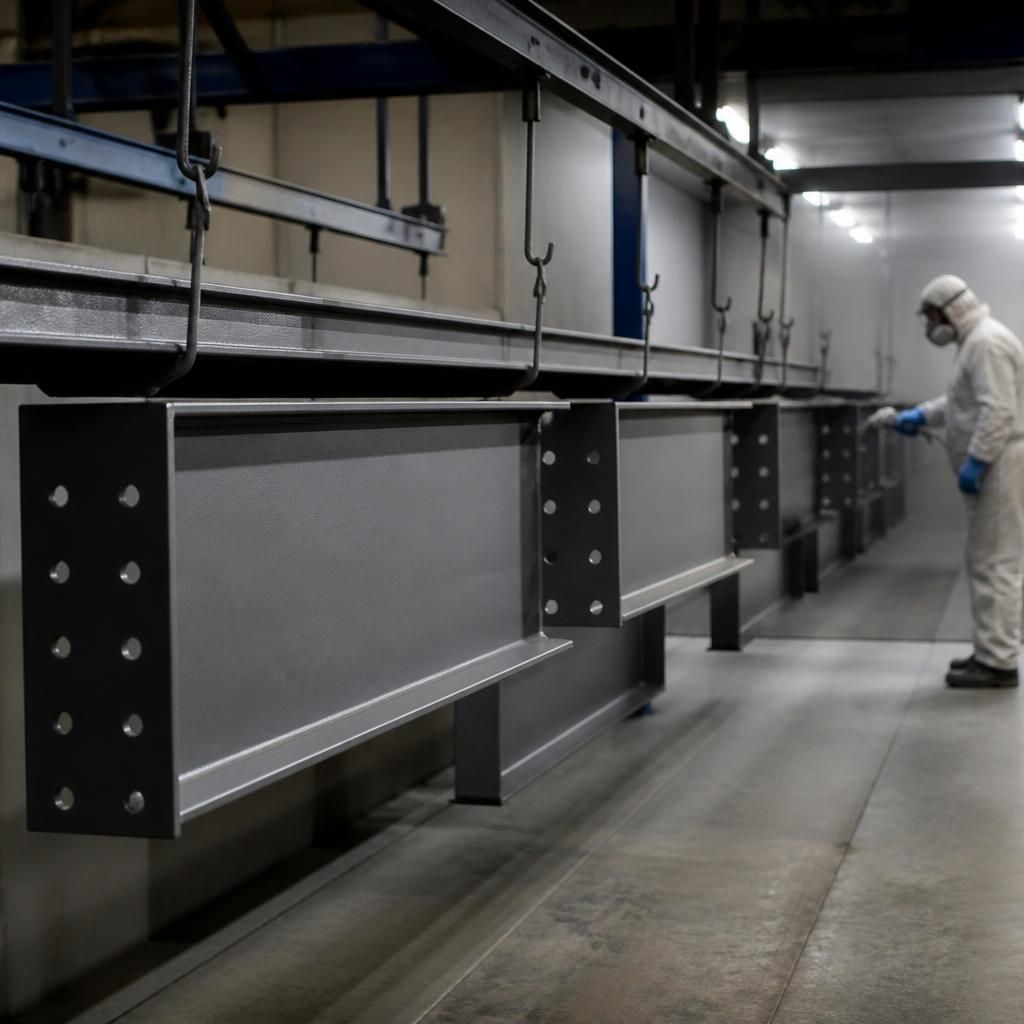
High-temperature anti-corrosion coatings protect steel from the effects of heat; they do not reduce the steel’s operating temperature. Where equipment requires temperature control, the coating specification should therefore be considered separately from insulation, ventilation or other thermal-management measures.
This distinction is important because a coating can remain intact at an elevated dry temperature while still being unsuitable for areas exposed to condensation, immersion or chemical deposits. The selected system should be assessed against the complete service conditions, not temperature resistance alone, with technical data confirming its suitability for the intended steel component.
Discuss High-Temperature Anti-Corrosion Coatings for Steel
For guidance on selecting a suitable high-temperature anti-corrosion coating, discuss your steel component’s operating conditions, exposure and finish requirements with a coating specialist. This helps establish whether a specialist powder coating or another protective system is appropriate.