

How does the RAL 2000 powder coating process ensure that aluminium components maintain their aesthetic appeal and structural integrity in challenging environments?
RAL 2000 powder coating helps aluminium components retain their colour and finish by forming a uniform, cured protective layer over correctly prepared surfaces. The coating also acts as a barrier against moisture, corrosion and everyday environmental exposure, helping preserve the aluminium’s underlying structural performance in demanding applications.
RAL 2000 powder coating helps aluminium components retain their appearance and service performance in challenging environments through controlled preparation, accurate application and complete curing. The process is not simply the application of colour: each stage is managed to create consistent coverage while avoiding defects that could expose the aluminium or interfere with the component’s intended use.
Surface preparation is the first protection against premature failure. Aluminium naturally develops an oxide layer, and components may also carry oil, dirt, fabrication residue or handling contamination. These substances can prevent the powder from bonding evenly. Cleaning and suitable pre-treatment provide a sound surface for the coating, helping reduce risks such as poor adhesion, lifting, blistering and uneven appearance. Welds, edges, recesses and drilled areas require particular attention because contamination or insufficient coverage in these locations can become a weak point in service.
The condition of the component is also assessed before coating. Sharp edges, weld spatter, burrs and surface imperfections may remain visible through a decorative finish, while damage or distortion can affect how the part is coated and assembled. Correcting suitable defects before application supports a more uniform RAL 2000 finish and prevents the coating process from being expected to compensate for underlying fabrication problems.
Powder application is controlled to achieve an even film over the component. The powder is applied electrostatically, allowing charged particles to be attracted to the earthed aluminium surface. Application settings, gun movement, component geometry and part positioning all influence the result. Complex shapes may require adjustments to reduce thin areas in recesses and excessive build-up on corners. Consistent coverage is important both for the visual quality of the yellow-orange RAL 2000 shade and for maintaining a continuous protective finish.
Film thickness must be appropriate to the component, its geometry and the intended environment. Too little coating can reduce coverage and make the substrate more vulnerable at exposed points; excessive build-up can affect appearance, edge definition, fit and the behaviour of assembled parts. Thickness is therefore considered alongside tolerances, threaded features, mating faces and any areas that must remain uncoated. Masking or other process controls can protect these functional surfaces where required.
Curing converts the applied powder into a continuous coating. The aluminium component is heated according to the powder system’s requirements so that the particles flow, level and chemically cure. Correct cure depends on the metal reaching the required temperature for the necessary time, rather than simply on the oven temperature. Load arrangement, component mass and section thickness can affect heat transfer, so these factors are considered when establishing the process. Inadequate curing may leave the finish lacking the expected mechanical and environmental resistance, while unsuitable heat exposure may be inappropriate for certain assemblies or materials.
Maintaining the component’s structural integrity also involves controlling the process around the aluminium itself. Coating does not repair cracks, weak welds, severe corrosion or metal that has already been distorted. These conditions need to be identified during specification and inspection. Where the component contains inserts, seals, bearings or other heat-sensitive parts, the coating route must account for them before processing. This helps prevent avoidable damage and ensures that the finished part remains suitable for its intended assembly and service conditions.
Visual and process checks help identify problems before coated parts are released. Depending on the project requirements, checks may include:
- uniformity of colour, gloss and surface texture across the component or batch;
- coverage at edges, corners, recesses and other difficult areas;
- visible defects such as pinholes, runs, craters, inclusions or contamination;
- film thickness in representative locations;
- adhesion and cure-related performance where specified by the coating requirement; and
- protection of masked, threaded or dimensional interfaces.
Handling after curing is another important part of preserving the finish. Aluminium components can be marked by unsuitable contact, stacking or packaging even when the coating itself has cured correctly. Appropriate handling and separation reduce the risk of scratches, impact damage and pressure marks before installation. During design and specification, the likely exposure should also be considered: outdoor location, moisture, pollutants, abrasion, cleaning methods and contact with other materials can all influence the coating requirement.
In practice, the most reliable result comes from treating RAL 2000 powder coating as a complete process rather than a colour choice alone. Sound aluminium, suitable preparation, controlled deposition, correctly managed curing and inspection work together to preserve the component’s visual consistency and protect the condition of its underlying structure in demanding applications.
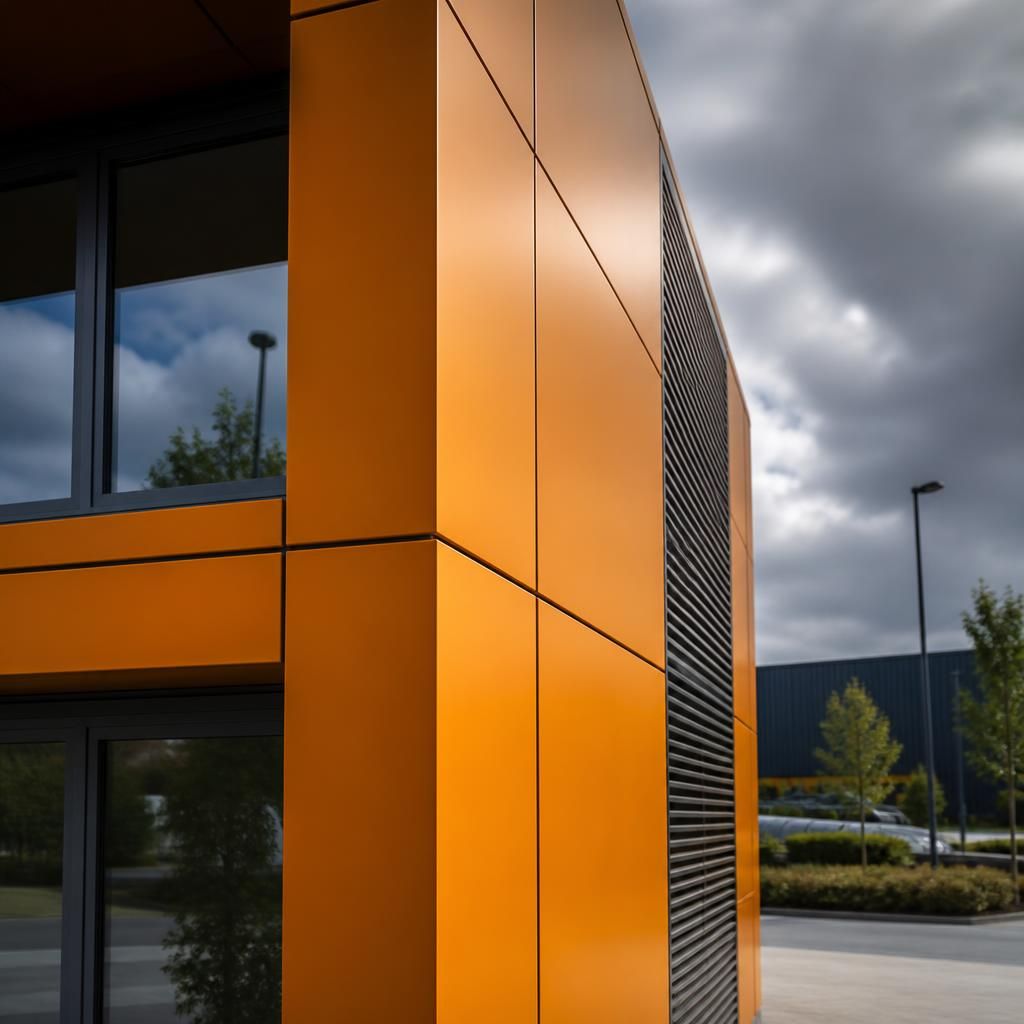
RAL 2000 identifies the colour shade, but it does not by itself define how the coating will perform outdoors. To preserve the yellow-orange appearance of aluminium in challenging environments, the powder system must be selected for the expected exposure, including ultraviolet light, moisture, atmospheric pollutants and cleaning activity. An exterior-suitable formulation can help limit colour change, gloss loss and surface chalking over the component’s service life.
This distinction is important when appearance is part of the component’s function. A coating may remain attached to the aluminium while its colour or gloss changes if the system is unsuitable for prolonged environmental exposure. The specification should therefore consider the location, expected service conditions and required visual consistency, rather than treating RAL 2000 as a complete performance specification. Where components are installed as part of a visible façade, enclosure or equipment assembly, matching the coating’s environmental capability to the application helps protect both its appearance and the condition of the aluminium beneath it.