

What should be considered for the impact resistance and chemical resilience of RAL 1018 powder coated aluminium in diverse industrial applications?
The impact resistance and chemical resilience of RAL 1018 powder coated aluminium depend on the aluminium alloy, surface preparation, coating specification, film thickness, curing and the conditions of use. Assess likely impacts, abrasion, temperatures, cleaning agents, solvents, oils and other chemicals before selecting the powder system and confirming its suitability for the intended industrial environment.
RAL 1018 powder coated aluminium can provide effective impact protection and chemical resilience when the coating system is matched to the service environment and the component is designed to avoid concentrated damage. The RAL designation identifies the yellow colour, but it does not define the coating’s mechanical or chemical performance. Those properties depend on the powder formulation, the intended use and the severity and duration of exposure.
Impact resistance should be assessed by considering how the component will be handled and used. A broad, low-energy contact may have little effect, whereas a sharp impact from a tool, fastener, pallet or moving component can chip or fracture the film. Particular attention is needed around corners, narrow edges, holes and projecting features, where force is concentrated over a small area. Components that may be struck should therefore avoid unnecessarily sharp geometry and should not rely on the coating alone to absorb heavy mechanical loads.
Impact performance is also affected by what happens after the initial contact. A small chip can expose the aluminium beneath, allowing moisture or contaminants to reach the substrate. Repeated knocks can enlarge the damaged area, while rubbing or sliding contact may gradually wear the finish rather than cause one visible impact mark. For parts subject to handling, transport or contact with other metalwork, the assessment should cover both single-impact damage and cumulative abrasion.
Where impact is a foreseeable risk, the proposed finish should be supported by relevant coating test data rather than colour selection alone. A suitable test may examine resistance to a controlled impact, while additional abrasion or scratch testing can be more representative for components that experience repeated contact. Test results should be interpreted alongside the actual component shape and use, because laboratory performance does not automatically predict behaviour under every site condition.
Chemical resilience depends on the substance, its concentration, temperature, contact time and method of exposure. Mild, brief contact may be acceptable for a coating that is not suitable for prolonged immersion or repeated chemical cleaning. Acids, alkalis, solvents, oils, fuels, detergents, disinfectants and process residues can affect a powder finish in different ways. Possible effects include softening, swelling, gloss change, staining, loss of adhesion or gradual breakdown of the coating film.
- Identify every substance likely to contact the component, including cleaning products and residues rather than only the principal process chemical.
- Establish whether contact will be occasional splashing, repeated wiping, pooling, condensation or continuous immersion.
- Consider the operating temperature, because elevated heat can increase the rate at which some chemicals affect the finish.
- Check whether chemicals can become concentrated as water evaporates from the surface.
- Assess whether deposits will be removed promptly or allowed to remain on the coating.
Compatibility should be confirmed using technical information for the proposed coating system and, where the exposure is unusual or commercially important, representative sample testing. The test should use the actual chemical or a properly specified substitute, at the expected concentration and temperature, for a period that reflects the intended service. Inspection should look beyond colour change and include blistering, softening, adhesion loss, surface tackiness and changes in gloss or texture.
The surrounding design can determine whether an otherwise suitable finish performs well. Drainage should prevent liquids from collecting in recesses, joints and horizontal ledges. Seals, gaskets and adjacent materials should also be checked, since a chemical that is tolerated by the powder coating may affect another component and create a route for contamination. Where aluminium parts are assembled with dissimilar metals, the joint should be arranged to limit trapped moisture and unwanted electrochemical effects.
Cleaning practice is part of chemical resilience. A compatible detergent, suitable application method and thorough rinsing are generally preferable to aggressive solvents or abrasive tools. Unidentified cleaners should not be trialled on visible finished work. A small, inconspicuous test area can reveal staining or softening before a full cleaning procedure is adopted, but it should not replace technical confirmation for demanding exposure.
Inspection should concentrate on early signs of damage: chips, scratches, whitening, blistering, loss of gloss, staining and areas where the finish feels softer than surrounding surfaces. Damage should be recorded with its likely cause and location. If aluminium is exposed, the appropriate repair or replacement decision should be made promptly, based on the component’s function and the surrounding environment. Touch-up materials may not reproduce the original appearance or performance exactly, so they should be selected as part of a defined repair procedure rather than treated as a universal solution.
For procurement and production, the specification should identify the required colour and appearance separately from the required resistance. It should describe the expected impact, abrasion and chemical exposures, the acceptance criteria, any sample or test-panel requirement and the information to be supplied with the finished components. This prevents RAL 1018 being treated as a performance grade and gives the applicator enough information to assess whether the proposed finish is appropriate.
For industrial aluminium components, the most reliable assessment combines the real exposure profile with coating data, representative testing and a review of component design. If the part faces frequent impacts, abrasive handling or aggressive chemicals, a standard decorative specification may be insufficient; the coating system should be selected specifically for those stresses before production work is approved.
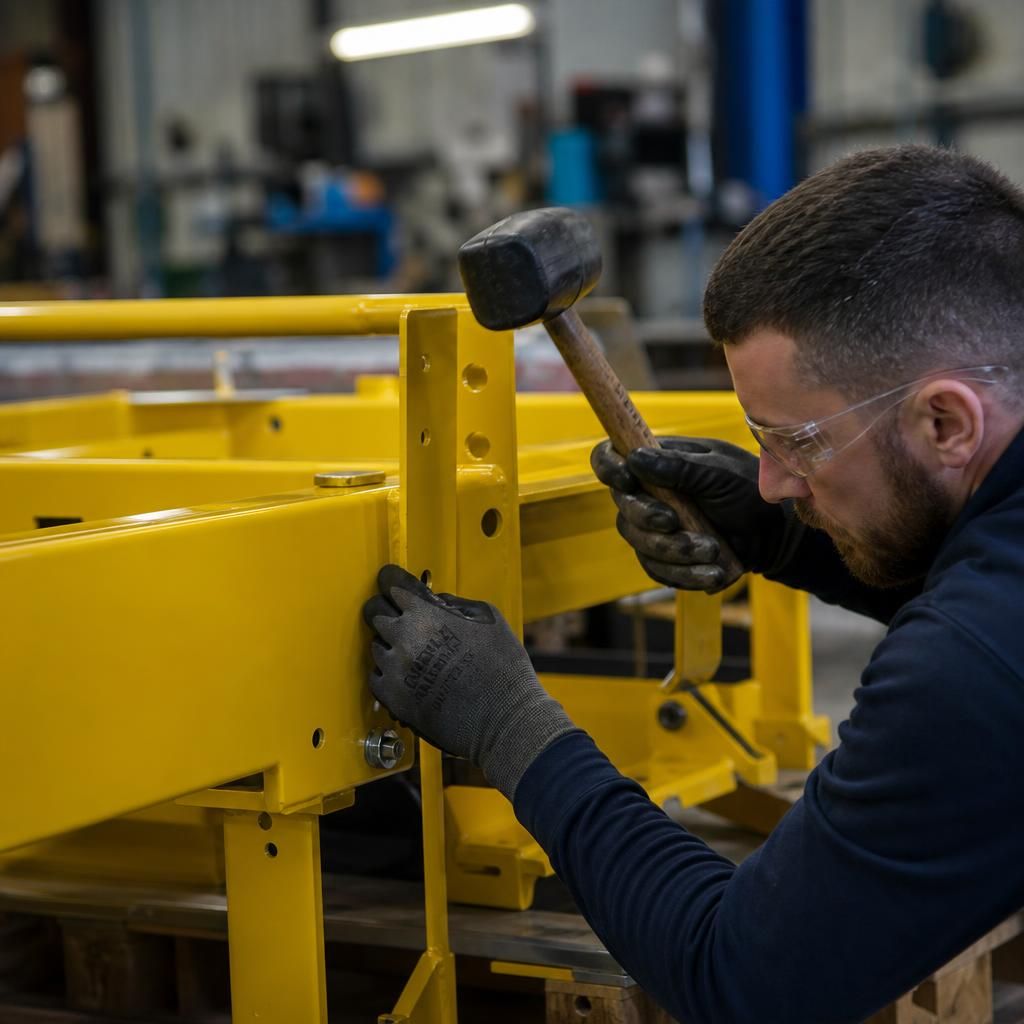
Impact resistance should not be judged by coating hardness alone. A very hard powder film may resist indentation and scratching yet crack when the aluminium beneath it flexes during handling or service. Conversely, a more flexible system may accommodate minor movement but offer less protection against sharp abrasion. The suitable balance depends on the aluminium alloy, component thickness, fixing method and type of contact expected.
Assess whether the finished part is likely to flex, vibrate or experience local deflection. Areas around fasteners, brackets and unsupported panels can place the coating under strain even when the external force is moderate. The specification should therefore consider flexibility and adhesion alongside impact results, with testing carried out on representative formed or assembled sections where movement is part of normal use.