

What are the key maintenance practices that should be followed after applying RAL 9007 powder coating to ensure optimal performance and longevity?
After applying RAL 9007 powder coating, maintain the finish by cleaning aluminium surfaces with clean water, a mild pH-neutral detergent and a soft cloth, while avoiding abrasive pads, aggressive chemicals and high-pressure cleaning directed at edges or joints. Inspect regularly for scratches, chips, corrosion or coating separation, then address damage promptly and keep drainage points, fixings and contact areas free from trapped dirt and moisture.
Long-term performance of RAL 9007 powder coating on aluminium depends on more than routine washing. The finish should be supported by a planned maintenance regime covering handling, installation, exposure control, mechanical damage, repairs and record keeping. These measures help preserve the coating’s appearance and maintain the protection it provides to the aluminium substrate.
Establish a maintenance baseline
Record the condition of the coated components when they are installed or first placed into service. Note the visible colour, gloss, texture, coating coverage and condition of edges, apertures and assembled joints. This gives future inspections a reliable comparison point and makes it easier to distinguish normal weathering from new damage.
The inspection schedule should reflect the component’s environment rather than relying on a universal interval. Aluminium exposed to coastal air, industrial pollutants, road spray, construction dust or persistent condensation generally requires closer observation than a component in a clean, sheltered setting. Roof-level, façade, external plant and frequently handled items may also need different inspection arrangements.
Protect the coating during handling and installation
Powder coating can be damaged by dragging, stacking, sharp supports and abrasive packaging even when the aluminium itself is not visibly distorted. Use clean, non-abrasive separators and avoid placing coated faces directly against rough surfaces. Components should be lifted rather than pulled across floors, benches or transport beds, with particular care taken around corners and projecting edges.
Protective films, pads or wrapping used during transport should be suitable for coated metal and removed in accordance with the coater or material supplier’s guidance. Trapped moisture, adhesive residue and heat beneath unsuitable coverings can affect the finish. Do not leave packaging, labels or temporary tapes in place longer than necessary.
Prevent damage during site work
Cutting, drilling, grinding, welding and other fabrication activities should be completed before coating wherever the design allows. If site modification is unavoidable, shield nearby coated areas from sparks, swarf, dust and tools. Newly exposed aluminium or cut edges should not be left untreated where they could admit moisture or contaminants; the appropriate edge treatment and repair method should be confirmed for the coating system and application.
Do not use the coated surface as a work platform, earthing point or support for heavy tools. Prevent contact with uncured sealants, wet cement, mortar, plaster, bituminous materials and other construction products that may stain or attack the finish. Any spill should be dealt with using the coating supplier’s approved method rather than an untested solvent.
Control mechanical and chemical exposure
Where components are subject to repeated impact, rubbing or contact with moving parts, review the design rather than relying on the coating to absorb continual abrasion. Add suitable buffers, liners, guards or clearance where practical. Pay attention to hinges, sliding interfaces, clamp points and areas where grit can become trapped between contacting surfaces.
Keep the finish away from direct contact with incompatible metals, particularly where moisture can remain between the surfaces. Suitable isolation washers, sleeves, sealants or spacers can reduce the risk of galvanic interaction and prevent localised damage to the coating. Fasteners and accessories should be selected for the service environment, and any damaged protective treatment on them should be addressed separately.
Manage water, condensation and drainage
Good component design and installation are part of coating maintenance. Ensure that profiles are not installed in a way that creates unintended water traps, blocked outlets or areas where wet debris remains against the coating. Check that seals, caps and joints continue to direct water away from vulnerable interfaces. Where condensation is possible, maintain ventilation and avoid arrangements that keep the rear of the aluminium continuously damp.
Changes to surrounding structures can also affect exposure. New plant, cladding, barriers or landscaping may redirect water, dust or chemical deposits towards previously sheltered coated surfaces, so these changes should trigger a review of the maintenance plan.
Repair coating damage using a controlled method
Small chips, gouges and exposed edges should be assessed according to their size, location and cause. A repair should remove loose material, deal with any substrate contamination or corrosion, prepare the surrounding coating carefully and use a compatible repair system. The repair product should be checked for adhesion, colour, gloss, texture and suitability for aluminium and the relevant exposure conditions.
Do not assume that a generic touch-up aerosol will reproduce RAL 9007 accurately. Metallic shades can vary in appearance with application method, orientation, film build and lighting, so a local repair may remain visible even when the nominal colour reference is the same. For prominent or extensive damage, obtain advice from the original coating provider or a suitably qualified repair specialist. If damage repeatedly occurs in one location, correct the underlying handling, design or contact problem instead of repeatedly patching the surface.
Keep maintenance records
Document inspections, identified defects, cleaning or repair work, products used and any changes to the component’s environment. Photographs and location references are useful for tracking whether a mark is isolated or developing across a wider area. Records also help coordinate maintenance where coated aluminium forms part of a larger façade, enclosure, vehicle, machine or fabricated assembly.
For specialist, large or safety-critical components, maintenance should follow the coating system specification and any instructions supplied for the particular application. When the coating shows widespread blistering, loss of adhesion, unusual colour change, recurring corrosion or damage extending beneath the visible surface, seek a technical assessment rather than applying another surface treatment over the defect.
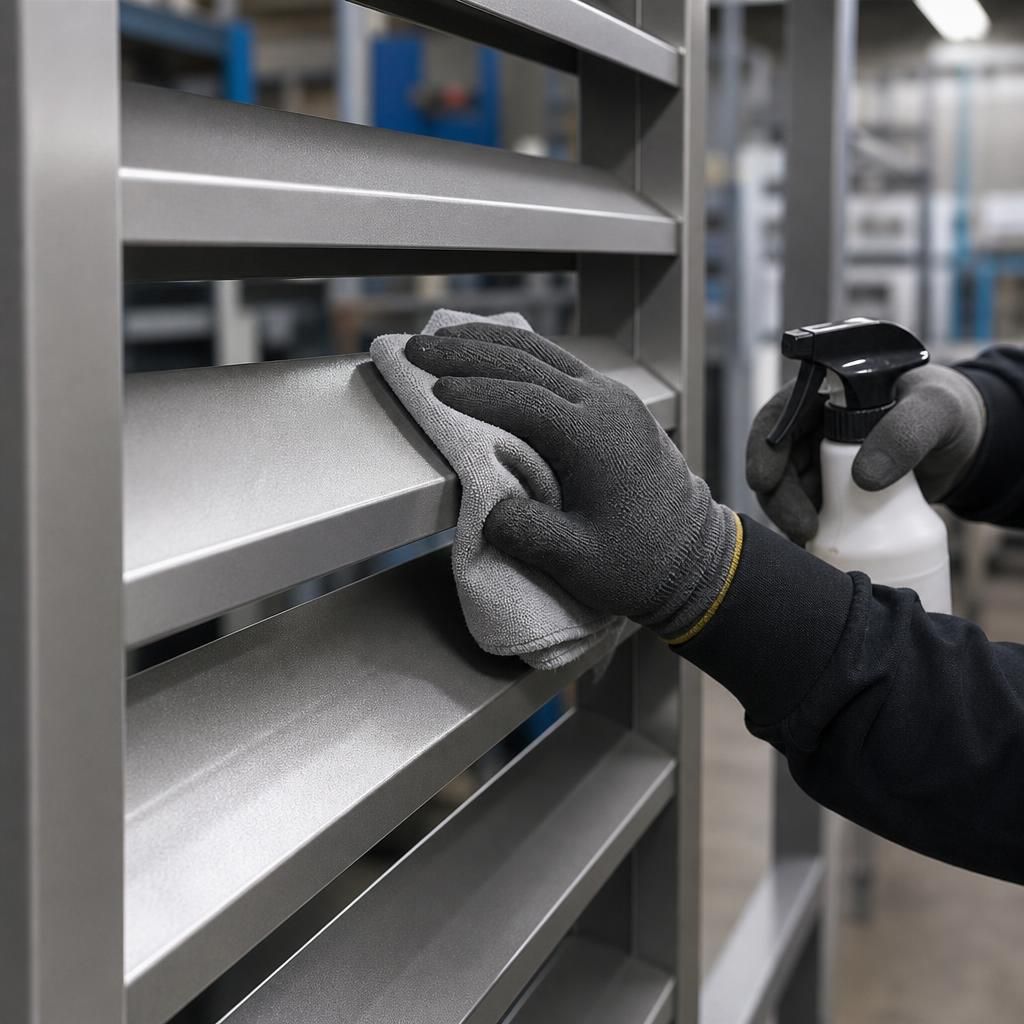
Routine cleaning should remove deposits without creating new surface damage. Begin with a gentle rinse to lift loose dust, then work in manageable sections using a clean, soft cloth and a diluted pH-neutral detergent. Rinse thoroughly so detergent residue does not dry onto the metallic finish, and dry the surface with a soft, non-abrasive material where water spotting could occur.
- Use fresh cleaning materials rather than cloths that may contain grit or metal particles.
- Test any unfamiliar cleaning product on a small, less visible area before treating the full component.
- Stop if the finish changes in colour, gloss or texture, and obtain guidance before continuing.