

What are the best practices for storing and handling filler primers to maintain their quality before application to metal components?
Store filler primers in their original, tightly sealed containers in a cool, dry, well-ventilated area, protected from direct sunlight, moisture and temperature extremes. Before application, check the product data sheet and safety data sheet, confirm the material is within its stated shelf life, and handle it carefully to avoid contamination or changes in consistency.
Best practice for storing and handling filler primers is to preserve the material’s identity, consistency and cleanliness from receipt to application. This requires controlled stock rotation, careful inspection of containers, clean dispensing equipment and preparation methods that follow the primer’s technical requirements rather than relying on assumptions about similar products.
Control the stock before it is opened. Record the product name, batch or lot reference, date received and intended coating system. Use stock in an appropriate rotation sequence and keep different products, colours, grades and components clearly separated. Any container with a damaged closure, leakage, swelling, corrosion, unreadable identification or other signs of deterioration should be placed in quarantine until its condition has been assessed. Do not combine material from different batches merely to simplify handling, as this can make traceability and investigation of application problems more difficult.
Keep containers closed until preparation begins. Opening a container unnecessarily increases the risk of airborne dust, moisture, fibres and other contaminants entering the primer. Before removing a closure, clean the outside of the container so loose dirt cannot fall into the material. Use clean, compatible tools and containers for measuring, stirring and transfer; equipment previously used for other coatings, solvents or curing agents can introduce contamination or cause an unwanted reaction.
Prepare the primer according to its product type. If the filler primer contains settled solids, use the mixing method specified in its product documentation to restore an even consistency. Mixing should be sufficient to disperse the material without unnecessarily incorporating air or creating foam. Do not add thinner, solvent, hardener or other additive unless the manufacturer’s instructions specifically permit it. For two-component products, keep the components identified and separate until mixing, use the stated ratio and observe the permitted working life after combination. Material that has exceeded its usable working life should not be returned to the original container or used on production parts.
When transferring primer, use a clean, labelled working container with a secure cover. Pour only the quantity needed for the immediate operation and avoid returning unused material to the original container, because even a small amount of contaminated or partially reacted material can affect the remaining supply. Close the source container promptly after dispensing and clean spills using a method suitable for that coating system. Never use an unlabelled secondary container, even for temporary storage.
Prevent cross-contamination during handling. Keep filler primer away from dust-generating work, grinding debris, metal swarf, water and incompatible chemicals. Use dedicated or thoroughly cleaned stirrers, pumps, hoses, spray equipment and measuring vessels where practicable. Do not place lids, tools or closures directly on dirty benches, and do not use material that contains visible skin, gel particles, foreign matter or unexplained lumps without first obtaining technical guidance.
For powder-form primer materials, avoid crushing or compacting the powder and use clean, dry handling equipment. Excessive agitation or rough transfer can create dust and may alter how the material feeds or charges during application. For liquid or paste products, protect the material from unnecessary agitation and keep the container closed between transfers. The correct approach depends on the formulation, so the product’s technical instructions take precedence over general handling practice.
Allow material and equipment to reach suitable working conditions before use. Sudden changes in material condition can affect viscosity, flow, atomisation, film build and the ability of the primer to level over the metal component. If condensation is possible, do not open or use a container until its contents and exterior are suitable for the working environment. Any adjustment needed to achieve application viscosity or consistency should be made only by the documented method for that specific primer.
Handling should also be controlled as part of the site’s coating procedure. Use the required protective equipment and ventilation, prevent exposure to skin and eyes, and manage spills and waste in accordance with the relevant safety information and workplace controls. Keep a record of batch references, preparation, mixing and any permitted adjustments. These records help link the filler primer to the finished component and make it easier to identify whether a coating defect arose from the material, preparation, application or subsequent curing process.
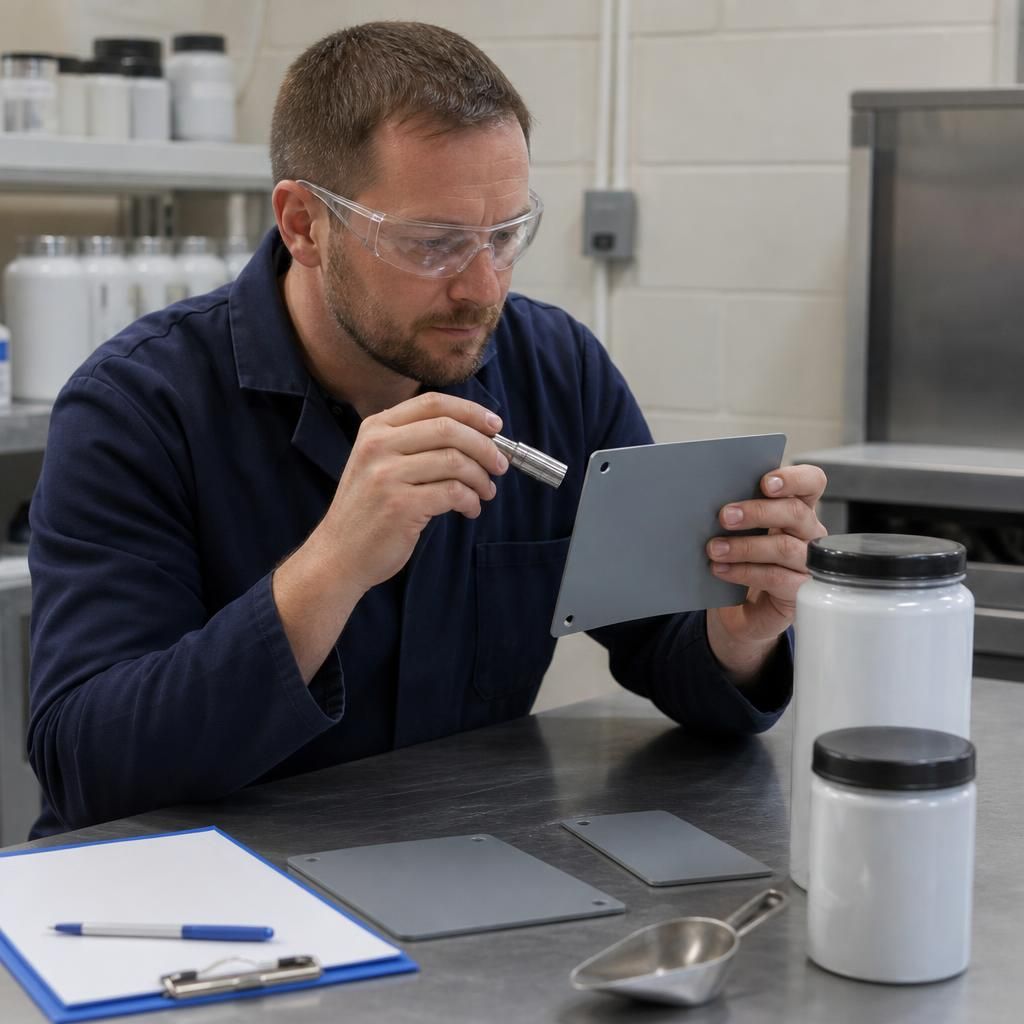
A final release check should take place after storage and before the filler primer is issued for production. Confirm that the material still matches its documented appearance and consistency, and investigate any unexplained change rather than assuming it will correct itself during application. Shelf life alone does not confirm that a product remains suitable if its container has been exposed to unsuitable conditions or mishandled.
Where the product documentation or site quality procedure requires it, assess a retained sample or carry out a controlled trial on a representative prepared metal component. Check the resulting film for defects such as abnormal flow, pinholes, cratering or poor uniformity, and record the batch reference with the result. If the material behaves differently from the approved standard, hold it for technical assessment instead of releasing it to the coating line.
Discuss Filler Primer Requirements for Your Components
Discuss your metal components, coating system and filler primer requirements with the powder-coating.co.uk team to establish suitable preparation, handling and application controls. Collection and delivery options are available for businesses across the Midlands and surrounding areas.