

How do nylon coatings contribute to reducing the total cost of ownership for metal components in industrial applications?
Nylon coatings can reduce the total cost of ownership of metal components by providing a durable, low-friction barrier against wear, impact, corrosion and chemical exposure. By extending component service life and reducing maintenance, replacement and associated production-disruption costs, they can make the overall lifecycle cost lower than relying on uncoated metal alone.
Nylon coatings contribute to a lower total cost of ownership by changing the cost profile of a metal component across its complete service life, rather than focusing only on the initial coating price. The assessment should include preparation and application, installation, operating performance, inspection, planned maintenance, unplanned stoppages, replacement parts and disposal.
Lower replacement frequency is only one part of the calculation. A coated component may also reduce the indirect costs associated with sourcing a replacement, removing the original part, fitting the new one, checking alignment and returning equipment to service. In production environments, these activities can require engineering, maintenance and purchasing resources even when the replacement component itself is relatively inexpensive.
Nylon can also reduce the need to specify a heavier or more complex metal component purely to withstand contact conditions. Where the coating provides suitable resistance to sliding contact, abrasion or impact, the underlying component may be designed around its structural function rather than being over-engineered for surface wear. This must be verified against the actual load, temperature, chemical exposure and contact arrangement; a coating is not a substitute for adequate substrate strength.
The financial benefit is particularly relevant where components are difficult to access. Parts located inside processing equipment, guarding systems, conveyor assemblies or vehicle-related equipment may involve considerable labour to inspect or remove. A coating that helps the component retain its required surface condition can make planned intervention easier to schedule and reduce the amount of associated dismantling.
Cost of ownership should also account for process consistency. A professionally applied coating can provide a controlled finish across repeated batches, supporting more predictable assembly and reducing the risk of individual parts requiring rework. Consistent coating thickness, appropriate masking and sound adhesion are important because excess material may affect clearances, while insufficient or poorly bonded material can shorten service life and create additional remedial work.
- Preparation: cleaning, preparation of the metal and removal of contaminants establish the foundation for adhesion and should be included in the initial project cost.
- Application: coating selection, thickness, masking and curing requirements affect dimensional accuracy, compatibility and the suitability of the finished part for its intended duty.
- Installation: coated surfaces may need to be checked against shafts, fasteners, bearings, seals or mating components before assembly.
- Service management: inspection should focus on local damage, exposed substrate, edge lifting and changes in the contact surface rather than treating the coating as maintenance-free.
- Renewal or disposal: the eventual cost of recoating, stripping or replacing the component should be considered when comparing alternative surface treatments.
Nylon coatings may also help control the cost associated with product quality. A damaged or unsuitable metal surface can contribute to marking, scoring or contamination in processes where components contact finished goods or intermediate materials. If the coating is selected for the relevant operating environment and applied to the required specification, it can support a more stable contact surface. The commercial value comes from avoiding process defects and investigation work, not simply from the presence of a coating.
The most reliable comparison is therefore between complete lifecycle scenarios. For an uncoated part, the calculation may include more frequent intervention, replacement stock, access equipment, engineering time and production consequences. For a nylon-coated part, it should include coating preparation, application, inspection and any limits on temperature, load or chemical exposure. Comparing only the purchase price of the two parts can give a misleading result.
Before specifying the treatment, assess the component’s contact pressure, movement, abrasive media, impact pattern, operating temperature, cleaning chemicals, dimensional tolerances and expected loading. These factors determine whether nylon is technically appropriate and whether the coating can deliver a sound economic case. A coating that is unsuitable for the duty may create premature repair costs, whereas a correctly specified system can make expenditure more predictable over the component’s working life.
For B2B projects, this evaluation can be supported by reviewing drawings, batch requirements and the consequences of component failure with the coating provider. Powder-coating specialists serving manufacturers, fabricators, construction firms and automotive businesses can advise on preparation, masking and finish requirements for metal parts, helping the purchaser compare application cost with the wider operational costs that the treatment is intended to control.
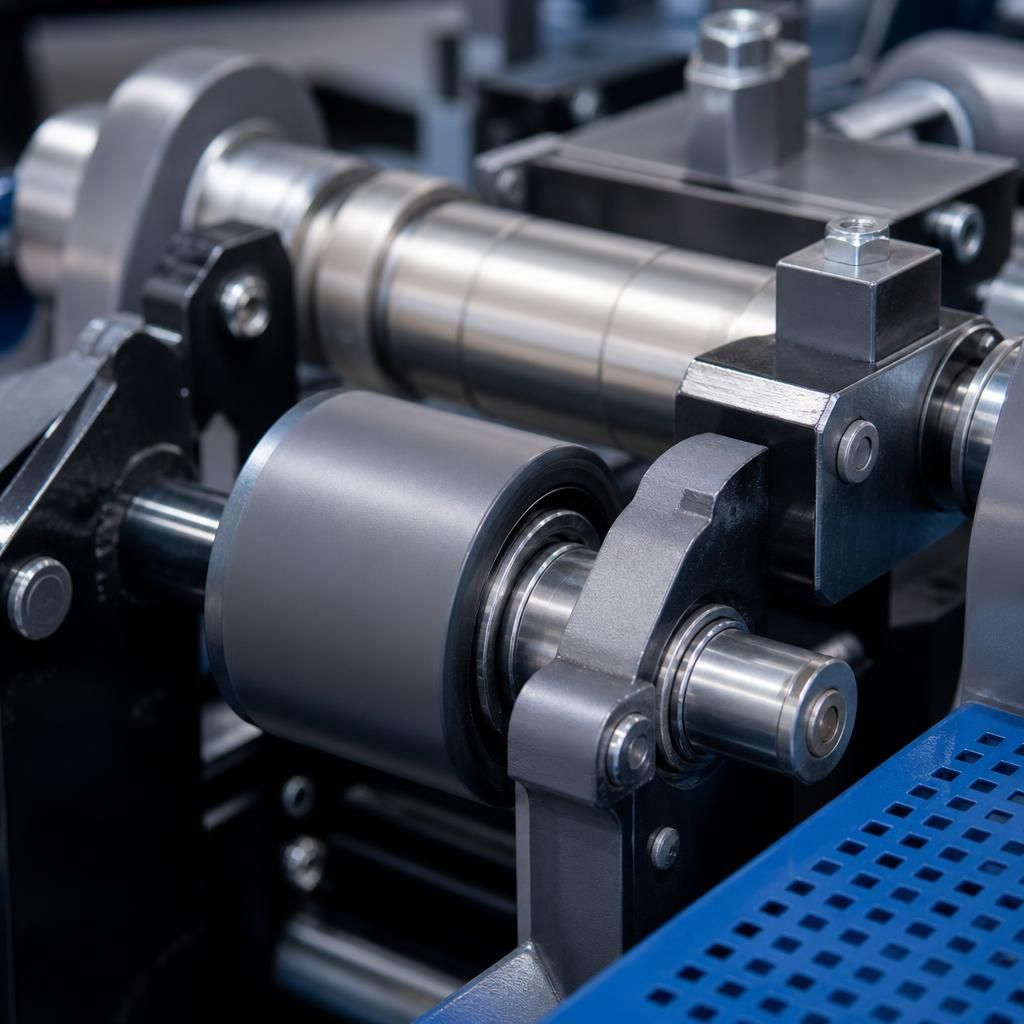
Low friction is another way nylon coatings can influence the total cost of ownership of moving metal components. Where a coated surface forms part of a sliding or contacting arrangement, it may reduce resistance between mating surfaces, helping to limit heat generation, surface damage and the mechanical effort required to operate the equipment.
The potential cost benefit depends on the component’s load, speed, contact geometry and lubrication regime. Reduced resistance may support more stable operation and lessen stress on associated parts, but it should be assessed as part of the complete assembly rather than assumed from the coating alone. Reviewing these conditions during specification helps determine whether the coating offers an operating-cost benefit in addition to its surface protection.
Assess Nylon Coatings for Your Metal Components
Review your component drawings, operating conditions and batch requirements with a nylon coating specialist to establish whether the treatment is technically and economically suitable. This assessment can help you compare the coating cost with the wider lifecycle costs of the uncoated alternative.