

What are the most critical maintenance practices to ensure the longevity and effectiveness of epoxy primer coats on metal substrates?
Maintain epoxy primer coats by inspecting them regularly for cracking, blistering, peeling, corrosion or mechanical damage, and by keeping the surface clean and dry. Remove contaminants using suitable non-abrasive methods, address coating damage promptly, limit exposure to incompatible chemicals and follow the coating manufacturer’s guidance for repairs or recoating.
Maintaining an epoxy primer coat involves controlling the conditions around the coated metal, managing mechanical and environmental stresses, and preserving the continuity of the complete coating system. The primer is not maintained effectively by appearance checks alone: its performance depends on sound interfaces, adequate protection from service conditions and correctly managed repairs when the surrounding system changes.
Establish a maintenance baseline. Record the coating system used, substrate type, preparation standard, primer and subsequent coat details, application date, curing conditions and the areas most exposed to wear. Photographs and marked-up drawings can identify welds, edges, bolt heads, joints, recesses and drainage points that require closer attention. This information allows later changes to be compared with the original condition rather than judged subjectively.
Assess the coating according to its service environment. A primer on an internal machine frame is exposed to different stresses from one on external structural steel, a vehicle component or equipment used in a chemically aggressive area. Maintenance planning should consider humidity, condensation, immersion, salt-laden air, process vapours, temperature cycling, impact, vibration and contact with abrasive materials. Areas exposed to repeated wetting or trapped moisture require particular attention to design details that prevent water remaining against the coating.
Control water retention at interfaces. Epoxy protection can be undermined where water collects behind brackets, around poorly sealed joints or beneath damaged jointing materials. During planned maintenance, check that drainage paths remain clear and that altered components have not created crevices or horizontal ledges. Where the wider assembly allows it, improving drainage and sealing compatible joints can reduce the load placed on the primer. Sealants should not be applied over an unprepared, friable or contaminated coating, because this can conceal deterioration rather than resolve it.
Protect high-stress areas from mechanical loading. Lifting points, access panels, fasteners, sliding contacts and areas subject to repeated impact often deteriorate before broad, undisturbed surfaces. Review how components are handled, assembled and supported. Use suitable padding during transport and avoid dragging coated parts across hard surfaces. If service modifications introduce drilling, cutting, welding or grinding, the exposed metal and the surrounding heat-affected area need to be incorporated into a properly specified repair rather than left as an isolated bare patch.
Pay particular attention to edges and transitions. Sharp edges, weld profiles, corners and changes in section place greater demands on coating continuity. These locations can have thinner coverage and are more vulnerable to impact and corrosion initiation. Maintenance records should identify them as control points, especially where a primer forms part of a multi-layer system. Any local repair should blend into the sound surrounding coating and restore the intended layer sequence, rather than simply applying a small amount of material over the visible defect.
Manage the complete coating system, not the primer in isolation. Epoxy primers are frequently overcoated with powder or another protective finish. The upper layer provides important resistance to weathering, abrasion and service exposure, while the primer supports adhesion and corrosion protection. If the topcoat becomes thin, porous, detached or incompatible with a proposed repair material, applying more primer on top may not be the correct solution. Recoating decisions should take account of intercoat adhesion, surface profile, curing history and the compatibility of every layer.
Use controlled repair procedures. A repair should define the limits of removal, the method of preparing exposed metal and the required overlap onto sound coating. Loose material must be removed without spreading damage, and the prepared area should be free from residues before new coating is applied. Application conditions matter during repair: substrate temperature, condensation risk, humidity, ventilation, film thickness and curing time can all affect the result. Small repairs should be allowed to cure fully before the component is returned to service or covered by another layer.
Verify repairs rather than relying only on visual appearance. Depending on the asset and risk level, useful checks may include dry-film thickness measurements, adhesion testing, holiday or discontinuity testing, and examination of repaired edges for lifting. The appropriate method depends on the coating construction and substrate; some tests can themselves damage the finish and therefore need to be planned. Record test locations and results so recurring weaknesses can be distinguished from isolated defects.
Review the maintenance data periodically. Repeated defects in the same location usually indicate an underlying cause such as poor drainage, movement, inadequate edge coverage, impact during handling or exposure beyond the system’s design conditions. Correcting that cause is more effective than repeatedly touching up the same area. A useful maintenance record links each repair to its location, probable cause, preparation method, materials used, curing conditions and any follow-up result.
For industrial metalwork, the most effective approach is therefore a documented, condition-based programme: preserve the coating system’s continuity, reduce moisture and mechanical stresses, control modifications, verify repairs and use recurring defects to improve the asset or its operating practices. This maintains the protective function of the epoxy primer while avoiding repairs that merely conceal deterioration.
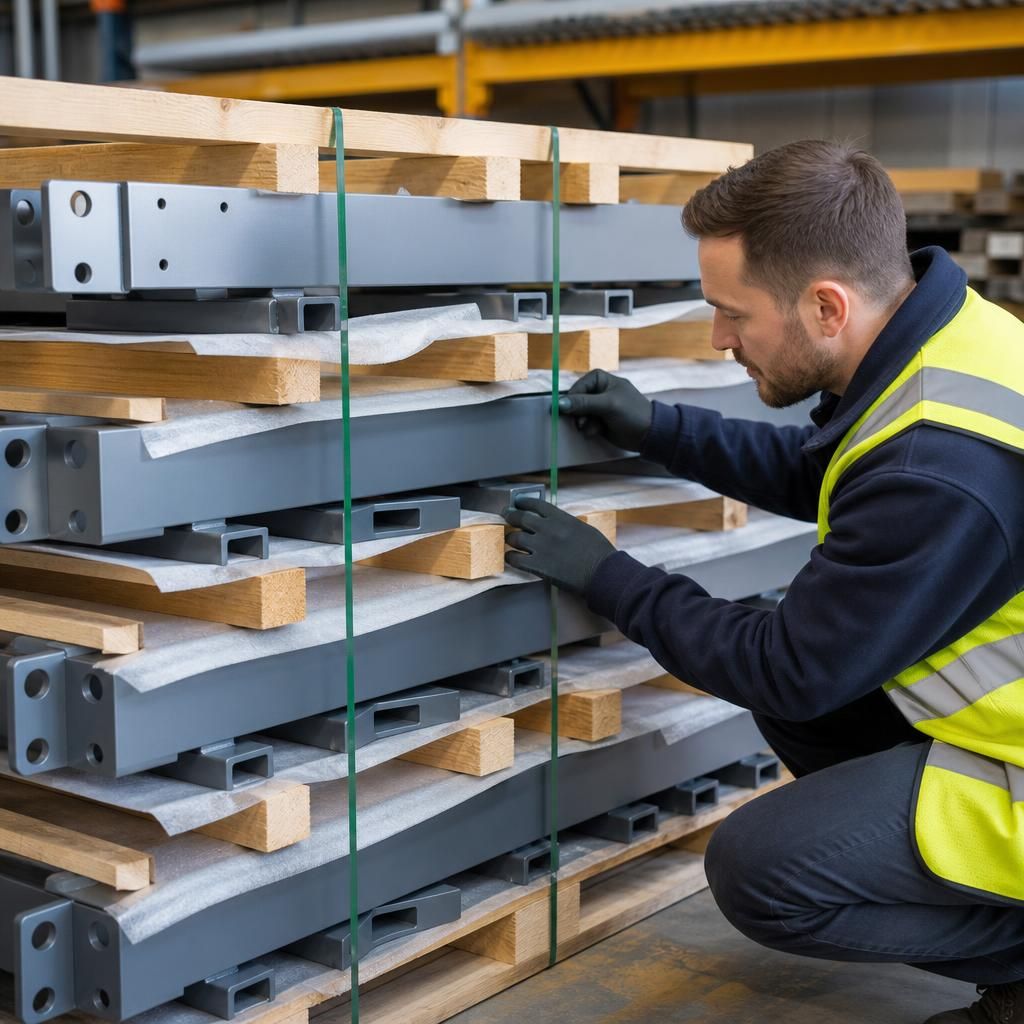
Storage and transport conditions are part of epoxy primer maintenance, particularly for coated components that are not installed immediately. Keep parts separated from one another and support them without creating concentrated pressure points, as stacking and contact can mark or abrade the coating. Packaging should prevent handling damage while allowing moisture to escape; wrapping a cool component in an impermeable material can trap condensation against the primer.
Inspect coated parts after unpacking and before installation. Look for rub marks, pressure damage, condensation staining and areas where protective packaging has remained damp. Surface moisture should be removed using a method that will not scratch or chemically attack the coating, while any exposed metal or damaged coating should be assessed before the component enters service. Good storage and handling practices prevent defects being introduced after application and mistaken for failures of the primer itself.