

What are the long-term benefits and potential limitations of choosing powder coating for electrical insulation over traditional insulation methods?
Powder coating can provide durable, uniform electrical insulation with strong resistance to abrasion, corrosion and environmental exposure, potentially reducing maintenance over a component’s service life compared with some traditional methods. Its limitations include the need for suitable heat-tolerant substrates, carefully controlled coating thickness and curing, restricted access to enclosed or recessed areas, and more complex repair or removal if the coating is damaged.
Over a component’s service life, powder coating can provide a stable electrical barrier with consistent coverage, reduced dependence on separate insulating parts and a finish that remains integrated with the metal substrate. Compared with traditional methods such as insulating tapes, sleeves, varnishes, liquid paints or moulded components, its main long-term advantages are repeatable application, resistance to handling damage and the ability to combine insulation with a protective surface finish. The limitations arise mainly from part geometry, electrical design requirements, process control, repairability and the need to verify that the selected coating remains suitable for the component’s operating conditions.
Long-term electrical performance
When correctly specified and applied, a powder-coated surface can maintain separation between conductive metal areas and help prevent unwanted current paths. Because the coating is applied as a continuous film rather than assembled from overlapping tapes or fitted sleeves, there are fewer joints, seams or loose edges that could become points of weakness during handling and service.
This can be useful for metal enclosures, brackets, busbar supports, motor and transformer components, electrical cabinets and other fabricated parts where the insulation must remain attached to the component. The coating may also reduce the need to accommodate separate insulating pieces in the design, provided that required clearances, creepage distances, contact points and voltage requirements are fully assessed.
Traditional methods can still be appropriate where insulation must be flexible, removable or added after assembly. However, their long-term performance may depend more heavily on correct fitting, adhesive condition, mechanical restraint and protection against displacement. Powder coating removes some of those assembly variables, but only where the component can be coated successfully and the finished film meets the relevant electrical specification.
Consistency across production batches
For repeat manufacturing, powder coating offers a controlled production method. The powder type, application settings, masking arrangement and curing schedule can be documented and reproduced for subsequent batches. This supports more consistent insulation coverage than manually wrapping parts with tape or applying a liquid coating by hand, where operator technique can influence overlap, thickness and edge finish.
Repeatability is particularly valuable when coated parts are assembled into standardised electrical products. A defined coating process can make inspection easier because the same areas, contact zones and exclusion points are treated in the same way each time. It can also simplify quality records and help identify whether a deviation arose during preparation, application, curing or final assembly.
Protection of the underlying metal
Electrical insulation is not the only consideration. A suitable powder coating can also protect the metal from handling marks, moisture-related deterioration and contamination that could affect the component’s wider service condition. Keeping the substrate in good condition can support reliable fit and electrical separation over time, particularly where exposed metal would otherwise become marked or contaminated.
This combined function can be more efficient than using one product for insulation and a separate treatment for surface protection. It does not mean that every powder formulation provides the same level of environmental or chemical protection. The coating must be selected according to the substrate, operating temperature, cleaning regime, chemicals, moisture exposure and expected mechanical contact.
Potential production and design benefits
- Powder coating can combine a functional insulating layer with a finished appearance, avoiding a separate decorative treatment where the specification allows.
- It can reduce the number of separate insulating components required in some assemblies, which may simplify parts lists and fitting operations.
- It is suitable for repeatable processing of batches of metal components, subject to the size, shape and preparation requirements of the parts.
- Powder application produces a dry film as part of a defined finishing process, avoiding the handling issues associated with wet coatings during their drying stage.
These benefits should be assessed across the complete production route rather than by comparing coating price with the price of an individual sleeve or tape. Masking, pre-treatment, inspection, testing, transport, assembly tolerances and any required rework all affect the practical result.
Dimensional and assembly limitations
A coating adds material to the surface of a component. Even a controlled film can affect the fit of close-tolerance parts, the insertion of fasteners, the seating of joints or the alignment of mating surfaces. Areas intended for earthing, electrical contact or bolted connection may need to remain free from coating, while other areas may require defined insulation coverage. These requirements should be shown clearly on drawings and agreed before production.
Masking also creates a boundary between coated and uncoated areas. If that boundary falls in a mechanically exposed or electrically sensitive position, the design may require additional protection or a revised manufacturing sequence. A powder-coated component is therefore not automatically insulated in every location; the functional zones must be specified and inspected.
Geometry and access constraints
Powder coating is most predictable when the component presents surfaces that can be prepared, sprayed and inspected in a controlled manner. Deep internal features, narrow gaps, sharp transitions, threaded sections and complex assemblies can make it difficult to achieve the intended film distribution without affecting fit or masking requirements.
Traditional insulation can be more adaptable for certain awkward shapes. A sleeve may be fitted over a cable or bar after manufacture, and a liquid insulating material may be brushed or dispensed onto a small local area. Conversely, those methods can introduce seams, variable application or dependence on separate components. The correct comparison is therefore based on the component’s geometry and service function, not on the coating method alone.
Inspection, testing and compliance
Long-term suitability cannot be established by appearance alone. The specification should identify the required dielectric performance, film characteristics, temperature capability, chemical resistance and environmental exposure. Depending on the component and its use, checks may include visual inspection, coating coverage, adhesion, dimensional verification and electrical testing.
Electrical safety also depends on the complete design. Coating cannot compensate for inadequate creepage or clearance, unsuitable earthing arrangements, poor joints, contamination or excessive operating stress. Where the component forms part of a regulated product, the powder system and process should be assessed against the applicable product standards and the manufacturer’s technical requirements.
Repair, modification and end-of-life considerations
A powder-coated part is generally treated as a finished component rather than a surface that can be adjusted repeatedly during installation. Drilling, grinding, cutting or modifying the metal can remove insulation locally and may require a controlled repair or a replacement part. This is different from some tape or sleeve systems, which can be removed and refitted during maintenance.
Future maintenance should therefore be considered at the design stage. Areas likely to require access, testing, earthing or adjustment should be identified before coating. Any repair method must restore the required electrical separation and should not introduce an unverified patch that behaves differently from the original coating.
Overall assessment
Powder coating is most advantageous when a manufacturer needs repeatable insulation integrated with a metal component, a defined production process and protection that remains part of the finished surface. Traditional insulation may remain preferable where flexibility, field replacement, post-assembly application or access to complex shapes is more important than an integrated finish. The decision should be based on the component’s electrical duty, geometry, tolerances, operating environment, inspection requirements and expected maintenance route, with the coating specification validated before full-scale production.
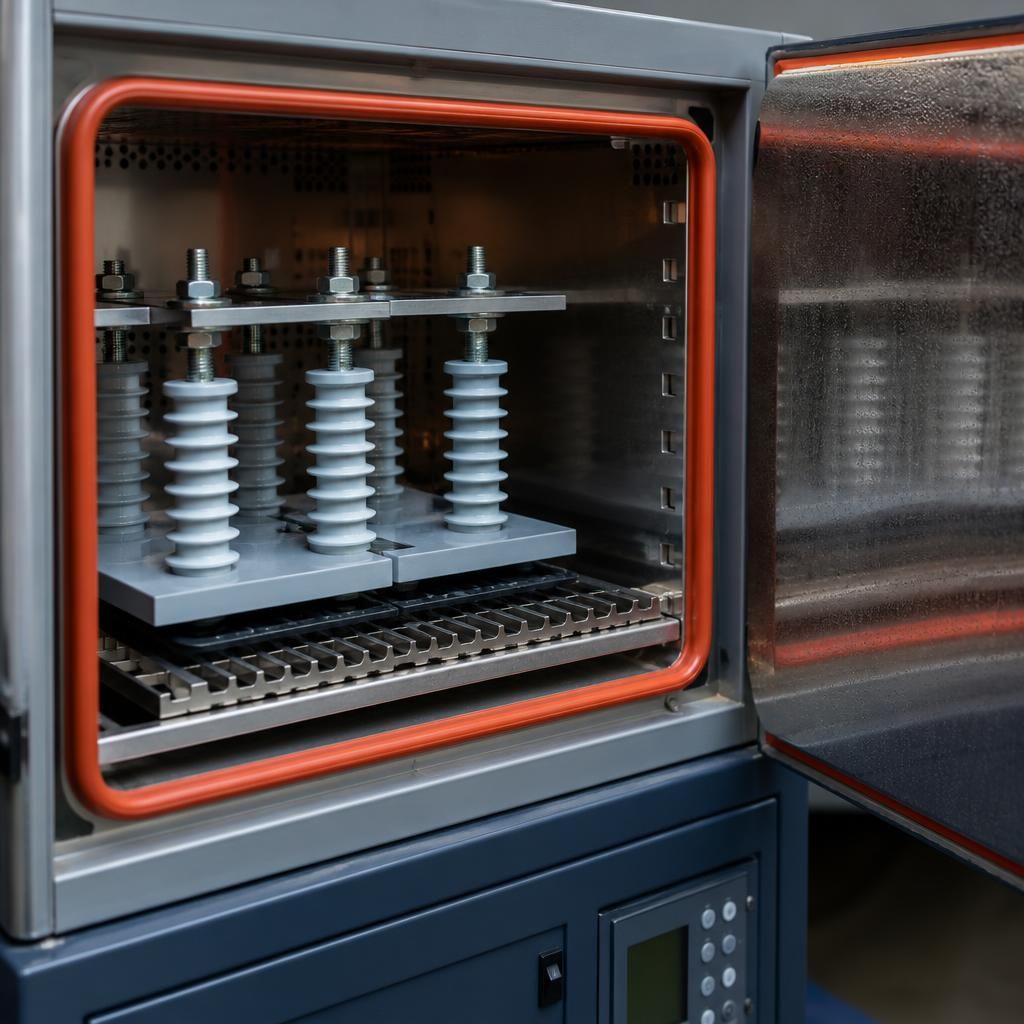
Thermal cycling is a separate long-term consideration for powder-coated electrical components. Repeated heating and cooling can cause the metal substrate and coating to expand and contract at different rates, placing stress on the insulating film. Over time, this may contribute to cracking, edge separation or loss of coverage, particularly where the coating is thick or the component has abrupt changes in shape.
The powder system should therefore be assessed against the component’s actual temperature range and heating pattern, rather than its initial appearance alone. Where substantial thermal movement is expected, the design may need a coating system and application process that accommodate that duty, with representative validation before production approval.