

What are the cost implications and potential return on investment when choosing electrostatic epoxy powder coating for large-scale industrial projects?
For large-scale industrial projects, electrostatic epoxy powder coating costs include surface preparation, masking, powder, application, curing, inspection, handling and any collection or delivery requirements. Its potential return on investment comes from efficient batch processing, consistent coverage, reduced rework and the durable protective finish helping to limit maintenance and replacement costs over the component’s service life.
The financial case for electrostatic epoxy powder coating on a large industrial project depends on total lifecycle cost rather than the coating price alone. A sound assessment considers the specification, component design, production volume, preparation requirements, application arrangements, inspection criteria, logistics and the expected service environment. The potential return on investment is strongest where a controlled factory-applied finish reduces avoidable quality issues and supports the required service life of the finished component.
What determines the project cost?
- Component size and geometry: Large, heavy or irregularly shaped parts can require additional handling, specialised racking or modified oven arrangements. Recesses, apertures and internal faces may also need particular attention during coating.
- Specification: The required film thickness, colour, gloss level, edge coverage, corrosion performance and inspection standard affect material use and processing requirements. A demanding specification can be justified where the component operates in a corrosive or heavily used environment, but it should be agreed before the quotation stage.
- Surface condition: Existing rust, mill scale, oil, weld spatter, sharp edges and fabrication residues influence the preparation needed. Components that arrive in a consistent, clean condition are generally easier to process than parts requiring extensive remedial work.
- Batch structure: The number of parts, repeatability of the design and grouping of compatible colours or specifications can affect production efficiency. Frequent changes between colours or coating requirements may add handling and setup considerations.
- Masking and uncoated areas: Threads, bearing seats, electrical contact points and close-tolerance faces may need masking. The complexity and quantity of these areas should be included in the scope rather than treated as an afterthought.
- Packaging and movement: Finished parts need suitable protection against marking, impact and contamination during handling and transport. Large components may also require lifting arrangements or dedicated packaging.
How should the investment be evaluated?
Compare the proposed coating route with the full cost of the alternatives, not simply their initial application charges. The comparison can include preparation, labour, consumables, equipment, supervision, inspection, rectification, transport, installation and future intervention. It should also account for the financial effect of taking components out of service for recoating or repair.
For a repeat production programme, a useful model separates one-off project costs from recurring unit costs. One-off items may include specification development, sample approval, masking design, trial processing and inspection planning. Recurring costs relate to each batch or component. This distinction helps prevent a development expense from distorting the expected cost of the wider programme.
ROI should be assessed against measurable operational outcomes. Relevant measures may include the proportion of parts accepted at inspection, the amount of remedial work, coating-related delays, time spent on future maintenance and the period before a component needs recoating or replacement. These figures should come from the project’s own quality, maintenance and production records wherever possible. If no reliable baseline exists, it is better to model conservative, expected and adverse scenarios than to present a single unsupported saving.
Where can value be lost?
A low initial quote may not represent the lowest overall cost if the scope excludes preparation, masking, testing, rejected parts or special handling. Incomplete drawings and unclear acceptance criteria can also lead to changes after production has started. Another risk is selecting an epoxy system without considering the service environment. Epoxy coatings can provide useful protection, but prolonged ultraviolet exposure may affect appearance and performance; an exterior application may therefore require a different specification or a compatible overcoat. Chemical exposure, heat, abrasion and immersion should likewise be identified before the material is selected.
Design decisions have a direct financial effect. Avoiding unnecessary crevices, improving drainage, controlling weld quality and allowing access for preparation can make the coating process more predictable. Tolerances should be checked because coating thickness and masking can affect fits, threads and moving interfaces. These checks are particularly important on assemblies with close mechanical or electrical requirements.
What should a project quotation include?
- Component drawings, dimensions, weights and quantities.
- Base-metal condition and the required preparation standard.
- Powder type, colour, gloss, film thickness and service environment.
- Areas requiring masking, plugging or a coating-free finish.
- Sampling, inspection, testing and documentation requirements.
- Packaging, handling, transport and responsibility for damage in transit.
- Procedures for non-conforming parts, rework and approval of any variation.
For large-scale industrial work, requesting this information in a consistent format makes quotations easier to compare. The preferred option is not necessarily the one with the lowest application charge; it is the route whose defined scope, technical suitability and expected service requirements align with the project’s total cost model. A coating specialist can use the drawings, quantities and environmental requirements to establish a more dependable basis for that assessment.
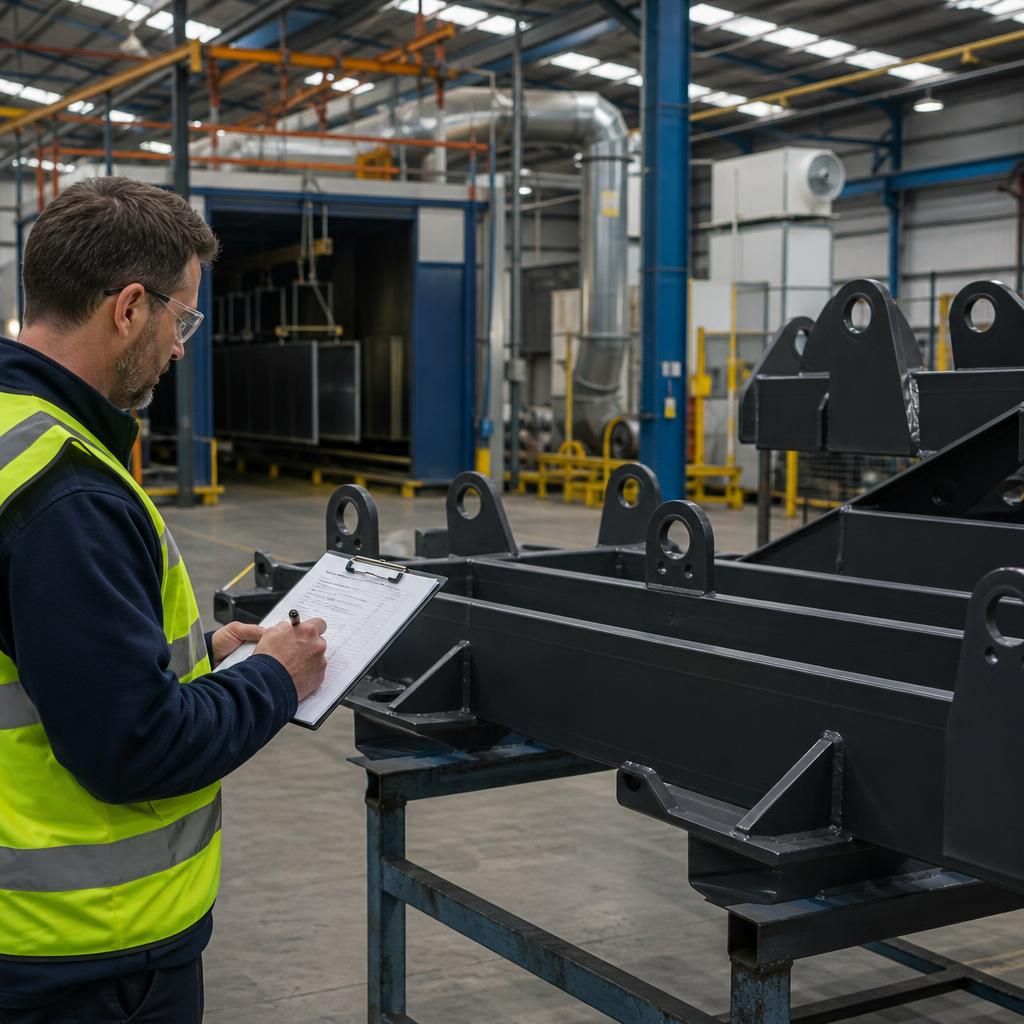
For large-scale work, the investment decision may include whether coating is carried out internally or by a specialist processor. An internal route can require suitable spray equipment, extraction, curing capacity, trained operators, inspection provision, maintenance and dedicated floor space, alongside the cost of managing powder and waste. These resources should be assessed against the project’s expected workload rather than treated as overheads with no connection to the coating process.
Outsourcing can instead convert much of this requirement into a defined processing cost, provided the quotation clearly covers preparation, masking, curing, inspection, handling and transport. The most useful comparison is therefore the cost per conforming, usable component, including the resources needed to maintain consistent quality under the selected route.