

How does powder coating affect the recyclability and environmental impact of aluminium frames and tubes in industrial applications?
Powder coating does not prevent aluminium frames and tubes from being recycled: coated aluminium can enter established aluminium recycling routes, where the coating is managed during processing. Its environmental impact is generally reduced by durable service life, low solvent emissions and the potential to recover unused powder, although pretreatment and oven curing still consume materials and energy.
The environmental effect of powder-coated aluminium frames and tubes depends on the whole product life cycle rather than the coating alone. Material selection, frame design, pretreatment, curing, transport, maintenance and end-of-life handling all influence the result. A correctly specified coating can support a lower-impact product by protecting the aluminium for longer, but it should also be assessed for how easily the finished component can be separated, processed and reused or recycled.
Aluminium recycling and coating residues
At the end of service, powder-coated aluminium is normally processed through established scrap and remelting systems. During furnace processing, the organic coating is separated from the metal through thermal treatment. The aluminium can then be recovered as part of the recycled metal stream, although the exact handling of coated scrap depends on the recycler’s equipment, acceptance criteria and contamination controls.
Coating residues, fixings, sealants, rubber components and mixed materials can be more significant than the powder coating itself. Frames and tubes should therefore be designed, where practical, so that non-aluminium parts can be removed easily. Avoiding unnecessary bonded inserts, permanently attached plastics and incompatible metals can simplify dismantling and improve the quality of the scrap feed.
Why the aluminium substrate matters
The greatest environmental distinction is often between primary and recycled aluminium, rather than between one decorative finish and another. Aluminium made from recycled content generally requires substantially less energy than producing metal from extracted ore. For industrial frames and tubes, specifying an appropriate recycled content, documenting the alloy and keeping material streams identifiable can support more effective future recycling.
Alloy choice still has to meet the structural, fabrication and corrosion requirements of the application. A coating cannot compensate for an unsuitable alloy or poor joint design. Where a component includes several aluminium alloys, steel fittings or other materials, clear material identification can help the recycler direct each part to the correct processing route.
Designing for a longer first service life
A durable finish can reduce the need to replace a frame or tube because of surface corrosion, abrasion or loss of appearance. This matters environmentally because replacing a component involves producing, finishing, transporting and installing another item. The benefit is strongest when the coating specification matches the actual exposure: outdoor weathering, industrial contamination, abrasion, chemicals and temperature cycles can require different preparation and coating choices.
Good design should also allow inspection, cleaning and repair. Accessible joints, replaceable sections and standardised components can make refurbishment more practical than disposal. If a frame can be recoated or partially replaced while its sound aluminium structure is retained, the material and processing already invested in the original component remain in use for longer.
Where environmental impacts arise during finishing
Powder coating still has an environmental footprint. Aluminium parts require cleaning and pretreatment before application, and those stages use chemicals, water and energy. The coating must then be cured in an oven, with the impact influenced by oven efficiency, loading, cure temperature, production planning and the amount of rework or rejected material.
Overspray recovery can reduce material waste, but recovered powder is not automatically suitable for every colour or specification. Keeping powder types and colours properly controlled helps avoid unnecessary disposal. Accurate application, suitable racking and correct curing also reduce reprocessing, which avoids repeating the associated preparation and energy use.
Environmental assessment should therefore include the complete finishing process, not just the absence of liquid solvent. Relevant information may include the pretreatment chemistry, energy source, powder utilisation, waste arrangements and any measured emissions or lifecycle data supplied for the coating system.
Maintenance, refurbishment and end-of-life planning
Routine care can preserve the coating and reduce the need for aggressive cleaning or premature refinishing. Mild cleaning methods, prompt attention to mechanical damage and avoiding contact with incompatible chemicals can help maintain the protective layer. When damage occurs, the appropriate repair depends on its depth, location and the operating environment; simply applying a new layer over contamination or corrosion can shorten the result and create additional waste.
Before disposal, the owner should identify whether the frame can be reused, refurbished or repurposed. Reuse normally retains more of the product’s original value than recycling it as scrap. If recycling is the only practical option, separating accessories and providing information about the aluminium alloy and coating system can help the waste contractor select the correct route.
How to assess a specification
- Choose an aluminium alloy and wall thickness appropriate to the loads and exposure, avoiding premature replacement caused by under-specification.
- Define the required coating performance by environment rather than selecting a finish on appearance alone.
- Consider recycled aluminium content and retain documentation identifying the alloy and other attached materials.
- Design joints, inserts and fittings for removal where this is technically practical.
- Ask how pretreatment chemicals, overspray and rejected parts are managed.
- Consider the energy source and operating efficiency of the curing process when comparing finishing routes.
- Plan for inspection, repair, recoating, reuse and eventual recycling at the design stage.
For an industrial comparison, the most useful approach is a whole-life assessment: compare the expected service life, maintenance requirements, finishing inputs, transport, refurbishment potential and end-of-life route of each option. Powder coating is not automatically the lowest-impact choice in every application, but a well-matched system on a well-designed aluminium component can combine long-term protection with practical reuse and established recycling pathways.
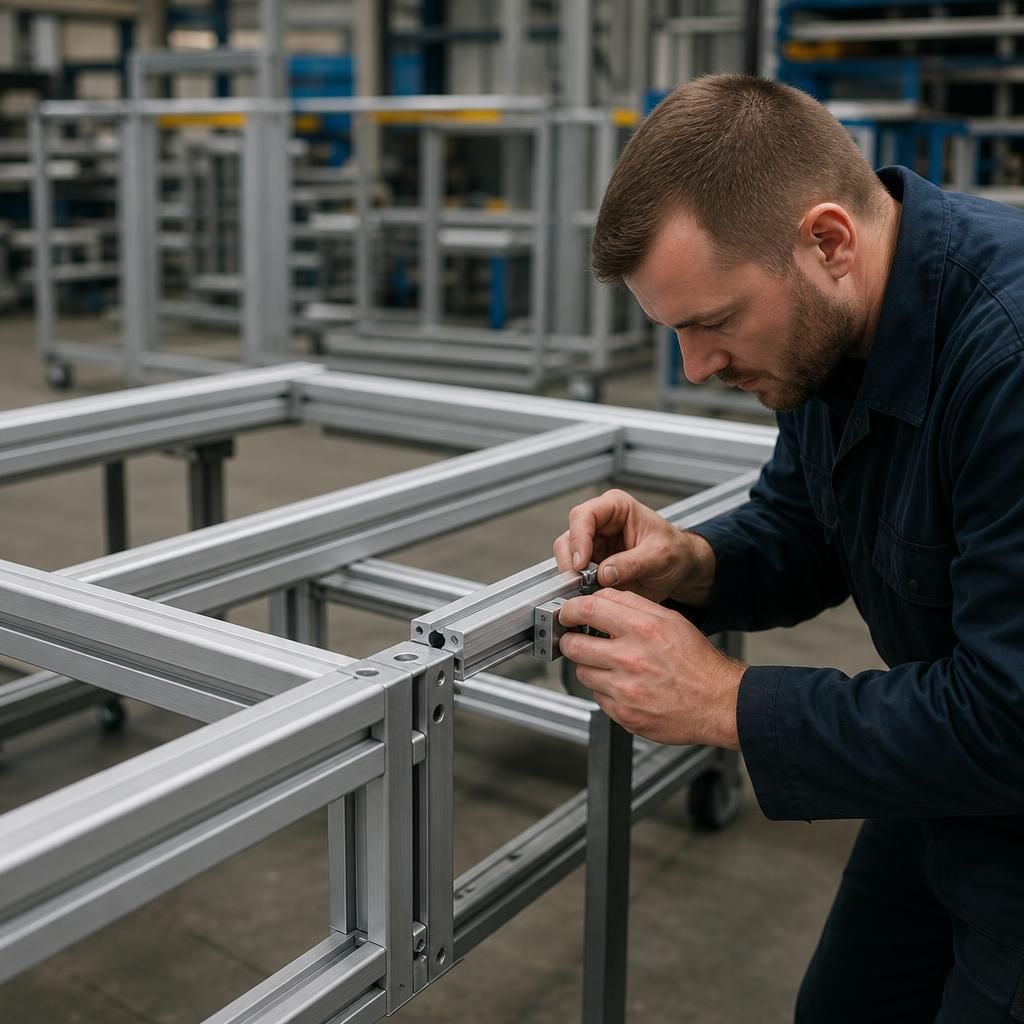
Powder coating can influence environmental performance through the way aluminium components are designed and finished for assembly. Coating applied to threaded holes, bearing seats, sliding interfaces or electrical contact points may interfere with fit or function, leading to stripping, rework or rejection. Specifying masking and contact areas before production helps avoid these additional processing stages and preserves the component’s intended service life.
This is particularly relevant for modular frames and tubular assemblies that may be dismantled, adjusted or refurbished. Clearly defined uncoated interfaces, removable fixings and accessible connection points can make future disassembly more practical without damaging the aluminium or the finish. A coating specification should therefore address functional surfaces as well as appearance, because preventing avoidable rework supports lower material, energy and waste impacts over the product’s life.