

What measures are taken during aluminium pretreatment to ensure environmental compliance and sustainability?
Environmental compliance during aluminium pretreatment is supported by controlled chemical use, appropriate handling of process residues and responsible management of wastewater and waste materials. Efficient preparation methods, careful segregation and compliant disposal help reduce environmental impact while maintaining the surface quality needed for powder coating.
Environmental compliance during aluminium pretreatment is achieved by controlling the process against applicable UK environmental, chemical and workplace requirements while reducing water, energy and resource use. The main measures include documented operating controls, suitable chemical selection, monitored process conditions, pollution prevention, staff training and records that demonstrate how the treatment line is managed.
Compliance requirements are identified before the process is operated. The applicable obligations can depend on the treatment chemistry, equipment, discharge arrangements and scale of the operation. A responsible system therefore begins with a review of environmental permit requirements, trade effluent conditions, waste legislation and chemical controls such as UK REACH and GB CLP where relevant. Environmental aspects should be recorded in a site procedure so that responsibilities, limits and escalation arrangements are clear.
Chemicals are assessed before they enter the process. Safety data sheets and supplier information are used to understand hazards, storage requirements, compatibility and end-of-life considerations. Where technically suitable, less hazardous or lower-impact alternatives may be evaluated for cleaning, etching, deoxidising and conversion treatment. Substitution must not be based on environmental classification alone: the alternative also needs to provide the surface condition required for adhesion and corrosion resistance. A pretreatment that fails technically can lead to stripping and recoating, which increases material and energy consumption.
Process conditions are kept within defined operating limits. Aluminium pretreatment stages can be affected by concentration, temperature, contact time, pH, contamination and bath loading. Routine checks help identify drift before it causes inconsistent treatment or unnecessary reprocessing. Monitoring may include recorded test results, equipment checks and planned calibration of relevant instruments. This creates traceability and provides evidence that the process is being operated in accordance with its documented controls rather than being adjusted informally.
Water demand is reduced through good line design and control. Rinse stages are commonly reviewed to prevent excessive water use, including by controlling flow, avoiding unattended running and using counter-current arrangements where appropriate. Drag-out from one tank into the next can increase chemical consumption and place additional demand on rinsing, so component loading, drainage time and racking arrangements are important. These measures improve resource efficiency without compromising the cleanliness of the aluminium surface.
Energy use is also considered across the treatment line. Tanks that require heating can be insulated, covered where suitable and maintained to reduce avoidable heat loss. Pumps, extraction systems and associated equipment should be operated at the level needed for the process rather than left running without a defined purpose. Preventive maintenance supports this approach by reducing leaks, poor temperature control and inefficient equipment operation.
Pollution prevention is built into the physical arrangement of the work area. Treatment tanks, transfer points and chemical storage areas should be positioned and maintained so that a leak is less likely to reach soil, drains or surface water. Appropriate secondary containment, sound pipework, protected drainage and clearly identified containers help separate normal operations from accidental releases. Spill response procedures should specify isolation, notification, suitable equipment and follow-up investigation. Emergency arrangements need to be practised and reviewed when the process or chemicals change.
Air emissions are considered where the chemistry or equipment can create vapour, mist or dust. Local exhaust ventilation may be required at points where airborne contaminants could be generated. It should be inspected and maintained so that extraction remains effective, with any relevant examination records retained. Chemical handling methods, closed containers and careful transfer procedures can further reduce the release of vapour or mist into the workplace and surrounding environment.
Environmental performance is supported by separating process controls from product-quality checks, while linking the two where they affect resource use. For example, preventing over-treatment, staining or poor adhesion reduces the likelihood that components will need to be stripped and processed again. Inspection criteria should therefore identify defects early, and investigations should look for underlying causes such as bath condition, rinsing, loading or equipment performance rather than relying only on rework.
Training and competence are essential compliance measures. Personnel handling aluminium pretreatment chemicals should understand the documented process, chemical hazards, storage rules, spill arrangements and the significance of recording checks accurately. Training should be refreshed when a chemical, tank, extraction system or operating instruction changes. Contractors and maintenance personnel also need suitable instructions where their work could affect tanks, drainage, ventilation or pollution controls.
Records provide evidence that the controls are working. Depending on the operation, these may include chemical inventories, inspection and calibration records, process monitoring results, maintenance reports, training records, incident investigations and information supplied to authorised waste or effluent contractors. Reviewing these records can reveal recurring losses, abnormal water use, equipment faults or repeated reprocessing, allowing corrective action to be prioritised.
Finally, sustainability should be assessed over the whole coating preparation cycle rather than by looking at one tank or chemical in isolation. A process with lower water or chemical demand is not automatically preferable if it produces an unsuitable surface or reduces the service life of the finished coating. The strongest approach balances legal compliance, pollution prevention, resource efficiency and reliable surface preparation, with periodic review whenever materials, equipment or treatment requirements change.
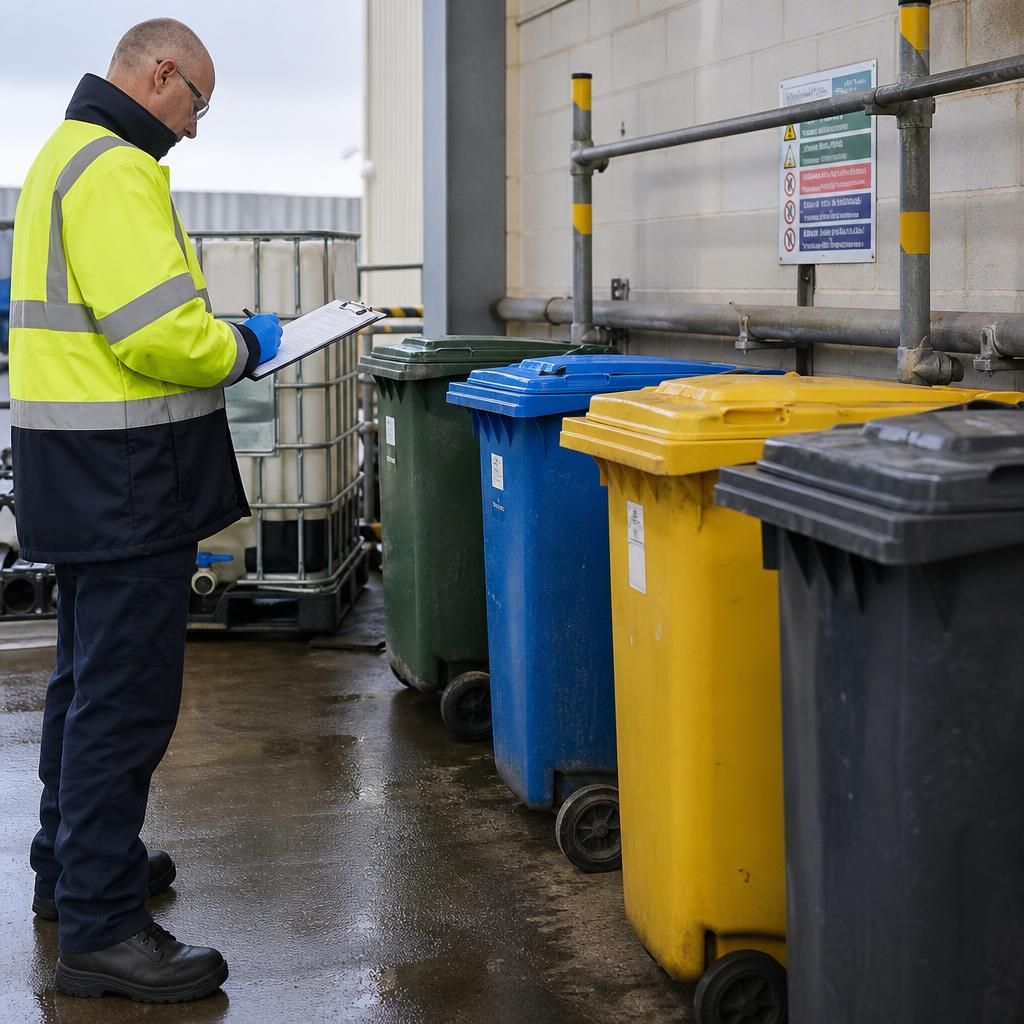
Waste hierarchy is a key environmental measure during aluminium pretreatment. Spent treatment solutions, sludge, contaminated filters and spill-response materials should be identified, segregated and managed according to their composition rather than combined indiscriminately.
- Process residues are assessed so their appropriate waste classification and handling requirements are understood.
- Separate containers prevent incompatible or hazardous materials from being mixed and make recovery or treatment more practical.
- Containers are kept closed, labelled and protected from damage or leaks while awaiting collection.
- Waste movements are documented, with transfer information retained to demonstrate that residues were passed to a suitable authorised operator.
This approach supports the waste hierarchy by prioritising prevention and reduction before recovery, treatment or disposal. It also avoids using dilution or uncontrolled mixing to manage concentrated residues, helping protect drainage systems, soil and water while providing a clear audit trail for environmental compliance.