

What are the essential features to look for in a complete powder coating system for electrostatic recoating applications?
A complete powder coating system for electrostatic recoating should combine a controllable spray gun and powder feed unit with dependable grounding, adjustable application settings, efficient powder recovery and a curing oven suited to the component and coating specification. It should also provide consistent temperature control, straightforward cleaning and safe operation so damaged metal parts can be recoated evenly and cured reliably.
The essential features of a complete powder coating system for electrostatic recoating are compatibility with previously coated metal, accurate process control, effective part handling, validated curing and clear monitoring of coating quality. Recoating is more demanding than coating clean, uniform steel because the component may contain a mixture of bare metal, sound existing finish, damaged edges, recesses and areas with different electrical behaviour.
Compatibility with the recoating process
The system should be suitable for the powders, substrates and component sizes used in the intended work. Check that its operating range supports the coating manufacturer’s application requirements, including powder type, particle behaviour and recommended film build. A system designed only around new, uniformly conductive parts may be difficult to use on components retaining sections of cured coating.
Electrostatic attraction can vary across a damaged component. Bare steel, existing powder coating and poorly conductive residues do not necessarily accept powder in the same way. The equipment should therefore allow the operator to adapt the application method to recessed areas, sharp edges and partially insulated surfaces without relying on a single fixed setting.
Thorough preparation and contamination control
A complete recoating arrangement must support proper preparation before powder is applied. This includes removing loose or failed coating, oil, grease, corrosion products and other contaminants. Any remaining finish must be firmly bonded and compatible with the new system; powder applied over unstable material can fail with the underlying layer.
Preparation equipment and the coating area should prevent cleaned parts from being recontaminated. Suitable handling fixtures, clean contact points and controlled movement between preparation, application and curing are important. Masking provisions are also needed where threads, bores, mating faces or earth-contact surfaces must remain free of coating.
Part access and consistent positioning
Fixtures should hold components securely while exposing the surfaces that require repair. They should be able to accommodate the shape, mass and hanging points of the parts being processed without obstructing critical areas. Good positioning helps maintain a consistent spray distance and angle, particularly around corners, undersides and internal sections.
For batch work, repeatable fixture design is especially useful. It reduces variation between parts and makes it easier to reproduce an established process. The system should also provide a practical route for moving components between preparation, spraying and curing without damaging uncured powder.
Control of difficult geometries
Recesses, corners and enclosed sections can create the Faraday cage effect, in which the electric field discourages powder from reaching a deep or shielded area. A suitable system should support techniques for dealing with these locations, such as changing the approach angle, reducing electrostatic force where appropriate and applying powder with deliberate gun movement.
Operators should be able to distinguish between a genuine coverage problem and excessive powder build-up on an exposed edge. A complete system is therefore best supported by clear operating information, repeatable recipes and access to the process data needed to identify why a particular area is undercoated or overcoated.
Monitoring and verification
Process monitoring should cover more than the visible appearance of the finish. Useful checks include powder coverage, film thickness, colour consistency, gloss where specified and the condition of repaired edges. A dry-film thickness gauge can help identify thin areas and excessive build, while visual inspection under consistent lighting can reveal pinholes, inclusions, craters and uneven texture.
Cure verification is equally important. The relevant condition is the temperature reached by the metal part for the required time, not simply the air temperature shown by the oven. For different component masses and geometries, a system should allow the curing profile to be checked and recorded so that the coating is neither under-cured nor exposed to unnecessary heat.
Reliable documentation and repeatability
For B2B production, the system should support records of the powder specification, preparation method, application settings, film thickness checks and curing results. This creates a traceable process and helps operators reproduce an acceptable finish when similar damaged parts return for recoating.
Clear controls, understandable alarms and accessible maintenance points also reduce the risk of process variation. Consumable parts should be identifiable and replaceable, and the system documentation should explain inspection, calibration and fault-finding requirements rather than leaving these decisions to guesswork.
How to assess a system before selection
- Define the largest, smallest, heaviest and most geometrically complex components to be recoated.
- Identify the existing finishes, substrates, powder types and preparation methods involved.
- Check how the arrangement handles recesses, masking, mixed conductivity and awkward hanging positions.
- Confirm that film thickness and cure results can be measured against the coating specification.
- Assess whether recipes, inspection records and maintenance information can be used consistently by different operators.
- Consider whether the layout allows parts to move cleanly and safely through preparation, application and curing.
A complete powder coating system is therefore not defined solely by the presence of spraying and curing equipment. For electrostatic recoating, it must connect preparation, part handling, application, curing, inspection and process records into a controlled sequence that suits the condition and geometry of the damaged component.
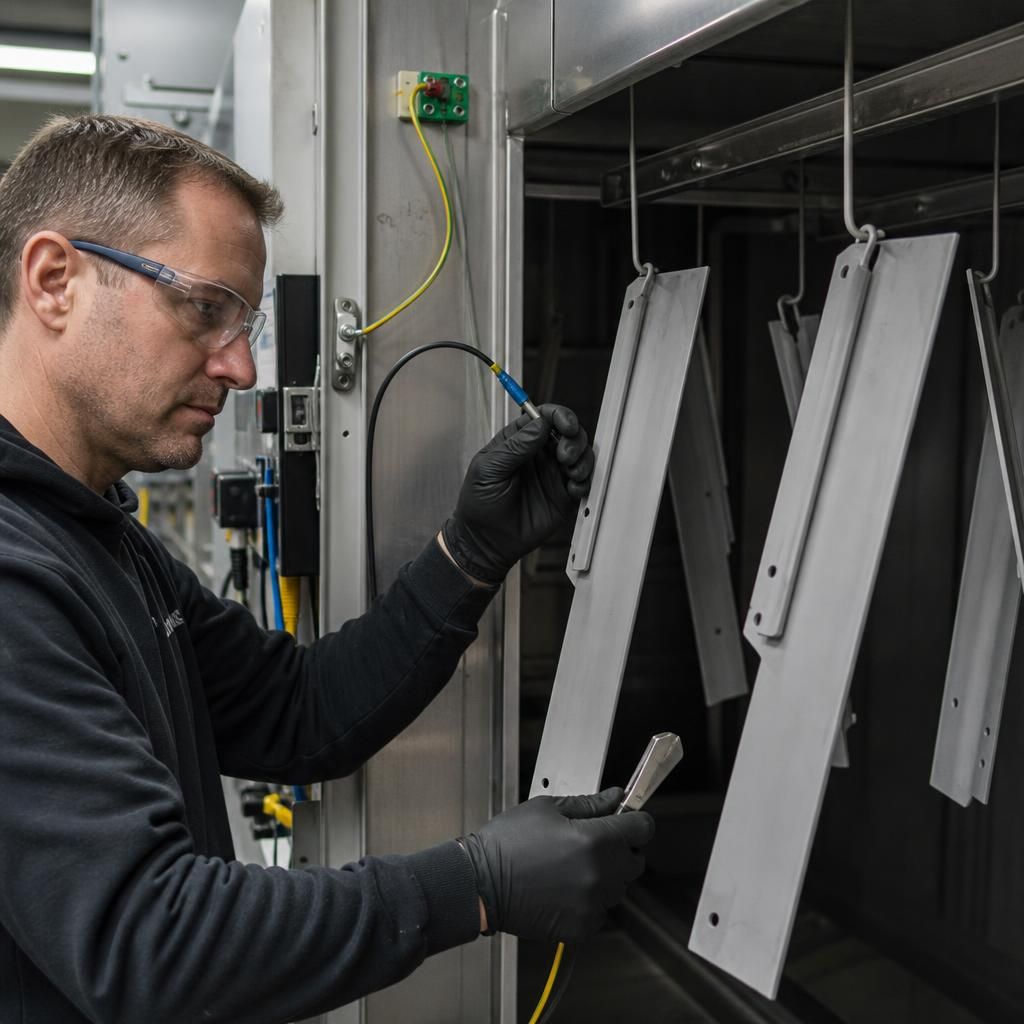
Electrical safety and grounding controls are essential features of a complete powder coating system for electrostatic recoating. The system should maintain a reliable earth path from each metal component through its fixture and hanging equipment, allowing the charged powder to be attracted consistently while reducing the risk of uncontrolled electrical discharge.
Grounding depends on clean, secure contact points. Coating build-up, rust or contamination on hooks and contact areas can interrupt continuity, so fixtures should be designed for straightforward inspection and cleaning. Contact points should be positioned where they will not interfere with critical coated surfaces, while still providing a dependable connection throughout spraying.
Safety features should also include clearly defined controls for starting and stopping powder application, isolating electrical energy and accessing equipment for cleaning or maintenance. Interlocks, visible fault indications and documented checks help prevent spraying when the required conditions are not present. These controls are particularly important during recoating, where retained finishes and irregular component shapes can make electrical behaviour less predictable.