

What are the best practices for maintaining powder blasting equipment to ensure optimal performance and extended lifespan?
Best practice is to maintain powder blasting equipment through a planned routine of inspection, cleaning, adjustment and timely replacement of worn components. Check abrasive flow, pressure, air quality, hoses, nozzles, filters, seals and extraction systems, while recording maintenance findings to identify faults before they affect surface preparation.
Effective powder blasting equipment maintenance is a preventive system that keeps the machine mechanically sound, abrasive delivery stable and dust control effective. It combines manufacturer-recommended servicing with condition checks, safe isolation, controlled abrasive handling and documented corrective action, rather than relying on repairs after performance has deteriorated.
Follow a planned maintenance cycle. Divide tasks into operator checks, scheduled servicing and condition-based work. The maintenance plan should identify each item of equipment, the inspection required, the person responsible, acceptable operating conditions and the action to take if a defect is found. Use the equipment manufacturer’s instructions as the primary reference, particularly for pressure vessels, blast pots, automatic systems and reclaim units.
- Before use: confirm that guards, access panels, emergency stops and control devices are secure and functional. Check for unusual noise, vibration, leakage, damaged electrical connections or signs of overheating.
- During operation: watch for unstable pressure, irregular abrasive discharge, excessive dust or changes in the finish produced by the blasting process. These can indicate an emerging fault even when the equipment still operates.
- At planned intervals: service moving assemblies, inspect structural parts and verify that safety-critical controls remain effective. The interval should reflect operating conditions, abrasive type, duty cycle and the recommendations supplied with the equipment.
- After servicing: carry out a controlled test with the work area clear, checking that controls respond correctly and that the system returns to a stable operating condition.
Manage abrasive material carefully. Keep abrasive dry, clean and stored in suitable containers. Moisture can cause bridging, blockages and inconsistent delivery, while mixed or degraded media may alter the cleaning action and increase wear. Do not continue using abrasive contaminated with oil, paint residue or removed substrate unless the system is designed to separate and process it. Reclaim systems should be checked for damaged screens, blocked separators and accumulated fines, as poor separation can circulate unwanted debris and increase component wear.
Give attention to the blast pot and pressure system. Depressurise and isolate the system before opening, removing blockages or carrying out internal work. Inspect the pot, lid closure, gaskets, inspection points and pressure-related fittings for damage or corrosion. Pressure vessels and associated safety devices require competent examination and servicing in accordance with applicable UK requirements; maintenance should never involve bypassing a relief device or operating with a defective closure. Keep service records for examinations, repairs and any restrictions placed on the equipment.
Protect the compressed-air supply. Air quality affects both blasting consistency and the condition of the machine. Drain moisture collection points as specified, investigate oil carryover and maintain dryers, separators and receivers as part of the wider compressed-air system. A compressor that is technically operational can still create maintenance problems if it supplies wet or contaminated air. Sudden pressure loss should be investigated rather than corrected by simply increasing the set pressure.
Check abrasive metering and control valves. Metering components can become obstructed by damp media or worn by continuous contact with abrasive. Inspect valve seats, control diaphragms and adjustment mechanisms for sticking, leakage or delayed response. Confirm that the control system stops abrasive and air flow when the operator releases the deadman control. Any control that fails to stop the process safely should remove the equipment from service until repaired.
Maintain the cabinet, enclosure and extraction route. Remove settled abrasive from ledges, floors and internal surfaces using a method suitable for the material; avoid creating airborne dust with uncontrolled compressed air. Inspect viewing panels, gloves, seals, access doors and lighting covers for damage that could allow dust escape or reduce visibility. Keep extraction ducts and collection areas free from excessive build-up, and check that airflow remains adequate for the enclosure. Dust collectors should be serviced according to their design, with collected waste handled in line with the relevant risk assessment and waste controls.
Inspect the delivery path for progressive wear. Abrasive can enlarge bends, couplings and internal passages gradually, making deterioration difficult to see from outside. Look for bulges, soft spots, exposed reinforcement, damaged couplings and scoring around connection points. Replace components using parts suitable for the abrasive and pressure involved. Do not use temporary repairs on pressure or abrasive-delivery parts where they could fail during operation.
Use condition monitoring to find faults early. Compare current operating behaviour with the equipment’s normal baseline. Increasing vibration may indicate a bearing or drive problem; repeated blockages may point to moisture or a deteriorating separator; and unexplained changes in air consumption can suggest leakage or a control fault. Where appropriate, use inspection readings, maintenance logs and photographs to identify gradual change rather than treating each fault as an isolated event.
Make safe isolation part of every intervention. Stop the equipment, isolate electrical, pneumatic and pressure energy, release stored pressure and prevent inadvertent start-up before maintenance begins. Lock-off procedures should cover connected compressors, automatic feeds, reclaim systems and extraction equipment where their operation could create a hazard. Only trained and authorised personnel should work on pressure systems, electrical components or safety controls, and the equipment should be proven safe before access is permitted.
Keep records that support decisions. A useful maintenance record includes the date, equipment identification, operating condition, defect found, work completed, parts fitted and person carrying out the task. Record repeated faults separately so that the underlying cause can be addressed. For example, frequent valve blockages may require improved abrasive storage or moisture control rather than repeated valve replacement. Clear records also help demonstrate that inspections, examinations and corrective actions have been managed systematically.
Maintenance is most effective when it is linked to surface-preparation quality as well as machine reliability. If the equipment cannot deliver a stable, repeatable blast process, stop and investigate the cause before processing further metalwork. This prevents an unnoticed mechanical or air-quality problem from affecting the consistency of preparation for subsequent powder coating.
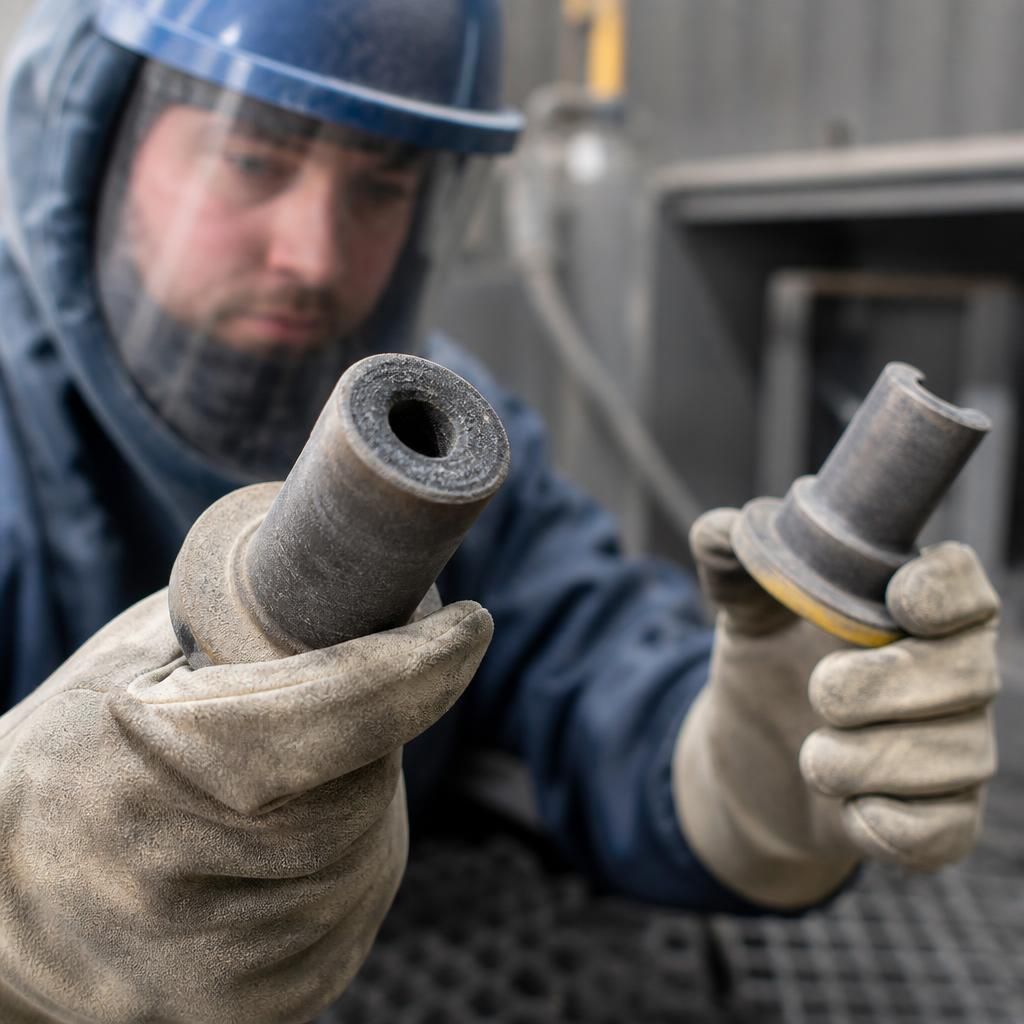
Abrasive nozzle condition should be checked as a separate maintenance point because wear changes the blast pattern, abrasive consumption and surface-preparation result. Inspect the nozzle bore for enlargement, cracking, uneven wear and damage around the holder or gasket. Compare the resulting blast pattern with the equipment’s established operating condition, rather than increasing pressure or abrasive flow to compensate for a worn nozzle. Replace damaged or excessively worn parts with components suitable for the abrasive and operating pressure, then verify the pattern before returning the equipment to production.