

What measures do you employ to maintain efficiency and quality during high-volume batch production, especially when dealing with urgent client timelines?
We maintain efficiency and quality in high-volume batch production through controlled preparation, consistent coating and curing procedures, in-process inspection, and organised batch scheduling. For urgent client timelines, production is planned around agreed priorities while preserving the checks needed to deliver reliable finishes across each batch.
High-volume batch production is kept efficient and controlled by treating each order as a defined production lot, with its specification, component sequence, coating requirements and inspection criteria recorded before processing begins. This creates a clear reference for the team, reduces avoidable interruptions and helps ensure that urgency does not lead to unapproved changes in preparation, application or curing.
Each batch is reviewed against the information supplied for the components. This includes the metal type, component dimensions, surface condition, required coating system, colour, finish and any areas that must remain uncoated. Identifying these points before the parts enter production helps prevent rework caused by incorrect masking, unsuitable racking or an application method that does not suit the component geometry.
Production planning also considers how parts can be grouped without compromising the specification. Components with compatible requirements may be processed together, while items needing different coating systems, finishes or handling arrangements are kept distinct. This reduces unnecessary equipment changes and material movement, but batch grouping is not allowed to override the requirements of an individual order.
- Batch identification: Parts are kept associated with the relevant job information throughout preparation, coating, curing and inspection.
- Load planning: Components are arranged to make effective use of the available processing space while allowing adequate access for coating and heat transfer.
- Racking and handling: Fixtures are selected to support the parts securely and to minimise contact marks, shadowing or damage during movement.
- Material control: The specified powder and coating requirements are checked before application so that the correct material is used for the intended finish and service conditions.
Efficiency depends on reducing avoidable handling rather than simply increasing the number of parts processed at once. Parts therefore need to be presented in a logical sequence, with suitable packaging or protection for finished surfaces. Careful movement between stages helps prevent scratches, contamination and mix-ups that can result in additional processing or rejection.
For urgent work, the practical approach is to establish which stages are critical to the agreed priority and which activities can be organised around them. Required information, component quantities, masking details and any special finish requirements need to be available at the outset. If a specification is incomplete or a component condition requires clarification, resolving that issue before coating is generally more efficient than allowing an uncertain batch to proceed and correcting it later.
Quality is maintained through defined acceptance criteria rather than visual judgement alone. Depending on the order requirements, checks may consider coverage, colour, gloss, texture, edge coverage, masking accuracy, surface cleanliness and visible defects. Inspection of representative parts during a production run can identify a developing issue before it affects the entire batch. Finished parts are then reviewed for conformity before they are prepared for collection or delivery.
Traceability supports both quality control and efficient problem-solving. Batch records can link the finished components to the job specification, coating material, processing sequence and inspection findings. If a question arises about a particular group of parts, this information helps isolate the relevant batch rather than disrupting unrelated work. It also provides a useful basis for reviewing recurring issues and refining future production planning.
Equipment condition is another important control in volume work. Application equipment, curing equipment, racks and handling areas must be kept suitable for the required process. Build-up, contamination or damaged fixtures can affect transfer, appearance or part positioning. Routine checks and appropriate cleaning between compatible or different coating requirements help reduce the risk of defects and unnecessary stoppages.
Urgent timelines are therefore managed by prioritising work through a controlled process, not by removing essential checks. Where the job allows, preparation, documentation, material allocation and component sequencing can be arranged in advance so that production time is used effectively. Any change to the agreed requirements should be assessed for its effect on coating compatibility, batch separation, inspection and delivery arrangements before it is incorporated.
For Midlands manufacturers, fabricators, construction firms and automotive businesses, this approach is particularly relevant where batches contain varied metal components or where collection and delivery need to be coordinated with the production sequence. The objective is to maintain a repeatable route from specification to finished batch, while retaining enough control to deal with different component sizes, shapes and priorities without compromising the required coating quality.
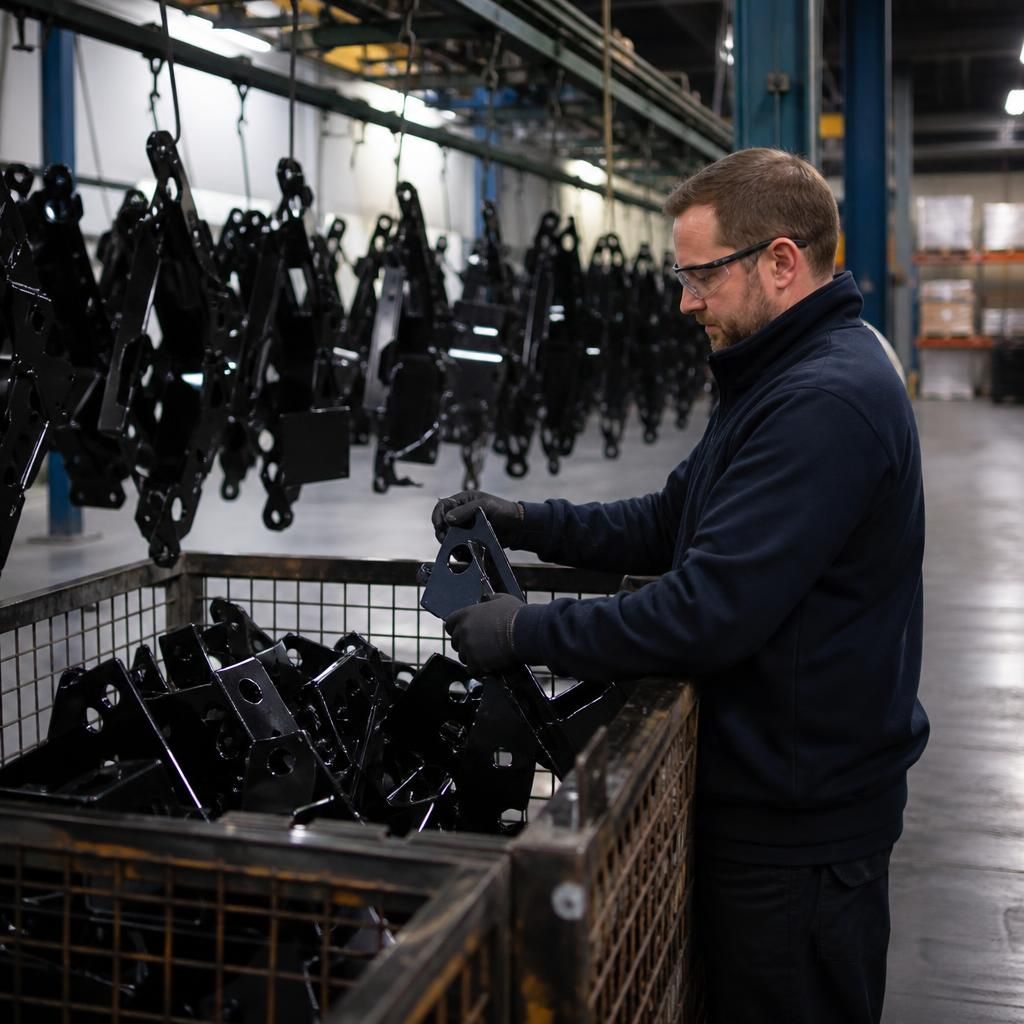
A controlled non-conformance process helps protect both quality and production flow during high-volume batch work. Any part that does not meet the agreed finish or inspection criteria is separated from accepted components and clearly identified, preventing it from being packed, delivered or mixed back into the production lot.
The affected parts can then be assessed to determine whether they require rework, further inspection or exclusion from the batch. This keeps a localised issue from disrupting work that has already passed inspection and gives the production team a clear route for resolving defects without weakening the required standard. For urgent orders, this separation is particularly important because it allows conforming components to continue through finishing and preparation while the isolated issue is reviewed.
Discuss Your High-Volume Batch Production Requirements
Discuss your high-volume batch production requirements with our team, including component details, coating specifications, quantities and any urgent timeline. This information allows the appropriate production and inspection arrangements to be considered before the work is scheduled.