

What considerations should be made when selecting tinted clear powder coats for specific metal components?
Selecting a tinted clear powder coat for a specific metal component requires assessing the substrate, service environment, required durability, curing requirements and the appearance of the underlying metal. The tint, gloss level and film thickness should then be matched to the component’s visual specification, exposure to chemicals or weather, handling demands and any need to preserve the metal’s visible texture or colour.
Tinted clear powder coats should be selected against the component’s functional surfaces, geometry, tolerances and visual standard, not simply by choosing a preferred colour. A suitable specification defines how transparent the coating must remain, how much of the metal should be visible, which areas must remain free from coating, and how consistency will be assessed across the finished batch.
Define the required level of transparency. A tinted clear finish can range from lightly coloured and highly transparent to a denser translucent appearance. This distinction affects how clearly the base metal, grain, machining marks, welds and surface variations can be seen. If the metal itself forms part of the design, a light tint may be appropriate; if the intention is to reduce visual variation, a stronger tint may be more suitable. A physical reference sample is usually more reliable than a colour description alone.
Consider the component’s geometry. Corners, recesses, holes, internal faces and narrow returns can affect powder deposition and the way the tint appears after curing. A translucent finish may look deeper in recesses or heavier at edges, particularly where the film builds unevenly. Components should therefore be reviewed as three-dimensional parts rather than specified from a flat sample. The coating specialist may also need drawings or marked-up photographs showing visible faces, concealed areas and any surfaces that must not be coated.
Protect critical interfaces. Tinted clear powder must not interfere with threads, bearing seats, sliding faces, electrical contact points, earth connections, drain paths or close-fitting assemblies. Masking requirements should be agreed before processing, including the acceptable edge of the coating around each protected area. The specification should also identify whether overspray on hidden faces is acceptable, since removing powder from a finished component can damage the surrounding film.
Check dimensional allowances. Powder coating adds a measurable film to the component, which can affect press fits, slots, holes, fasteners and moving joints. This is particularly important for precision-fabricated parts and assemblies containing mating components. Critical dimensions should be identified in advance so that masking, hanging and coating coverage can be planned around them. Where several coated parts are assembled together, the combined effect of their coating thicknesses should be considered rather than assessing each part in isolation.
Agree a visual approval method. Tinted clear coatings can show differences caused by metal reflectivity, surface texture, viewing angle and film distribution. A specification should state the permitted colour range, gloss level, transparency, visible surface characteristics and inspection lighting. Approval samples should use the same or a representative substrate and preparation method as the production parts. Comparing a coated component with an unrelated painted swatch can produce misleading results.
Assess batch and assembly consistency. Parts that will be installed next to one another should be processed under the same agreed specification. Differences in base-metal finish, powder application, film thickness or curing can alter the apparent tint even when the nominal powder colour is unchanged. Where components come from different fabrication batches, it is sensible to establish whether variation in the underlying metal is acceptable or whether a more concealing finish would provide a more uniform result.
Review the powder and application specification. The chosen product should be suitable for the component and its intended service conditions, with the manufacturer’s requirements followed for application and curing. Relevant details include the approved powder type, colour reference, gloss category, target film thickness, masking points and inspection criteria. These details create a repeatable instruction for future batches and reduce the risk of a finish being judged against an undefined expectation.
Allow for handling, assembly and maintenance. The finished surface can be affected by sharp contact during transport, fitting or later servicing. Components with frequent handling or contact should be assessed for exposed edges and vulnerable projections, while parts intended for cleaning should have an agreed cleaning method that will not adversely affect the coating. If touch-up or replacement is likely, retain the coating reference and approval sample so that a later repair can be compared with the original finish.
For complex metal components, the most useful enquiry information includes a drawing, material description, dimensions, quantity, visible-face requirements, protected areas, assembly tolerances and a representative sample where the metal is intended to remain visible. A powder-coating specialist can then assess whether a tinted clear finish is technically and visually appropriate, identify masking or dimensional concerns, and help establish a practical approval standard before the full batch is processed.
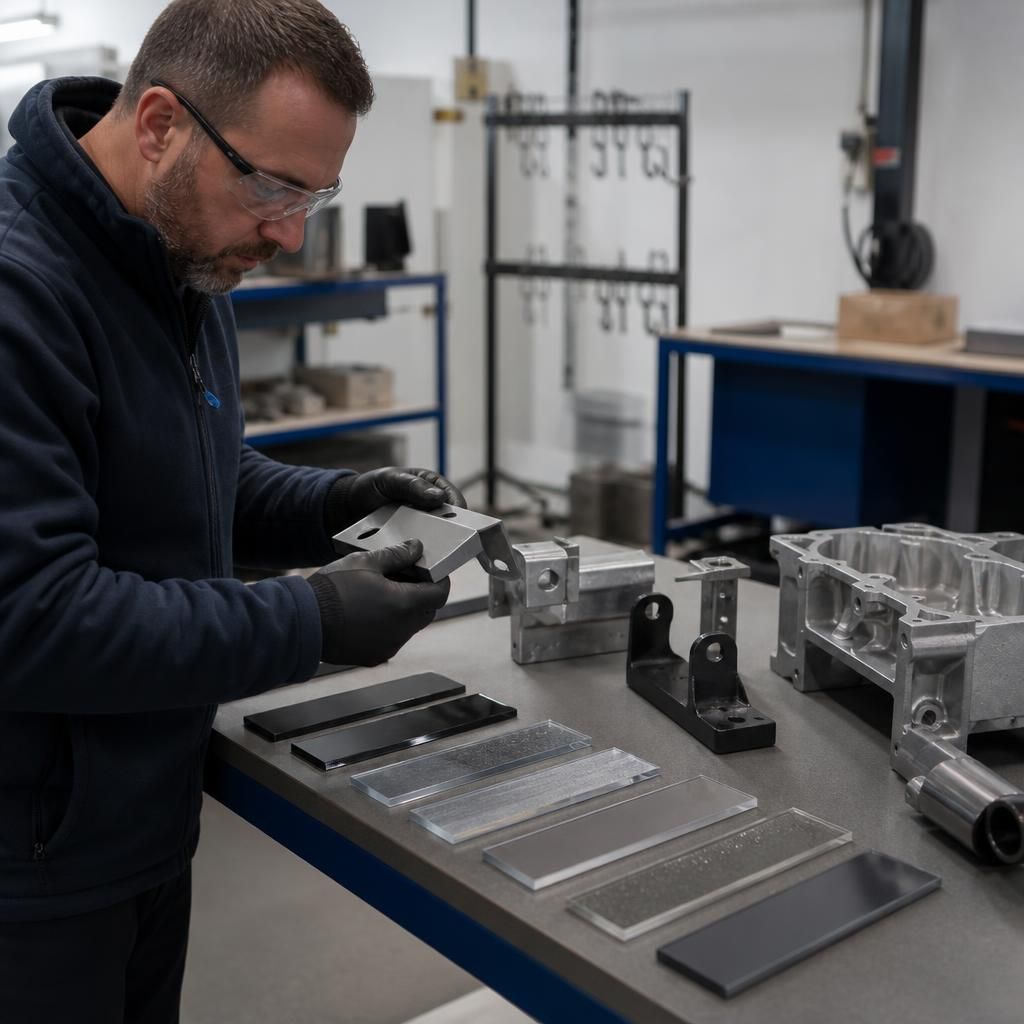
The metal substrate and its pre-treatment are key considerations when selecting a tinted clear powder coat. Because the finish allows some of the underlying surface to remain visible, differences between steel, aluminium, galvanised metal and cast components can affect both appearance and coating performance.
- Confirm that the powder system is suitable for the specific metal and pre-treatment process.
- Check whether the component may release trapped air or contaminants during curing, particularly where it has a porous or complex structure.
- Assess whether existing coatings, conversion layers or residues could affect adhesion or alter the appearance of the tint.
- Use a representative prepared sample when approving the finish, rather than assessing the powder on an unrelated substrate.
This assessment helps separate a colour-selection issue from a substrate or preparation issue. If the underlying metal varies significantly between components, the same tinted clear powder may produce noticeably different results, so the agreed specification should identify the permitted substrate condition as well as the coating colour and finish.
Discuss your tinted clear powder coat requirements
Discuss your tinted clear powder coat requirements with the coating team, providing component drawings, material details and any visual or dimensional specifications. This allows the proposed finish, masking requirements and approval process to be assessed before production.