

What are the best practices for applying zinc powder coat primers to achieve optimal adhesion and corrosion resistance over mill scale?
For optimal adhesion and corrosion resistance, remove loose or cracked mill scale, oil, rust and other contaminants, then abrade or blast the steel to a sound, suitably profiled surface and ensure it is clean and dry. Apply a zinc powder coat primer compatible with the full coating system at the specified film thickness, control application and curing conditions according to its technical data, and inspect the cured primer for consistent coverage, defects and adhesion before applying the topcoat.
The best practice is to treat a zinc powder coat primer as one part of a tested coating system rather than as an independent corrosion barrier. Reliable results depend on matching the primer to the steel condition, topcoat and service environment, then controlling application, curing, handling and inspection in accordance with the product’s technical data sheet.
Confirm system compatibility before coating. Check that the primer is specifically suitable for the intended substrate and compatible with the proposed powder topcoat. Important details include the approved recoat interval, required film thickness, curing schedule, overcoat limitations and any restrictions relating to steel contaminated by mill scale. Zinc-rich primers and zinc-containing anti-corrosion primers do not all behave in the same way, so the product description alone is not sufficient for system selection.
The full coating specification should also reflect the exposure conditions. Consider whether the finished component will face outdoor weathering, persistent moisture, condensation, industrial contamination, road salts, abrasion or immersion. A primer and topcoat combination intended for a relatively mild indoor environment may not be appropriate for more aggressive service. Where the consequences of corrosion are significant, agree the complete system with the coating manufacturer or a qualified coating specialist before production begins.
Control the steel and the workpiece design. Mill scale varies in thickness, adhesion and continuity, particularly around welds, heat-affected areas, cut edges and repaired sections. These areas should be assessed separately because they can behave differently from broad, intact faces. Sharp corners, narrow gaps, folded returns and recessed features can also produce uneven powder deposition or reduced coverage. If the component design permits, provide accessible surfaces, suitable drainage and radiused edges so the primer can form a continuous protective layer.
Remove fabrication residues that could interfere with the primer system. Cutting fluids, drawing compounds, weld spatter, marking materials, abrasive dust and handling contamination can create local adhesion failures or pinholes. Parts should be presented consistently from one batch to the next, with masking, racking and hanging arrangements selected to avoid contact damage and to expose the required faces to the powder cloud.
Apply the primer uniformly. The target is not simply a visible zinc-coloured film; it is a continuous, even layer with sufficient dry film thickness to provide the specified corrosion protection without creating defects. Powder delivery, gun movement, part orientation, earthing and spray access should be kept consistent. Recesses and Faraday areas may require changes in gun angle, distance or application sequence. Excessive build can be as problematic as inadequate coverage, causing poor appearance, solvent or gas-related defects in the system, cracking, or difficulty achieving the specified cure.
Use suitable test panels or representative components when introducing a new primer, changing the topcoat or altering the application method. A trial should examine difficult features as well as flat surfaces. It can reveal problems with coverage, back-ionisation, edge build, recoat behaviour or the interaction between the zinc primer and topcoat before the production batch is processed.
Manage curing as a measured process. Powder curing is determined by the metal temperature and the time the coating spends at that temperature, not merely by the oven’s displayed air temperature or the time that parts remain inside it. Component mass, geometry, loading pattern and oven airflow can affect the actual cure received by the primer. Establish that the least-heated areas reach the required cure specified for the product, and avoid assuming that a schedule suitable for one steel section will suit another.
Do not apply the topcoat until the primer has reached the condition required by its technical data. Some systems are intended to be overcoated within a defined interval, while others require additional preparation if that interval is exceeded. A primer that has been overheated, contaminated or damaged during handling should be assessed before it is covered, because the topcoat may conceal rather than correct the underlying problem.
Inspect each stage rather than relying on final appearance. A practical quality-control sequence includes:
- checking the prepared component and masking before application;
- monitoring powder application and recording relevant process settings;
- measuring the cured primer’s dry film thickness at representative locations, including difficult features;
- checking for bare areas, pinholes, craters, inclusions, runs, excessive build and visible contamination;
- verifying cure using a method appropriate to the product and coating system;
- examining the primer and topcoat interface where the system specification requires adhesion or recoat testing; and
- recording batch identification, inspection results, deviations and corrective action.
Film-thickness measurements should be interpreted against the specified range, not used in isolation. A high average reading can conceal thin areas at edges or within recesses, while a visually consistent surface can still have poor adhesion if contamination or incomplete cure is present. Inspection equipment should be suitable for the substrate and maintained or checked in line with its instructions.
Protect the coating between operations. Once the primer is applied, prevent contact with bare steel, dirty gloves, condensation, abrasive dust and standing water. Use clean supports and handling methods that do not mark the film. If damage occurs, do not simply cover it with the topcoat: identify the cause, repair the affected area using the approved procedure and confirm that the repaired surface is suitable for overcoating.
For production work, the most dependable approach is a written process specification covering substrate condition, primer and topcoat compatibility, application settings, curing requirements, inspection points, acceptance criteria and repair procedures. This creates consistency across batches and provides traceability if corrosion or adhesion issues are investigated later. Where the component is critical or the exposure is severe, validate the proposed system on representative steel before committing to full-scale production.
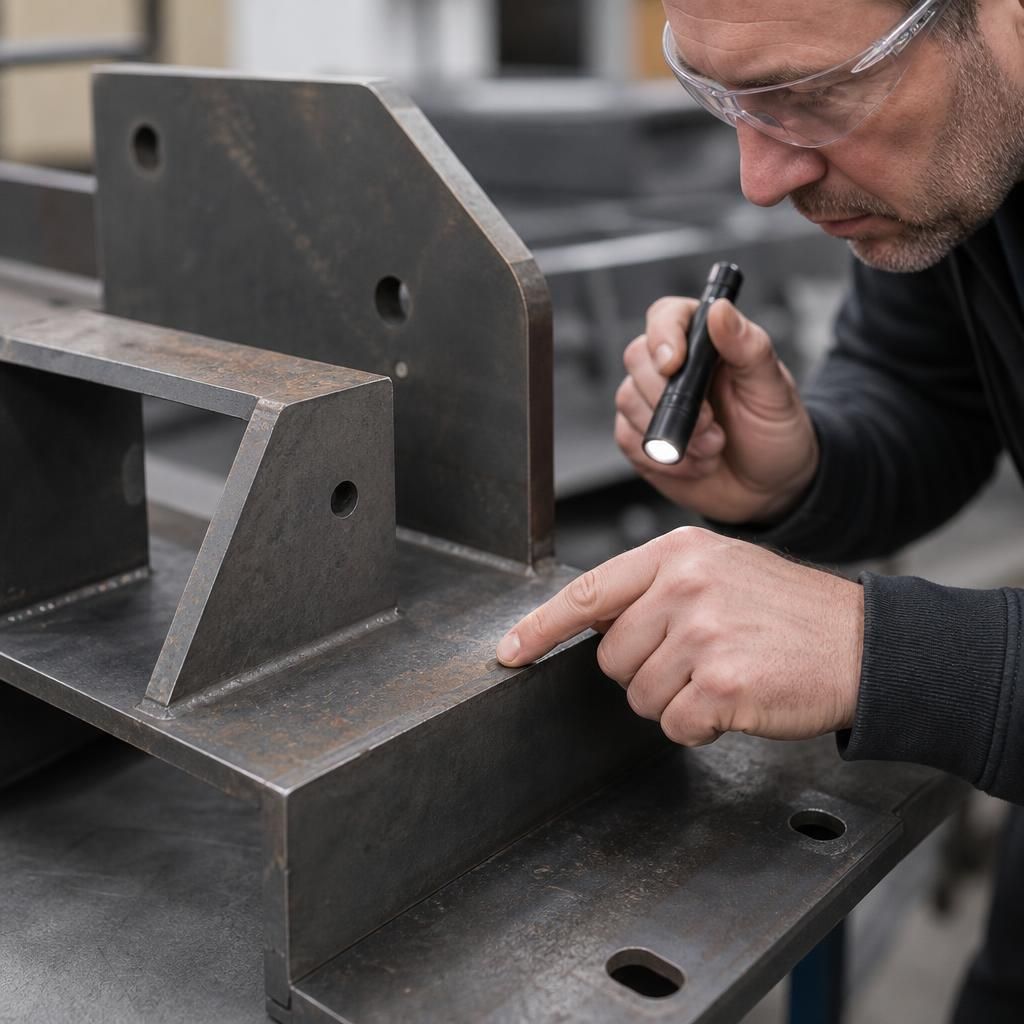
A zinc powder coat primer cannot compensate for a weak mill-scale layer beneath it. Mill scale is a hard oxide formed during steel manufacture, but its bond to the underlying steel may vary across the component. If the scale later lifts, cracks or separates, the primer and topcoat can detach with it even when their own interface is sound.
For this reason, assess the failure risk at the steel–mill-scale boundary, not only the appearance of the prepared surface. Pay particular attention to areas affected by cutting, welding, bending or previous heating, where the scale may be fractured or poorly bonded. A representative adhesion trial should include these less uniform areas rather than relying solely on a flat, clean-looking section.
Discuss Your Zinc Powder Coat Primer Requirements
Discuss your zinc powder coat primer requirements with our powder coating specialists, providing details of the mill scale, component design and intended service environment. We can help assess a suitable coating approach for your metal components and batch requirements.