

What are the advantages of using powder coating over galvanised steel compared to other finishing options in terms of durability and environmental impact?
Powder coating over galvanised steel creates a duplex finish: the galvanising provides sacrificial corrosion protection while the powder layer adds a tough, consistent barrier against weathering, abrasion and impact. Compared with many liquid paint systems, powder coating can offer longer-lasting protection with minimal solvent emissions and little material waste, making it a durable and more environmentally considerate finishing option when properly specified and applied.
Powder coating over galvanised steel is advantageous because it combines the long-term protection of a zinc coating with a specified finish that improves surface performance, appearance and serviceability. Compared with uncoated galvanised steel, liquid paint systems or zinc-rich repair coatings, the combined system can provide more dependable protection when the galvanised surface is prepared correctly and the powder coating is selected for the operating environment.
Durability in demanding conditions
The galvanised layer continues to protect exposed steel if minor damage reaches the substrate, while the powder coating separates the metal from moisture, pollutants and handling damage. This two-stage protection is particularly useful for fabricated components exposed to changing weather, industrial atmospheres or frequent contact. The powder layer also supplies a controlled colour and texture, which can remain more uniform than site-applied paint.
Powder coatings are formed by curing the applied powder into a solid film. When the coating system is suitable for the application, this film can resist routine scuffing and handling better than many conventional decorative finishes. It is also less prone to the uneven brush marks, runs and variable film build associated with some liquid applications. These benefits matter for manufactured batches, where repeatable appearance and predictable performance are important.
Advantages over other finishing options
- Compared with bare galvanised steel: powder coating provides a wider choice of colours and finishes, helping components meet identification, architectural or brand requirements while adding another protective layer.
- Compared with liquid paint: the cured film is applied under controlled conditions and does not rely on solvent evaporation to form its final finish. It can therefore provide a more repeatable coating result when the part geometry, powder type and curing schedule are properly matched.
- Compared with zinc-rich paint: powder coating is generally better suited to producing a consistent factory finish across a production batch. Zinc-rich products remain useful for repairs and some site applications, but they may not provide the same decorative specification or process control.
- Compared with electroplated finishes: powder coating can be specified for larger fabricated items and for a broader range of colours and textures. The most suitable option still depends on dimensional tolerances, temperature exposure and the required corrosion category.
Environmental considerations
The environmental advantage is mainly a lifecycle benefit rather than a claim that powder coating has no environmental cost. A finish that allows a galvanised component to remain in service for longer can reduce the need for replacement, stripping and repeat finishing. That can lower the demand for raw materials, transport and waste treatment over the product’s working life.
Powder application can also be more resource-efficient than some liquid processes because unused material may be collected and, where the equipment and powder system allow it, recovered for controlled reuse. This depends on the colour, coating chemistry and recovery arrangement; mixed powders and contaminated material may not be suitable for reuse. The absence of liquid carriers also reduces the handling of solvent-based coating materials, although the overall environmental assessment should include preparation, curing energy, packaging and waste management.
What determines the result
These advantages are not automatic. Galvanised steel may retain oils, passivation residues, zinc salts or other contaminants that interfere with adhesion. The surface normally requires cleaning and an agreed pre-treatment before powder application. Excessively sharp edges, trapped moisture, weld contamination and unsuitable curing conditions can also create premature failures.
Specification should consider the exposure classification, part design, galvanising condition, required appearance and likely handling. A suitable powder chemistry and thickness must be selected rather than applying the same system to every component. For large or complex parts, the coater should also confirm that the steel can reach the required curing temperature without distortion and that vents or drainage points will not release gases into the film.
In practical terms, powder coating over galvanised steel offers the strongest case where a component needs both a durable protective system and a controlled decorative finish. Its environmental credentials are most credible when supported by sound preparation, efficient application, appropriate curing and a service-life assessment rather than by the coating material alone.
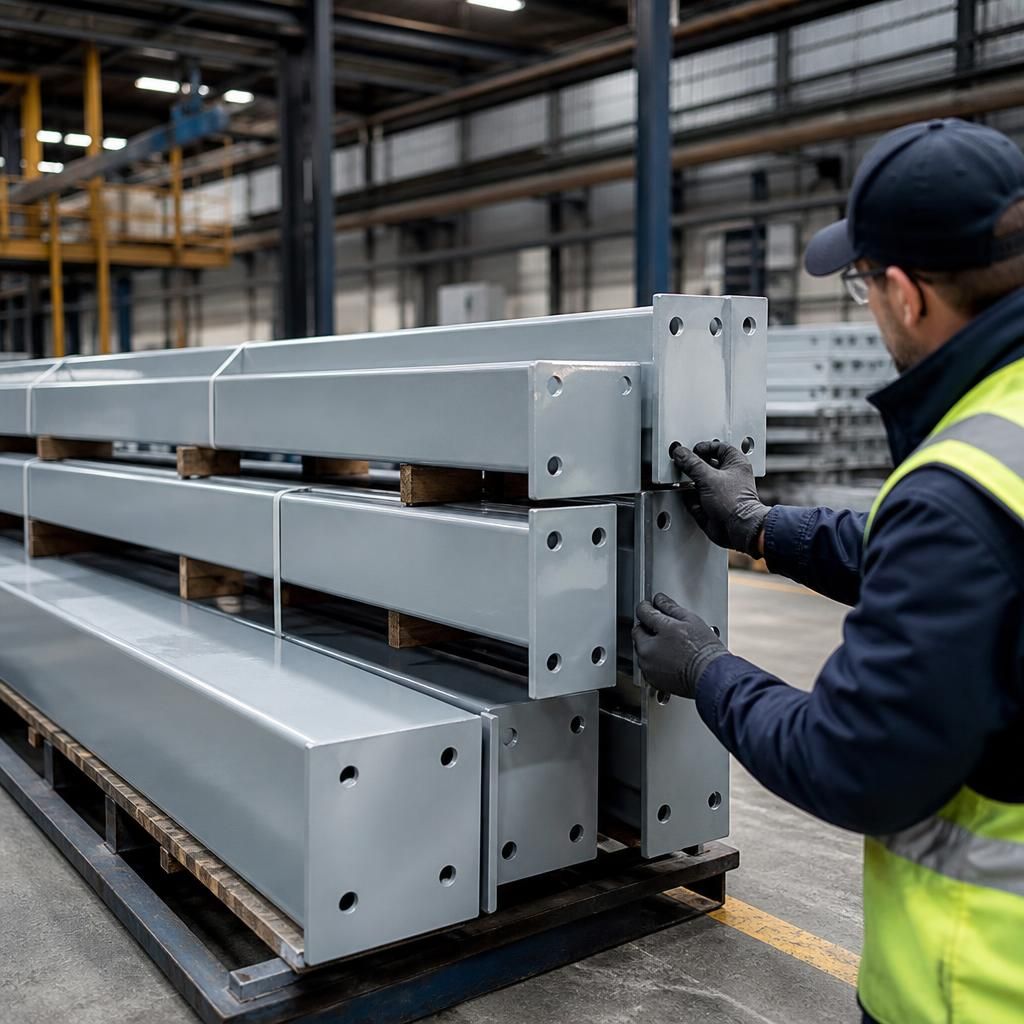
The environmental case for powder coating over galvanised steel is strongest when the additional finish extends the component’s usable life without creating a difficult end-of-life route. The underlying steel remains suitable for established metal-recycling processes, while the coating system should be assessed alongside any preparation residues, packaging and production waste. This makes disposal planning part of the finish specification rather than an afterthought.
A responsible comparison should therefore consider the complete service cycle: the expected exposure, the need for a coloured or textured finish, the likelihood of refurbishment and the available recycling route. In applications where the duplex system prevents early replacement or repeated decorative treatment, its environmental benefit may outweigh the extra processing involved in applying and curing the powder.
Discuss the right powder coating system for galvanised steel
Discuss your galvanised steel components with the powder-coating team to identify a suitable coating system, preparation method and finish for the intended service conditions. Provide details of the component size, exposure and required appearance so the specification can be assessed accurately.