

What precautions should be taken to prevent temperature fluctuations during the powder coating curing process?
Prevent temperature fluctuations by preheating the oven, keeping doors closed during curing, and loading parts consistently so airflow and heat distribution remain stable. Use calibrated temperature monitoring to verify the part—not just the oven air—reaches the powder manufacturer’s specified curing conditions.
Preventing temperature fluctuations during powder coating curing requires control of the oven’s heat source, airflow, insulation, monitoring system and production routine. The objective is to keep the coated components within the powder manufacturer’s specified time-and-temperature window, rather than relying only on the oven’s displayed air temperature.
Check the oven’s heat-control system. Heating elements, burners, thermostats, relays and control software should operate smoothly without pronounced cycling. A faulty sensor or poorly tuned controller can cause the heat source to switch on and off too aggressively, creating repeated peaks and drops. Temperature alarms should be configured to identify deviations before a full batch is affected, with clear procedures for stopping or segregating parts that fall outside the approved curing conditions.
Maintain insulation and seals. Damaged insulation, worn door seals, gaps around access panels and poorly fitted service covers allow heat to escape and make the oven work harder to maintain its set point. Inspect these areas for deterioration, distortion or loose fittings. Any repair should preserve the oven’s intended airflow and safety arrangements; improvised sealing can create other problems, particularly around burners, vents or moving equipment.
Keep airflow uniform. Recirculation fans and ducting distribute heated air throughout the chamber. Uneven airflow can produce hot and cold zones even when the average oven temperature appears correct. Check fan condition, rotation, guards, filters and duct openings, and remove powder build-up or other obstructions. Racking and hanging arrangements should also leave the designed air paths clear. Parts should not shield one another from circulating air or sit directly in a restricted-flow area.
Control the thermal load of each batch. A sudden change in the mass, thickness or material composition of the work can alter how quickly the oven responds. Keep production runs consistent where possible, and establish separate process settings for substantially different loads. Heavy fabrications, thin sheet components and mixed batches may absorb heat at different rates, so they should not automatically be processed using the same assumptions. Record the type and approximate loading characteristics of each run so that unusual temperature behaviour can be investigated.
Allow for thermal recovery. After a significant change in production conditions, the oven may need time to return to a stable operating state. The control panel reaching its target does not necessarily mean that every zone, rack position or internal surface has stabilised. Use the site’s validated process criteria to determine when a batch can enter the curing cycle, and investigate repeated slow recovery rather than compensating by arbitrarily increasing the set temperature.
Use a planned measurement routine. Fixed oven sensors should be checked against a traceable reference as part of calibration and maintenance. Measurements should cover the working zones and relevant positions in the chamber, not just the area nearest the control sensor. Where the process is sensitive or a new batch arrangement is introduced, a temperature profile can show how the component experiences the cycle as it moves through the oven. Keep records of profiles, alarms, calibration checks and corrective actions so that gradual drift can be identified.
Manage set points and recipes carefully. Store approved curing programmes so operators are not relying on handwritten adjustments or memory. Restrict unauthorised changes to temperature, dwell time, ramp settings and zone controls. Before starting a run, confirm that the selected recipe matches the powder specification, substrate and component design. Any change in powder formulation, coating thickness or part construction should trigger a review of the curing process rather than an assumption that the existing settings remain suitable.
Reduce avoidable environmental influences. The oven area should be protected from conditions that can interfere with combustion, electrical controls or heat retention. Uncontrolled air movement around the equipment, blocked ventilation routes, contamination in combustion air and unstable electrical supply can all contribute to inconsistent operation. These issues should be assessed by suitably qualified personnel, particularly where gas-fired equipment or high-temperature electrical systems are involved.
Use a response procedure for deviations. If an alarm, sensor fault or abnormal temperature trend occurs, record the batch identity and the point in the cycle at which the deviation happened. Do not assume that extending the cure or raising the temperature will correct every problem; excessive heat can damage the finish or substrate, while insufficient heat may leave the coating under-cured. Review the powder technical data, the measured temperature history and the equipment fault before deciding whether parts require further processing, testing or rejection.
These precautions work best as a controlled process rather than as isolated checks. A documented oven-maintenance schedule, validated recipes, repeatable batch conditions and recorded temperature evidence provide a more dependable basis for powder coating quality than the displayed set point alone.
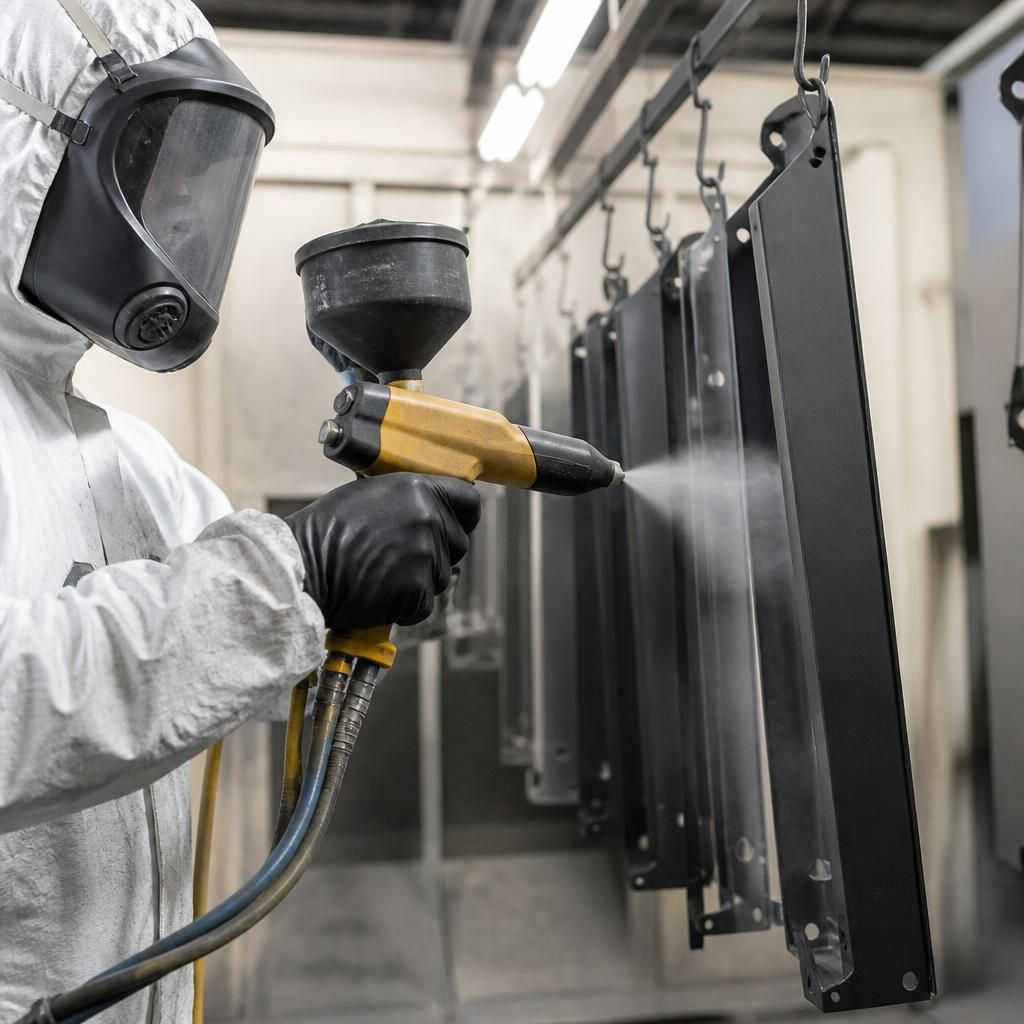
Keep coating application consistent before parts enter the curing oven. Uneven film thickness, heavy powder build-up in corners or damp contamination on the substrate can make some areas absorb heat differently from others, even when the oven temperature is stable. Check application equipment, grounding and powder coverage, and remove visibly excessive deposits before curing. This helps distinguish a genuine oven fluctuation from a variation caused by the coated component itself.