

How does the metal surface preparation impact the effectiveness of high temp powder coating?
Metal surface preparation directly affects the adhesion, consistency and heat resistance of high temp powder coating. Removing contaminants and creating a suitable surface profile helps the coating bond correctly, while inadequate preparation can lead to defects, premature failure and reduced protection at elevated temperatures.
Metal surface preparation is a determining factor in the performance of high temperature powder coating because it controls how clean, chemically compatible and physically suitable the substrate is before application. A coating may be formulated for elevated-temperature service, but it cannot compensate for oil, scale, corrosion, incompatible residues or an unsuitable surface condition beneath it.
Contamination affects more than initial bonding. Oils, grease, cutting fluids, dust, salts, fingerprints and cleaning residues can remain on metal after fabrication and handling. Under heat, some contaminants may migrate, decompose or release gases. This can produce craters, pinholes, blistering or local lifting in the finish. In a component exposed to repeated heating and cooling, those small defects can become routes for moisture and corrosion, reducing the useful life of the coating system.
Preparation therefore normally begins with a suitable cleaning stage. The method depends on the type and severity of contamination. Solvent cleaning may remove light organic residues, while alkaline or aqueous cleaning can be more appropriate for heavier oils and manufacturing soils. Any chemical cleaner must itself be removed thoroughly; an invisible film left on the surface can be just as disruptive as the original contamination. Cleaned parts also need to be protected from recontamination during storage, handling and transfer to the coating line.
Oxide, mill scale and corrosion require particular attention. Heat-affected areas, welds and previously exposed steel can carry oxides or corrosion products that are weaker than the underlying metal. If these layers remain, the powder may be bonded to the loose material rather than to the substrate. Abrasive blasting is often used to remove such material and produce a consistent surface for coating. The abrasive, pressure and profile must be selected for the metal and the component, since excessive treatment can alter dimensions, round edges or damage delicate features.
The resulting surface profile is important. A controlled profile gives the cured coating a suitable mechanical key, whereas a surface that is too smooth may provide insufficient purchase and one that is excessively rough can leave high points with reduced coverage. Peaks can also increase the risk of premature wear or local corrosion if the coating does not adequately cover them. Profile assessment should be appropriate to the part and the coating specification rather than treated as an identical requirement for every component.
Surface chemistry also influences high-temperature durability. Different metals, including carbon steel, stainless steel, aluminium and galvanised substrates, have different oxide layers and pretreatment requirements. A process suitable for one metal may be ineffective or unsuitable for another. Aluminium, for example, can develop a tenacious oxide layer, while galvanised steel may require preparation that preserves the zinc layer without leaving residues. The coating system and pretreatment should be checked for compatibility with the actual substrate, weld materials and any inserts or assembled components.
Welds and fabricated joints deserve close inspection. Weld spatter, sharp edges, porosity, flux residues and fabrication debris can create local coating weaknesses. Sharp corners naturally receive less powder than broad faces, and trapped contamination around a weld can emerge during curing or later heating. Removing spatter, smoothing unsuitable edges and ensuring that welds are properly cleaned helps produce a more uniform coating thickness across the whole component.
Outgassing is another preparation-related risk. Castings, porous welds, galvanised parts and components with cavities can contain air, moisture or volatile substances. When the part is heated, these materials may escape through the uncured powder and leave pinholes or blisters. Preparation can reduce the risk by removing residues, drying the part correctly and, where the coating system permits, using a suitable pre-treatment or pre-bake process. Vent and drain holes may also be necessary on enclosed fabrications, both to release trapped gases and to allow pretreatment materials to drain.
Parts should be dry before coating, particularly after water-based cleaning or rinsing. Residual moisture in seams, recesses and threaded areas can cause defects during heating and may contribute to corrosion beneath the finish. Components should be inspected after preparation rather than relying solely on the cleaning process itself. A suitable inspection can consider:
- visible oil, grease, dust, scale, rust and abrasive residue;
- water trapped in joints, recesses or hollow sections;
- weld spatter, sharp edges and fabrication marks;
- the cleanliness and profile of blasted areas; and
- evidence that the prepared surface has been touched or contaminated before application.
Timing between preparation and coating matters. Bare prepared steel can begin to oxidise again if it is exposed to humid conditions or contaminants before powder is applied. This can be particularly significant where the surface has been blasted and no protective conversion treatment is specified. Handling with clean gloves, suitable storage and controlled transfer help preserve the prepared condition. If flash rust or visible contamination develops, the part may need to be treated again rather than coated over.
Preparation should also account for the final operating environment. Components exposed to moisture, chemicals, salt, abrasion and repeated thermal cycling may need a more carefully controlled preparation and pretreatment system than parts used in a dry indoor setting. Thermal expansion differences between the substrate, pretreatment and powder film can place stress on the coating during service, so weak interfaces and embedded contamination become more consequential as temperatures rise and fall.
For this reason, the correct preparation route is established from the substrate, fabrication method, existing condition, coating specification and intended thermal environment. A sound process generally combines degreasing or washing, removal of oxides and corrosion, suitable profiling or conversion treatment, thorough drying, inspection and controlled handling before application. High temperature powder coating is then given the best opportunity to cure as specified and perform as intended on the finished metal component.
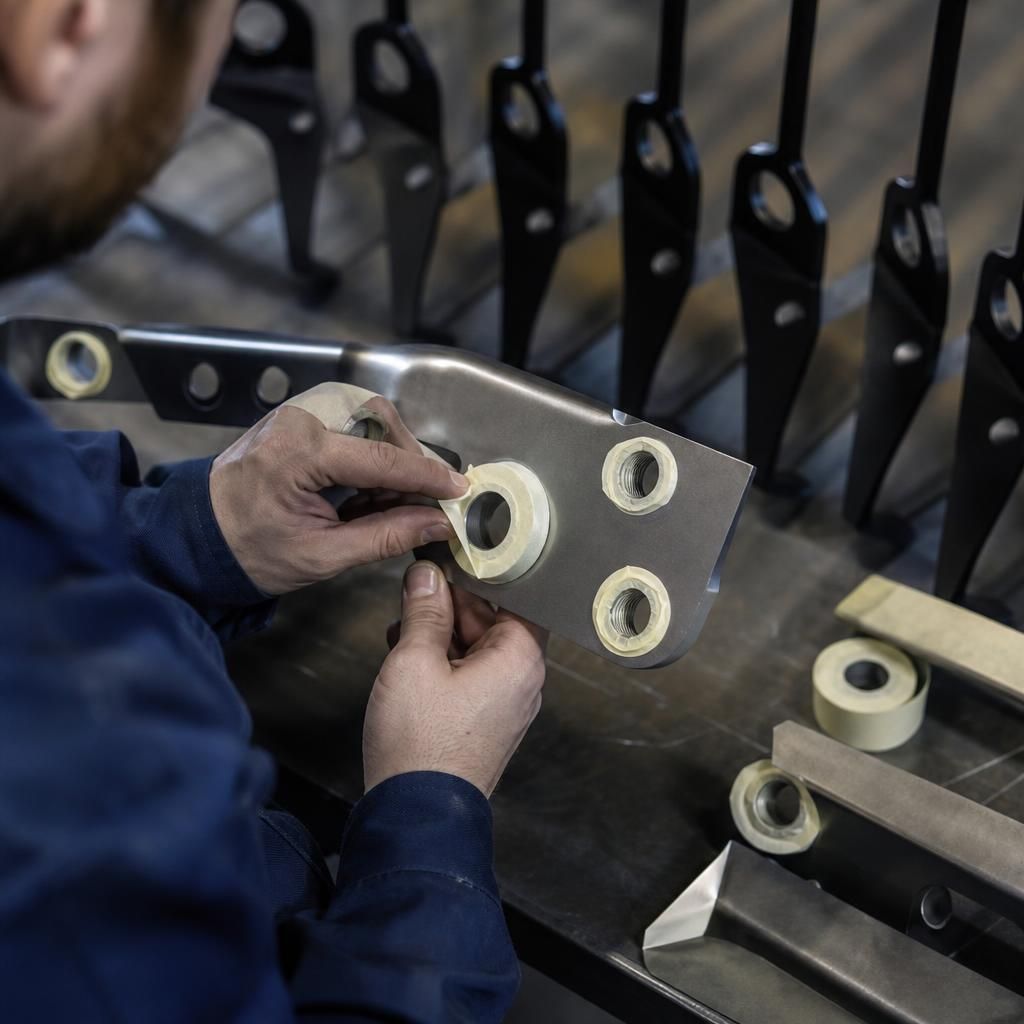
Masking and contact-point preparation are important parts of preparing metal for high temperature powder coating. Threads, bearing seats, electrical contact areas and accurately machined faces may need to remain free from powder, while the part must still provide a clean, conductive point for secure hanging and electrical grounding during application.
Where these areas are not identified before coating, excess powder can interfere with assembly, alter clearances or reduce electrical continuity. Poorly prepared hanging points can also affect powder transfer and leave inconsistent coverage in certain areas. Suitable high-temperature masking materials should be fitted after cleaning and removed carefully after curing, without leaving adhesive residue or exposing the surrounding finish to damage.
The preparation specification should therefore identify functional surfaces, masking locations and permitted contact points before the component enters the coating process. This is particularly important for fabricated parts that combine coated exterior surfaces with threads, close-tolerance interfaces or areas that must remain electrically conductive.
Discuss Your High Temperature Powder Coating Requirements
Discuss your high temperature powder coating requirements with our Midlands specialists, including the substrate, component design and intended operating conditions. This allows the appropriate preparation and coating approach to be considered for your metal parts.